
Wildlife at night
54 wildlife at night along the East Atlantic Flyway, from Norway to Angola: when each one peaks, where to go on your own, what it costs and what you will hear. Wild animals only, no zoos.
Best time, place by place
| Spectacle | Country | Peak | On your own? |
|---|---|---|---|
| Nightjars and woodlarks in the dune plantations | Denmark | 1 Jun – 10 Jul | You can go on your own |
| Corncrakes calling | United Kingdom | 15 May – 30 Jun | You can go on your own |
| Manx shearwaters returning at night | United Kingdom | 15 May – 15 Jul | Partly on your own |
| Nightjars churring | United Kingdom | 1 Jun – 15 Jul | You can go on your own |
| Storm petrels at Mousa Broch | United Kingdom | 5 Jun – 20 Jul | Guide, ranger or boat needed |
| Tawny owl territorial calling | United Kingdom | 10 Oct – 30 Nov and 15 Jan – 28 Feb | You can go on your own |
| Corncrakes calling on Tory, Inishbofin and the Mullet | Ireland | 20 May – 30 Jun | You can go on your own |
| Biesbosch beavers at dusk | Netherlands | 15 May – 31 Aug | You can go on your own |
| Nightjars churring on the Kalmthoutse Heide | Belgium | 1 Jun – 10 Jul | Partly on your own |
| Bavarian Forest: pygmy and Tengmalm's owls, woodpeckers, lynx country | Germany | 10 Mar – 20 Apr and 15 Sep – 31 Oct | You can go on your own |
| Elbe beavers at dusk, Mittelelbe | Germany | 15 May – 15 Jul | You can go on your own |
| Shearwater colonies: Îles d'Hyères and Lavezzi | France | 15 Apr – 15 Jul | Partly on your own |
| Provençal nights: nightingale, scops owl & stone-curlew | France | 25 Apr – 5 Jun | You can go on your own |
| Nightjars and woodlarks of the Landes pine forest | France | 1 Jun – 15 Jul | You can go on your own |
| Ural owls in the Wienerwald and Dürrenstein wilderness | Austria | 15 Feb – 25 Mar and 15 Sep – 31 Oct | You can go on your own |
| Beavers by boat at dusk, Donau-Auen | Austria | 15 May – 31 Jul | You can go on your own |
| Corncrakes and curlews of the Styrian Ennstal | Austria | 15 May – 20 Jun | You can go on your own |
| Brown bears from forest hides, Kočevsko | Slovenia | 15 May – 15 Jul | Guide, ranger or boat needed |
| Corncrakes and wet-meadow night chorus, Ljubljana Marsh | Slovenia | 15 May – 20 Jun | You can go on your own |
| Karst nights: scops owl, nightjar and cicadas | Slovenia | 20 May – 10 Jul | You can go on your own |
| Wolf howling and Ural owls, Kočevski Rog nights | Slovenia | 15 Aug – 15 Oct and 1 Feb – 31 Mar | You can go on your own |
| Edible dormouse nights and the 'polharjenje' season | Slovenia | 20 Aug – 5 Oct | You can go on your own |
| Paklenica canyons: eagle owl, chamois and rock birds | Croatia | 1 Feb – 20 Mar | Partly on your own |
| Scops owl nights on the Dalmatian islands | Croatia | 1 May – 20 Jun | You can go on your own |
| Brown bears and wolves, Gorski kotar and Velebit | Croatia | 15 May – 15 Jul and 15 Aug – 15 Oct | Guide, ranger or boat needed |
| Golden jackal choruses of Dalmatia | Croatia | 1 Jul – 31 Aug and 15 Dec – 15 Feb | You can go on your own |
| Golden jackal choruses on the Karst | Italy | 15 Jan – 31 Mar and 15 Jul – 31 Aug | You can go on your own |
| Mediterranean nights: nightingale & scops owl | Italy | 20 Apr – 31 May | You can go on your own |
| Scopoli's & Yelkouan shearwater colonies | Italy | 1 May – 31 Jul | You can go on your own |
| Wolf howling | Italy | 1 Aug – 30 Sep and 15 Jan – 15 Feb | Guide, ranger or boat needed |
| Eagle owl winter calling | Italy | 1 Dec – 15 Feb | You can go on your own |
| Cory's shearwater colonies of the Canaries | Spain | 15 May – 30 Sep and 20 Oct – 15 Nov | Partly on your own |
| Red-necked nightjar nights | Spain | 20 May – 10 Jul | You can go on your own |
| Iberian wolf howling, Sierra de la Culebra | Spain | 1 Aug – 30 Sep and 15 Jan – 28 Feb | You can go on your own |
| Iberian lynx mating calls, Sierra de Andújar | Spain | 20 Dec – 31 Jan | You can go on your own |
| Zino's petrel calling over Pico do Arieiro at night | Portugal | 15 May – 15 Jul | Partly on your own |
| Gongon — Cape Verde petrels calling at night over the Fogo caldera and the Santo Antão plateaux | Cabo Verde | 15 Jan – 15 Mar | You can go on your own |
| Niokolo-Koba — hippos, lions and the Gambia river in the dry season | Senegal | 1 Feb – 30 Apr | Guide, ranger or boat needed |
| Hippos and the chimpanzee islands of the River Gambia National Park | The Gambia | 15 Jan – 30 Apr | Partly on your own |
| Nightjars and owls of the coastal woodland — Brufut and Kotu | The Gambia | 15 Jan – 31 Mar | You can go on your own |
| Saltwater hippos of Orango | Guinea-Bissau | 1 Dec – 30 Apr | Guide, ranger or boat needed |
| Haut Niger National Park — the Mafou savanna and the upper Niger | Guinea | 15 Jan – 15 Apr | Guide, ranger or boat needed |
| Fouta Djallon — savanna chimpanzees and the Bafing highlands | Guinea | 1 Dec – 31 Mar | Partly on your own |
| Outamba-Kilimi — hippos, chimps and the northern savanna at night | Sierra Leone | 15 Jan – 15 Apr | Guide, ranger or boat needed |
| Hippos on the Mono river | Togo | 15 Jan – 31 Mar | Guide, ranger or boat needed |
| Pendjari: lions, elephants and hippos at the dry-season pools | Benin | 15 Jan – 15 Apr | Guide, ranger or boat needed |
| Kainji Lake: hippos and savanna nights on the Oli river | Nigeria | 1 Feb – 30 Apr | Guide, ranger or boat needed |
| Douala-Edéa and Lake Ossa: manatees, mangroves and the Sanaga mouth | Cameroon | 1 Dec – 15 Feb | Partly on your own |
| Bioko's southern beaches: leatherbacks, green turtles and the Caldera primates | Equatorial Guinea | 15 Dec – 15 Feb | Guide, ranger or boat needed |
| Turtle nights on São Tomé — Praia Jalé, Praia Inhame and Morro Peixe | São Tomé and Príncipe | 15 Nov – 10 Feb | Partly on your own |
| Príncipe after dark: the scops owl described in 2022, and the island's endemics at dawn | São Tomé and Príncipe | 1 Dec – 28 Feb and 15 Jun – 15 Sep | Guide, ranger or boat needed |
| Leatherback nesting from Pongara to Mayumba — Gabon's turtle coast | Gabon | 1 Dec – 31 Jan | Partly on your own |
| Mangroves of the Congo mouth: manatees, turtle beaches and the only marine park in the DRC | DR Congo | 15 Nov – 31 Jan | Guide, ranger or boat needed |
| Okavango headwaters: the Cuito source lakes and the Cuando | Angola | 15 Jun – 30 Sep | Partly on your own |
Where to go, north to south
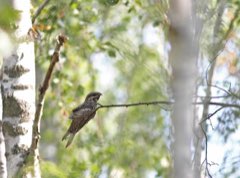 Nightjars and woodlarks in the dune plantationsNightjar churring from clear-fell edges, wing-claps and 'coo-ick' flight calls, woodlark's cascading song at dusk, long-eared owl chicks squeaking, roe deer barking; the North Sea surf behind the Thy dunes.
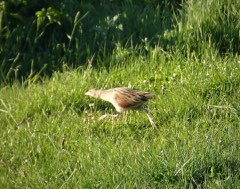 Corncrakes callingThe rasping 'crex-crex' from iris beds and meadows, with snipe, redshank and the sea behind.
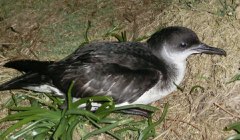 Manx shearwaters returning at nightHundreds of thousands of birds crashing in, with cackling, choking, hoarse calls from the air and burrows all around you.
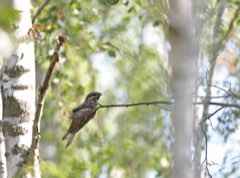 Nightjars churringContinuous mechanical churring with changes of gear, wing-claps, 'coo-ick' flight calls, with tree pipits and woodlarks at dusk.
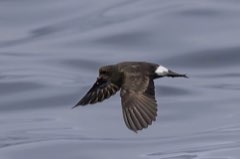 Storm petrels at Mousa BrochPurring and hiccupping from inside the Iron Age broch walls, and the bat-like flutter of returning birds passing your head.
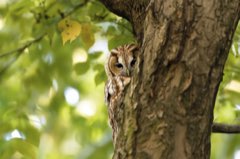 Tawny owl territorial callingHoots and 'ke-wick' duets and disputes as young birds try to settle territories; sometimes three or four birds answering.
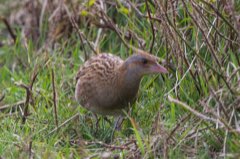 Corncrakes calling on Tory, Inishbofin and the MulletThe rasping 'crex-crex' of corncrakes from iris beds and nettle patches, several males answering across the island, with snipe drumming, the Atlantic on the rocks and sheep — one of the last places in western Europe you can still hear a corncrake night.
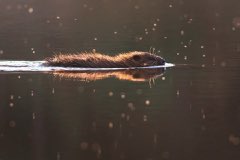 Biesbosch beavers at duskA beaver's tail slap, gnawing on willow, the push of its wake in a still creek; reed warblers and cuckoos at dusk in May; the murmur of thousands of geese and ducks settling on the open water at night; ospreys calling in spring.
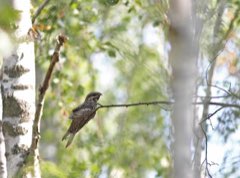 Nightjars churring on the Kalmthoutse HeideThe dry, sustained churr of nightjars from the pine edges, rising and falling as the bird turns its head, broken by 'kwik' calls and wing-claps; woodlarks' song at dusk, natterjacks rasping from the fens; the hum of the port of Antwerp on the horizon.
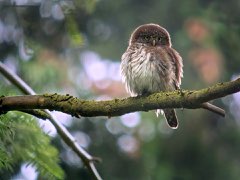 Bavarian Forest: pygmy and Tengmalm's owls, woodpeckers, lynx countryPygmy owl's piping series at dusk, Tengmalm's 'po-po-po-po' from the bark-beetle deadwood forest, Ural owl barking, three-toed woodpecker drumming rolls, nutcrackers; the loudest silence in Germany in the dead-spruce stands.
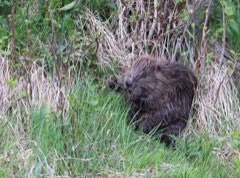 Elbe beavers at dusk, MittelelbeTail-slaps, gnawing on willow at water level, kits whining inside the lodge, splashy feeding; with a hydrophone the gnawing and the underwater entries are excellent; oriole, nightingale and marsh frogs at the same hour.
 Shearwater colonies: Îles d'Hyères and LavezziWailing and cackling shearwaters arriving over the cliffs at night to their burrows — Port-Cros holds about 90% of France's Yelkouan population — with the Mediterranean swell below.
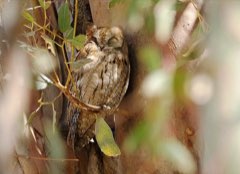 Provençal nights: nightingale, scops owl & stone-curlewNightingales in every tamarisk, scops owls' 'tiu' on a 2–3 s metronome, stone-curlew wails from the Crau, nightjars churring on the garrigue, tree frogs from the marsh.
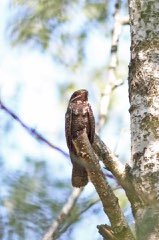 Nightjars and woodlarks of the Landes pine forestChurring nightjars from every clear-fell in Europe's largest planted forest, woodlarks still singing at dusk, and the surf from the Atlantic dunes if you are near the coast.
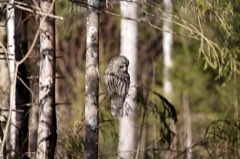 Ural owls in the Wienerwald and Dürrenstein wildernessUral owl's deep barking 'wuh-wuh... wu-wuhuh' series, female's hoarse heron-like calls, tawny owl duets, pygmy owl piping in the Dürrenstein old growth; snow-quiet beech forest.
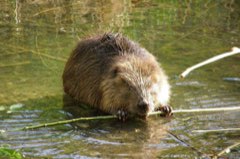 Beavers by boat at dusk, Donau-AuenTail-slaps, gnawing on willow, kits whining in the lodge, surface swims and dives; frogs and night herons; the Danube.
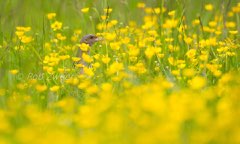 Corncrakes and curlews of the Styrian EnnstalRasping corncrakes from the wet meadows, curlew bubbling and snipe drumming at dawn, quail, tree frogs from the raised bog, cowbells and the Enns.
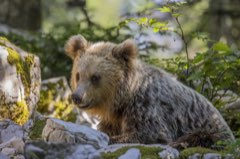 Brown bears from forest hides, KočevskoBears are mostly quiet: heavy footfalls in beech litter, sniffing, huffing and jaw-popping when nervous, cubs squalling, mating-season moans; the surrounding evening chorus (wood warbler, Ural owl at dusk, red deer) is the real soundscape.
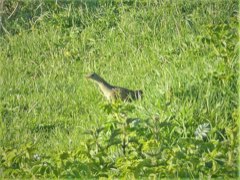 Corncrakes and wet-meadow night chorus, Ljubljana MarshCorncrake's rasping 'crex-crex' from several males at once, quail 'wet-my-lips', curlew bubbling at dawn, frog chorus from ditches, grasshopper warbler reeling; church bells and dogs from the villages.
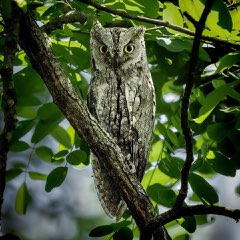 Karst nights: scops owl, nightjar and cicadasScops owl's monotone 'tyuh' every 2–3 s from village edges, nightjar churring on the dry meadows, sub-Mediterranean bush-cricket wall of sound, cicadas at 90+ dB at midday in July, eagle owl from the Vipava cliffs in late winter.
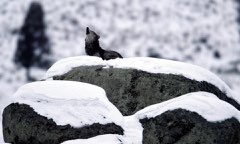 Wolf howling and Ural owls, Kočevski Rog nightsPack howls with high pup yips from rendezvous sites, carrying several km across karst dolines; Ural owl's deep barking 'wuh-wuh-wuho' and female's hoarse calls; Tengmalm's owl in late winter; red deer in the same windows from mid September.
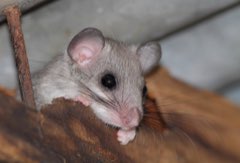 Edible dormouse nights and the 'polharjenje' seasonSqueals, churring and 'kissing' contact calls from the canopy, loud scrabbling on bark, beechnut shells raining down; in mast years the forest sounds like it is full of monkeys.
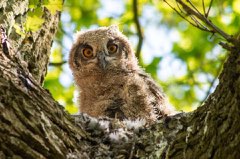 Paklenica canyons: eagle owl, chamois and rock birdsEagle owl's deep 'oo-hu' bouncing between 400 m canyon walls, rock partridge cackling at dawn, alpine swift screams, blue rock thrush, chamois alarm whistles, the Velika Paklenica stream.
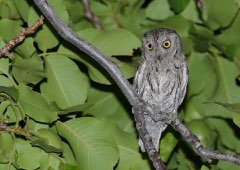 Scops owl nights on the Dalmatian islandsSeveral scops owls counter-singing across a village at different pitches, nightjar churring from the maquis, Cetti's warbler, cicada tail-off at dusk, cricket and bush-cricket floor, sea against the shore.
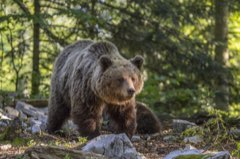 Brown bears and wolves, Gorski kotar and VelebitBear footfalls, huffs and jaw-popping close to a hide; wolf packs howling across karst dolines in late summer; dormice and Ural owls at night; the Lika plateau is one of the quietest places in southern Europe.
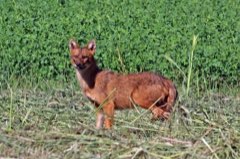 Golden jackal choruses of DalmatiaThe rising, yelping, quavering group howl of a jackal family — three or four voices climbing over each other for half a minute — answered from the next olive grove and the next, with scops owls, nightjars and crickets underneath on summer nights and silence and sea on winter ones.
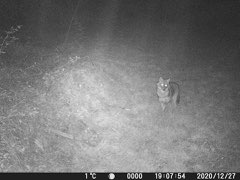 Golden jackal choruses on the KarstRising yelping group howls — faster and higher than wolves — answered by neighbouring families across the limestone plateau; the densest population in Italy.
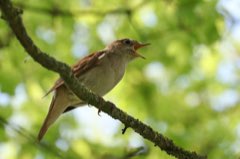 Mediterranean nights: nightingale & scops owlNightingales everywhere, the metronomic 'tiu' of scops owls (often several in duet), stone-curlew wails, tree frogs.
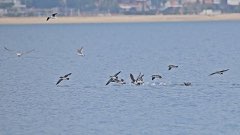 Scopoli's & Yelkouan shearwater coloniesScopoli's 'crying baby' wails from thousands of birds arriving over cliffs — one of the Mediterranean's strangest sounds.
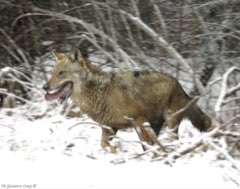 Wolf howlingChorus howls from family packs, including pups' high wavering howls, answering from across a valley.
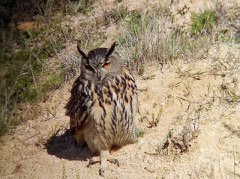 Eagle owl winter callingDeep 'oo-hu' territorial hoots from cliffs, sometimes in male–female duet, echoing off rock.
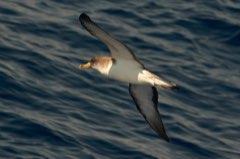 Cory's shearwater colonies of the CanariesThe wailing, sobbing 'pardela' chorus from thousands of birds over sea cliffs — the sound behind the Canarian mermaid legends — with the Atlantic swell and Bulwer's petrels' soft barking.
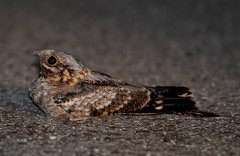 Red-necked nightjar nightsThe Iberian nightjar's knocking 'kutuk-kutuk-kutuk' — slower and woodier than the European nightjar's churr — from dozens of birds in stone-pine and dehesa, with scops owls and stone-curlews, and the birds sitting on the warm tracks in the headlights.
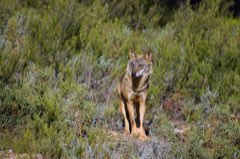 Iberian wolf howling, Sierra de la CulebraPack choruses with pups' yips across the heather-and-pine sierra, roe deer barks, and the deep quiet of one of the emptiest corners of Spain.
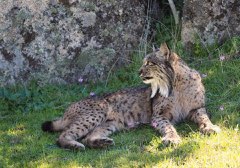 Iberian lynx mating calls, Sierra de AndújarLoud, hoarse caterwauling and 'meows' between males and females carrying across the scrub at dawn; red deer, wild boar and eagle owls in the same valleys. Mostly a sighting spectacle.
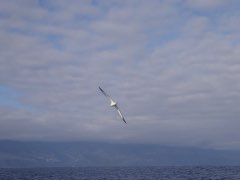 Zino's petrel calling over Pico do Arieiro at nightOne of Europe's rarest sounds: the long, mournful, tawny-owl-like moan of Zino's petrels circling the summit ridge in the dark, answered from the nesting ledges, with the occasional whimper and the quieter cackle of Manx shearwaters lower down — above a sea of cloud, in total silence otherwise.
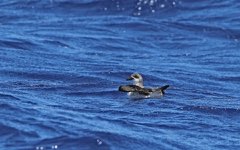 Gongon — Cape Verde petrels calling at night over the Fogo caldera and the Santo Antão plateauxSteeply descending moans, one to two seconds long, a third ending in a rising squeak, wing-whistles with Doppler shifts and occasional claps as birds beat along the caldera walls 500 m above you. Up to 20 calls a minute at the best São Nicolau pinnacles. Not loud — but one of the rarest night sounds in the Atlantic, with crickets, distant dogs and the volcano's silence under it.
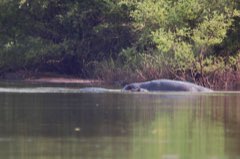 Niokolo-Koba — hippos, lions and the Gambia river in the dry seasonHippo pods bellowing on the Gambia river below the Simenti terrace, lions roaring across the dry savanna, hyenas, and at dawn the booming of ground hornbills and the calls of spur-winged geese and Egyptian plovers on the sandbars.
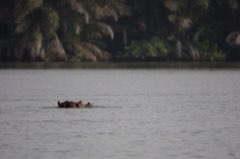 Hippos and the chimpanzee islands of the River Gambia National ParkHippo pods grunting and blowing on the river bends below Janjanbureh, chimpanzee pant-hoots carrying across the water from the Baboon Islands, baboon troops on the banks and fish eagles at every bend.
 Nightjars and owls of the coastal woodland — Brufut and KotuThe long-tailed nightjar's engine-like churr from every clearing, standard-winged nightjar's insect-like trill as males circle with their pennants, the deep grunts of Verreaux's eagle-owl in the big trees and white-faced scops owl's bubbling call.
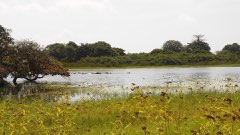 Saltwater hippos of OrangoHippo grunts and blows from a lagoon inside island forest, then the same animals walking past the village beach at night and surfacing in the sea in the morning — the world's only regularly marine hippos.
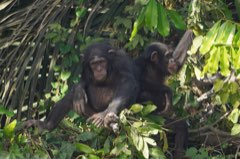 Haut Niger National Park — the Mafou savanna and the upper NigerHippos on the upper Niger, ground hornbills' bass at dawn, chimps in the gallery forests of the Mafou core, and the dry savanna at night with hyenas and nightjars — a Sahelian-Guinean mix with almost nobody there.
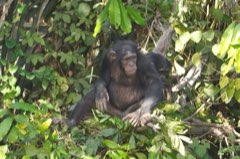 Fouta Djallon — savanna chimpanzees and the Bafing highlandsChimp calls echoing off sandstone canyon walls in a savanna-woodland mosaic, baboon troops on the cliffs, hippos on the Bafing, and canyons full of waterfall noise after the rains — with the Fulani villages' cattle and calls to prayer.
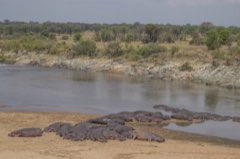 Outamba-Kilimi — hippos, chimps and the northern savanna at nightHippo pods on the Little Scarcies river, chimps and colobus in the gallery forests at dawn, ground hornbills booming, and savanna nights with nightjars and hyenas — Sierra Leone's oldest park and its emptiest.
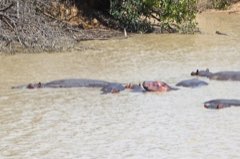 Hippos on the Mono riverHippo laughing-grunts and blows from the river pools at dusk, carrying up the gallery forest, with nightjars and the fishing villages beyond.
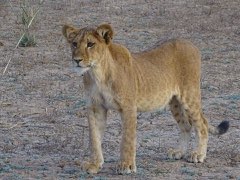 Pendjari: lions, elephants and hippos at the dry-season poolsLions roaring across the Pendjari plain in the small hours — one of the few places in West Africa where this is still likely — hippos bellowing at Mare Bali, elephants at the pools, hyena whoops and a savanna dawn of francolins, ground hornbills and doves.
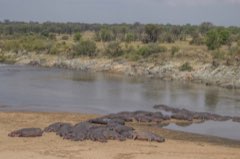 Kainji Lake: hippos and savanna nights on the Oli riverHippo choruses on the Oli river pools at dusk, hyena and nightjars around the camp, baboon barks, and the wide Guinea-savanna dawn of francolins, hornbills and doves.
 Douala-Edéa and Lake Ossa: manatees, mangroves and the Sanaga mouthGrey parrot roost flights whistling over the mangroves at dusk, egrets and herons settling, the Sanaga estuary's terns, and at Lake Ossa the soft blows of manatees surfacing in the dark.
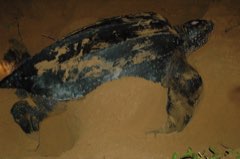 Bioko's southern beaches: leatherbacks, green turtles and the Caldera primatesBlack-sand surf, then the scrape and sigh of a leatherback digging a few metres away. At dawn the forest behind Moaba is one of the richest primate choruses in Africa: drill grunts and crowing, the chatter of red-eared monkeys, colobus roars, hornbills and the Bioko race of the grey parrot. Waterfalls drop straight onto the beach between the nesting bays.
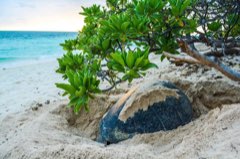 Turtle nights on São Tomé — Praia Jalé, Praia Inhame and Morro PeixeSurf on a black-sand beach, the scrape and thrown sand of a green turtle digging, her breathing, and the forest behind the beach: São Tomé scops owl, frogs, the squeak of fruit bats in the coconut palms. Quiet beaches without engine noise — the south is the end of the road.
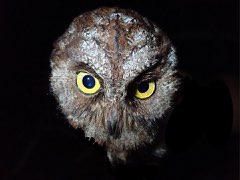 Príncipe after dark: the scops owl described in 2022, and the island's endemics at dawnA fast, insect-like 'tuu-tuu-tuu' at about one note a second, often as a duet with the female higher-pitched, from the old-growth forest of the uninhabited south — a sound nobody had named until 2022. Before dark, the island's grey parrots screaming to roost; at dawn, the thrush, the thrush-babbler, the speirops and the Príncipe sunbird in a forest with no roads.
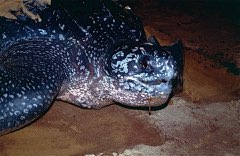 Leatherback nesting from Pongara to Mayumba — Gabon's turtle coastA leatherback digging is a slow, heavy scrape and the hiss of thrown sand, with deep sighing breaths — audible from 20 m on a still night between sets of surf. Otherwise the night is surf, the odd nightjar and, at Pongara, hippos and elephants in the forest behind the beach.
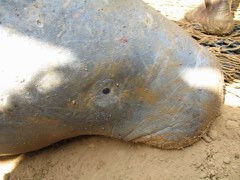 Mangroves of the Congo mouth: manatees, turtle beaches and the only marine park in the DRCA mangrove dawn: the drip and click of the Rhizophora at low water, kingfishers, herons, fish eagles, the blow of a manatee surfacing in a side channel (a short, sharp exhalation, easy to miss), hippos grunting in the back creeks; at night on the beach, surf and a nesting ridley's scraping — and the Congo's current audible against the sandbanks at Banana.
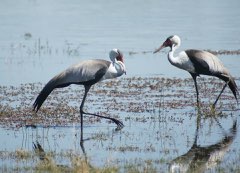 Okavango headwaters: the Cuito source lakes and the CuandoOne of the least-recorded soundscapes in Africa: hippos and Pel's fishing owl on the Cuito, frog choruses on peat-edged source lakes, wattled cranes over the floodplains, the miombo dawn with its cuckoos and barbets, and no engine for days.