
Nightjars and woodlarks of the Landes pine forest
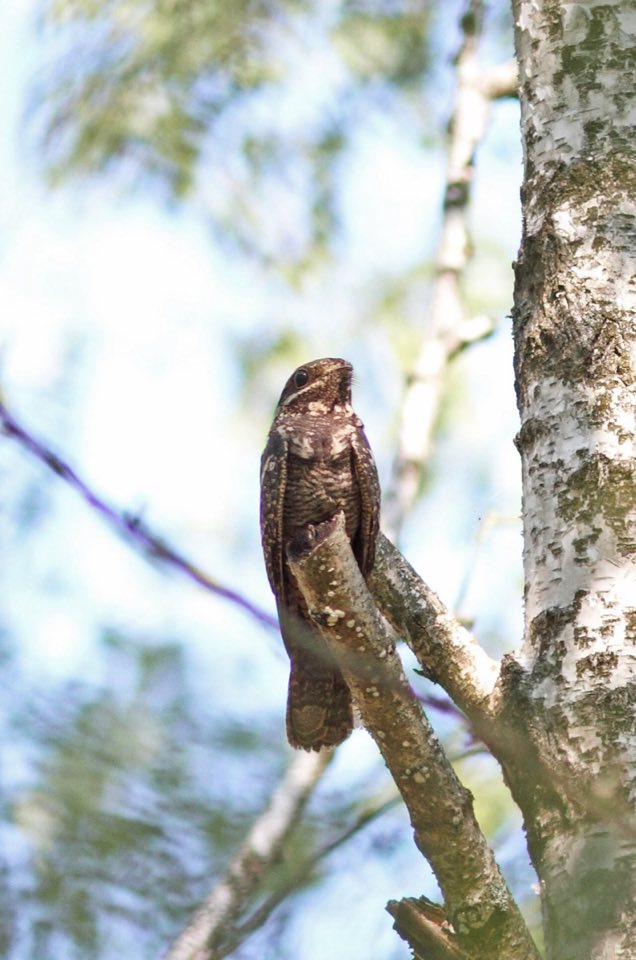
European nightjar (Caprimulgus europaeus), woodlark, tawny owl, Dartford warbler. Landes de Gascogne, France.
Best time: 1 Jun – 15 Jul (June to July). Where: Réserve naturelle du Courant d'Huchet, Parc naturel régional des Landes de Gascogne (Belin-Béliet / Pissos), Réserve d'Arjuzanx (France). Time of day: Woodlarks sing to dusk.
- You can go on your own
- Free
- No binoculars needed
- Sound 5/5
Open it in the interactive calendarSunrise and sunset listening times for the day you pick, and the map.
When is the best time?
Peak: 1 Jun – 15 Jul. June to mid July
Active from 15 May to 20 Aug (May to August) in a typical year.
Time of day
Woodlarks sing to dusk; nightjar churring from 20–30 min after sunset, strongest in the following hour, intermittent through the night and a second bout in the hour before sunrise.
- Dusk churring: 20 min after sunset → 90 min after last light
- Dawn churring: 75 min before sunrise → 10 min before sunrise
What will you hear?
Churring nightjars from every clear-fell in Europe's largest planted forest, woodlarks still singing at dusk, and the surf from the Atlantic dunes if you are near the coast.
Binoculars?
No binoculars needed. Churring from the clear-fells at dusk; ears only, a red torch for the track.
Where to go
- Réserve naturelle du Courant d'Huchet — Dune forest and lagoon; nightjars in the clearings, dark skies. Map
- Parc naturel régional des Landes de Gascogne (Belin-Béliet / Pissos) — Clear-fells and young plantations along the forest tracks. Map
- Réserve d'Arjuzanx — Heath and pine around the old mine lake. Map
How to go on your own, and what it costs
Forest tracks in the Landes are open to walkers: park on the D roads near Pissos or Belin-Béliet and walk into a clear-fell at dusk. Courant d'Huchet: free paths from the Moliets or Léon car parks. Arjuzanx heath: the public roads around the reserve.
Cost: Free.
Field-recording notes
The forest is a mosaic of private plantations with open tracks; keep to them and away from active logging. Clear-fells hold several males within earshot — a rig in the middle of one gets counter-churring from 3–4 directions. Warm, still nights only; the coast has constant surf, inland is dead quiet.
Sources
Similar spectacles
 Nightjars churringContinuous mechanical churring with changes of gear, wing-claps, 'coo-ick' flight calls, with tree pipits and woodlarks at dusk.
 Nightjars churring on the Kalmthoutse HeideThe dry, sustained churr of nightjars from the pine edges, rising and falling as the bird turns its head, broken by 'kwik' calls and wing-claps; woodlarks' song at dusk, natterjacks rasping from the fens; the hum of the port of Antwerp on the horizon.
 Karst nights: scops owl, nightjar and cicadasScops owl's monotone 'tyuh' every 2–3 s from village edges, nightjar churring on the dry meadows, sub-Mediterranean bush-cricket wall of sound, cicadas at 90+ dB at midday in July, eagle owl from the Vipava cliffs in late winter.
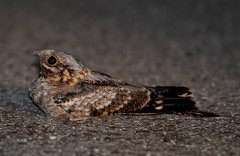 Red-necked nightjar nightsThe Iberian nightjar's knocking 'kutuk-kutuk-kutuk' — slower and woodier than the European nightjar's churr — from dozens of birds in stone-pine and dehesa, with scops owls and stone-curlews, and the birds sitting on the warm tracks in the headlights.
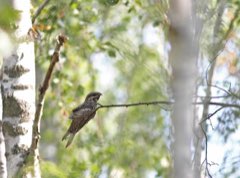 Nightjars and woodlarks in the dune plantationsNightjar churring from clear-fell edges, wing-claps and 'coo-ick' flight calls, woodlark's cascading song at dusk, long-eared owl chicks squeaking, roe deer barking; the North Sea surf behind the Thy dunes.
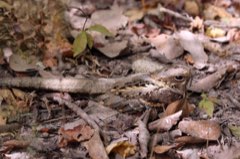 Nightjars and owls of the coastal woodland — Brufut and KotuThe long-tailed nightjar's engine-like churr from every clearing, standard-winged nightjar's insect-like trill as males circle with their pennants, the deep grunts of Verreaux's eagle-owl in the big trees and white-faced scops owl's bubbling call.
More: all spectacles in France · nightjars · wildlife at night · France in June · France in July