
Golden jackal choruses of Dalmatia
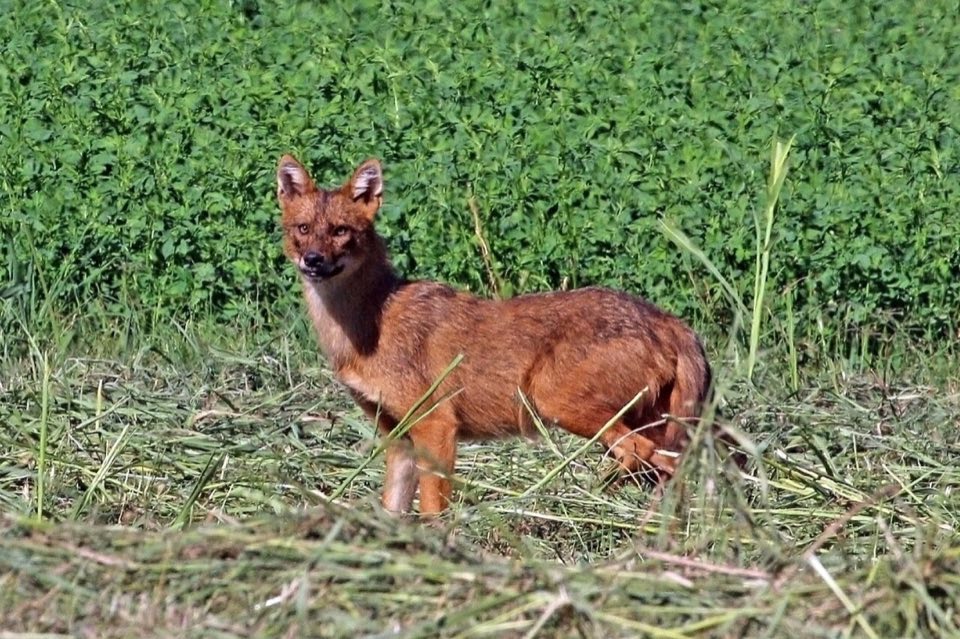
Golden jackal (Canis aureus) — Europe's densest populations in Ravni kotari, Pelješac and the Dalmatian hinterland; scops owl, nightjar, stone-curlew. Ravni kotari (Zadar hinterland), Vir island, Pelješac peninsula, Croatia.
Best time: 1 Jul – 31 Aug and 15 Dec – 15 Feb (December to February, July to August). Where: Ravni kotari – Smilčić / Benkovac fields, Zemunik Donji – Nin plain, Vir island (Croatia). Time of day: First bouts about an hour after dark, the most reliable chorus between 22:00 and 01:00, and a last round before dawn.
- You can go on your own
- Free
- No binoculars needed
- Sound 5/5
Open it in the interactive calendarSunrise and sunset listening times for the day you pick, and the map.
When is the best time?
- Peak 1: 1 Jul – 31 Aug — Summer: groups with pups, highest howling response
- Peak 2: 15 Dec – 15 Feb — Winter: pairing choruses
Active from 1 Jan to 31 Dec (all year) in a typical year.
Time of day
First bouts about an hour after dark, the most reliable chorus between 22:00 and 01:00, and a last round before dawn; groups answer one another across the karst fields so one chorus triggers the next.
- Night choruses: 1 h after last light → 01:00
- Pre-dawn round: 90 min before first light → first light
What will you hear?
The rising, yelping, quavering group howl of a jackal family — three or four voices climbing over each other for half a minute — answered from the next olive grove and the next, with scops owls, nightjars and crickets underneath on summer nights and silence and sea on winter ones.
Binoculars?
No binoculars needed. Ears only — jackals are rarely seen; a thermal imager finds them on the field edges, a torch does not.
Where to go
- Ravni kotari – Smilčić / Benkovac fields — Karst-plain farmland and scrub south-east of Zadar where acoustic surveys found the densest territories near the city; listen from minor roads between the villages. Map
- Zemunik Donji – Nin plain — Fields and scrub between the airport and the Nin lagoons; territories close to the coast. Map
- Vir island — Island north of Zadar with its own territorial groups (bridge access); quiet out of season. Map
- Pelješac – Ston — The peninsula has one of the highest jackal densities in the country; vineyards and macchia above Ston. Map
How to go on your own, and what it costs
Drive the minor roads between the Ravni kotari villages (Smilčić, Zemunik, Nadin, Benkovac) after dark and stop on wide verges away from houses; Vir is reached by the road bridge from Privlaka; on Pelješac use the D414 lay-bys above Ston. Public roads, free; stay off private vineyards and olive groves at night.
Cost: Free.
Field-recording notes
Rural roads at night are the way: park, kill the engine and wait. Zadar airport (Zemunik) and the A1 motorway are audible across Ravni kotari — move east towards Benkovac or on to Vir for quiet. No playback: researchers use it under licence to census groups, and it disturbs territories; a natural chorus will come. The jackal is a game species in Croatia and hunted (also at night with lamps in places) — avoid hunting-club land, ask locally, and do not look like a poacher with a thermal camera: wave at anyone who stops. Winter nights are cold and clear; summer nights bring crickets and scops owls on top.
Sources
- Krofel 2008 – Survey of golden jackals in northern Dalmatia (Ravni kotari, Vir): acoustic method, densities
- Acosta-Pankov et al. 2018, Acta Zoologica Bulgarica – Seasonal differences in howling response of golden jackals (summer peak)
Similar spectacles
 Manx shearwaters returning at nightHundreds of thousands of birds crashing in, with cackling, choking, hoarse calls from the air and burrows all around you.
 Nightjars churringContinuous mechanical churring with changes of gear, wing-claps, 'coo-ick' flight calls, with tree pipits and woodlarks at dusk.
 Nightjars churring on the Kalmthoutse HeideThe dry, sustained churr of nightjars from the pine edges, rising and falling as the bird turns its head, broken by 'kwik' calls and wing-claps; woodlarks' song at dusk, natterjacks rasping from the fens; the hum of the port of Antwerp on the horizon.
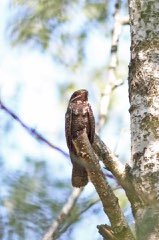 Nightjars and woodlarks of the Landes pine forestChurring nightjars from every clear-fell in Europe's largest planted forest, woodlarks still singing at dusk, and the surf from the Atlantic dunes if you are near the coast.
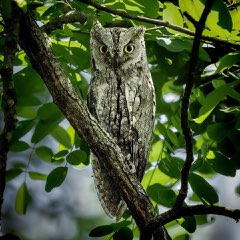 Karst nights: scops owl, nightjar and cicadasScops owl's monotone 'tyuh' every 2–3 s from village edges, nightjar churring on the dry meadows, sub-Mediterranean bush-cricket wall of sound, cicadas at 90+ dB at midday in July, eagle owl from the Vipava cliffs in late winter.
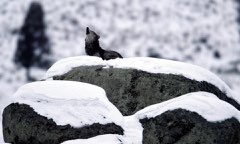 Wolf howling and Ural owls, Kočevski Rog nightsPack howls with high pup yips from rendezvous sites, carrying several km across karst dolines; Ural owl's deep barking 'wuh-wuh-wuho' and female's hoarse calls; Tengmalm's owl in late winter; red deer in the same windows from mid September.
More: all spectacles in Croatia · wildlife at night · January · Croatia in February · Croatia in July · Croatia in August · December