
Corncrakes calling
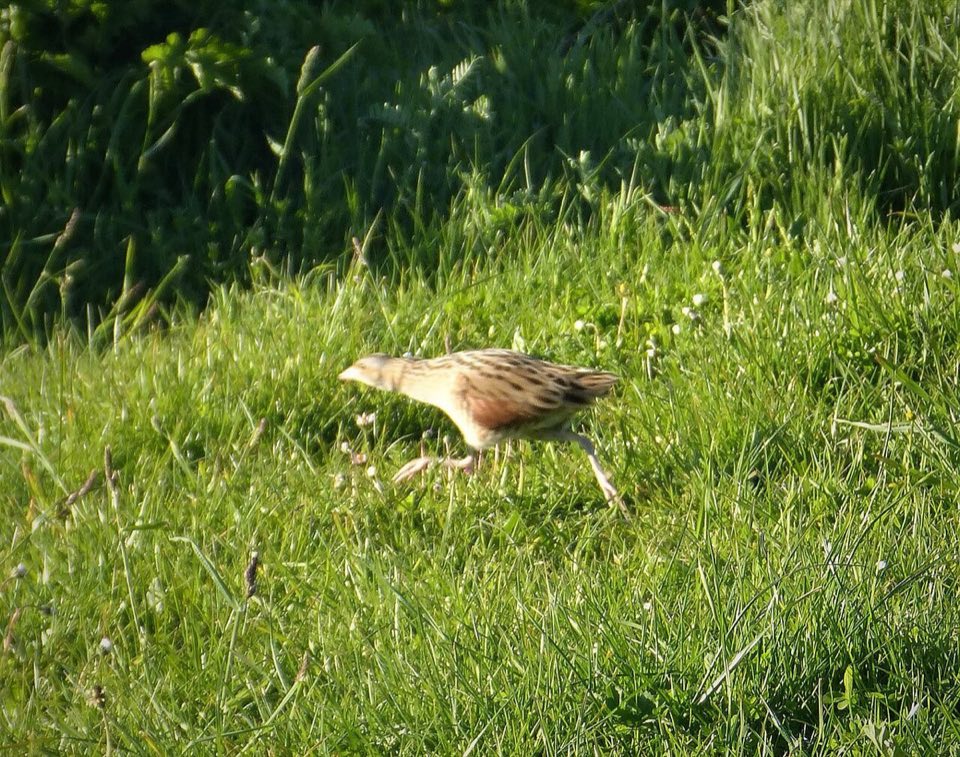
Corncrake (Crex crex). Hebrides, Orkney, United Kingdom.
Best time: 15 May – 30 Jun (May to June). Where: RSPB Balranald, North Uist, Isle of Tiree, Isle of Iona (United Kingdom). Time of day: Calling starts at dusk (about 23:00 in June on the Hebrides) and is near-continuous from midnight to 03:00.
- You can go on your own
- Free
- No binoculars needed
- Sound 4/5
Open it in the interactive calendarSunrise and sunset listening times for the day you pick, and the map.
When is the best time?
Peak: 15 May – 30 Jun. Mid May to end of June
Active from 25 Apr to 10 Aug (April to August) in a typical year.
Time of day
Calling starts at dusk (about 23:00 in June on the Hebrides) and is near-continuous from midnight to 03:00; some birds call by day early in the season.
- Night calling: last light → 03:00
What will you hear?
The rasping 'crex-crex' from iris beds and meadows, with snipe, redshank and the sea behind.
Binoculars?
No binoculars needed. Calls from iris beds within metres of the road; the bird itself is almost never seen.
Where to go
- RSPB Balranald, North Uist — Machair and iris beds; single-track roads with little traffic at night. Map
- Isle of Tiree — Highest densities in the UK; wind is constant, so choose sheltered iris beds. Map
- Isle of Iona — Near the abbey, among the easiest to hear. Map
How to go on your own, and what it costs
Balranald: free RSPB reserve, open at all hours; park at the visitor centre at Hougharry and walk the machair track, or simply listen from the single-track road verges after 23:00. Tiree and Iona: CalMac ferries (Oban–Tiree; Fionnphort–Iona), then public roads — corncrakes call from iris beds within metres of the tarmac. Do not enter the fields.
Cost: Free; CalMac Oban–Tiree £14.20 adult single, Fionnphort–Iona £2.40 single / £4.80 return (summer 2026).
Field-recording notes
Schedule 1 species — no entering fields and no playback. Calling birds are often within metres of the road verge, so a rig left on the verge overnight is the low-disturbance option. Calm nights are rare on the islands; check forecasts and take the first one.
Sources
Similar spectacles
 Corncrakes calling on Tory, Inishbofin and the MulletThe rasping 'crex-crex' of corncrakes from iris beds and nettle patches, several males answering across the island, with snipe drumming, the Atlantic on the rocks and sheep — one of the last places in western Europe you can still hear a corncrake night.
 Nightjars churring on the Kalmthoutse HeideThe dry, sustained churr of nightjars from the pine edges, rising and falling as the bird turns its head, broken by 'kwik' calls and wing-claps; woodlarks' song at dusk, natterjacks rasping from the fens; the hum of the port of Antwerp on the horizon.
 Nightjars and woodlarks of the Landes pine forestChurring nightjars from every clear-fell in Europe's largest planted forest, woodlarks still singing at dusk, and the surf from the Atlantic dunes if you are near the coast.
 Provençal nights: nightingale, scops owl & stone-curlewNightingales in every tamarisk, scops owls' 'tiu' on a 2–3 s metronome, stone-curlew wails from the Crau, nightjars churring on the garrigue, tree frogs from the marsh.
 Corncrakes and curlews of the Styrian EnnstalRasping corncrakes from the wet meadows, curlew bubbling and snipe drumming at dawn, quail, tree frogs from the raised bog, cowbells and the Enns.
 Corncrakes and wet-meadow night chorus, Ljubljana MarshCorncrake's rasping 'crex-crex' from several males at once, quail 'wet-my-lips', curlew bubbling at dawn, frog chorus from ditches, grasshopper warbler reeling; church bells and dogs from the villages.
More: all spectacles in the United Kingdom · wildlife at night · the United Kingdom in May · the United Kingdom in June