
Gongon — Cape Verde petrels calling at night over the Fogo caldera and the Santo Antão plateaux
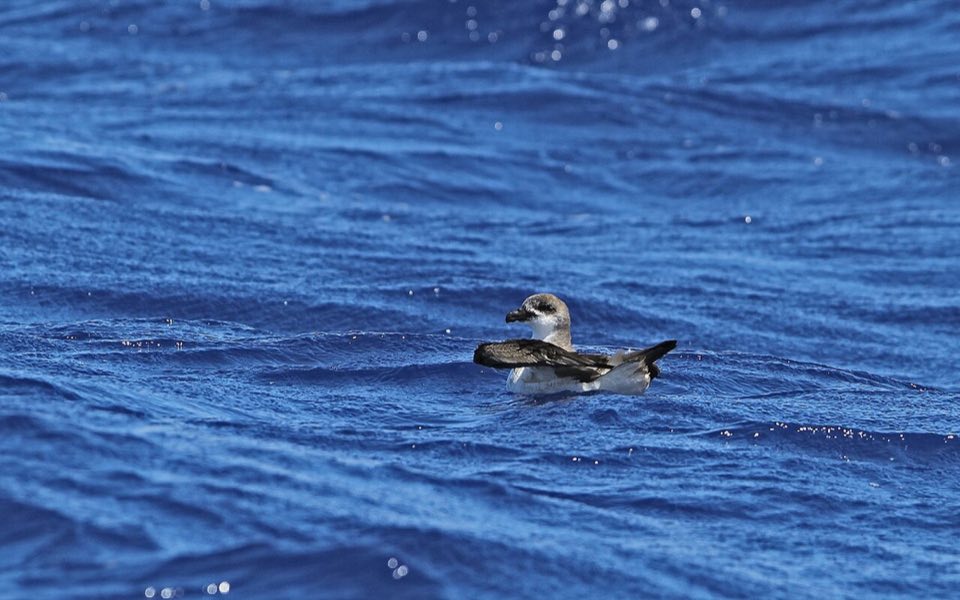
Cape Verde petrel / Fea's petrel (Pterodroma feae), local name 'gongon'; Boyd's shearwater and Cape Verde storm-petrel at lower cliffs. Chã das Caldeiras (Fogo), Chã Dura plateau (Santo Antão), Monte Gordo (São Nicolau), Cabo Verde.
Best time: 15 Jan – 15 Mar (January to March). Where: Portela, Chã das Caldeiras (Fogo), Bangaeira, Chã das Caldeiras (Fogo), Parque Natural de Monte Gordo (São Nicolau) (Cabo Verde). Time of day: First call about an hour after sunset, heaviest in the first 2–3 hours of darkness.
- You can go on your own
- Free
- No binoculars needed
- Sound 4/5
Open it in the interactive calendarSunrise and sunset listening times for the day you pick, and the map.
When is the best time?
Peak: 15 Jan – 15 Mar. Mid January to mid March — the winter breeding season; calling still strong in the third week of March
Active from 1 Dec to 30 Apr (December to April) in a typical year.
Time of day
First call about an hour after sunset, heaviest in the first 2–3 hours of darkness; birds still arriving in the small hours and a pre-dawn exodus around 05:00, silent by first light
- Evening calling peak: 1 h after sunset → 23:30
- Pre-dawn exodus: 04:30 → first light
What will you hear?
Steeply descending moans, one to two seconds long, a third ending in a rising squeak, wing-whistles with Doppler shifts and occasional claps as birds beat along the caldera walls 500 m above you. Up to 20 calls a minute at the best São Nicolau pinnacles. Not loud — but one of the rarest night sounds in the Atlantic, with crickets, distant dogs and the volcano's silence under it.
Binoculars?
No binoculars needed. Pitch dark on a mountain; you will hear, not see. A red head-torch for the path; nothing else.
Where to go
- Portela, Chã das Caldeiras (Fogo) — Village inside the caldera at 1,700 m; the largest Fogo colonies (about 35 pairs) are on the western caldera walls above Bangaeira, heard from the rubble slopes above the villages. Map
- Bangaeira, Chã das Caldeiras (Fogo) — Sister village; the cliff colonies are directly above. Guesthouses, guides and the Fogo Natural Park post. Map
- Parque Natural de Monte Gordo (São Nicolau) — The colony is on rock pinnacles on the east side of Monte de Sentinha in the island's centre; dangerous ground — listen from the park paths. Coordinates for the park. Map
- Santo Antão highlands — Chã Dura / Cova area — Largest population in the 1998 census; the Topo de Biôrro colony is above the Ribeira de Água Nova gorge on the Chã Dura plateau at about 1,000 m. Coordinates approximate (Cova crater road); ask in Ribeira Grande for a guide. Map
How to go on your own, and what it costs
Fogo: fly to São Filipe, aluguer up to Chã das Caldeiras (about 1.5 h); sleep in Portela or Bangaeira and walk up the rubble slopes behind the villages after dark. São Nicolau: Monte Gordo park from Cachaço/Ribeira Brava, park paths only. Santo Antão: hire a guide in Ribeira Grande for the Chã Dura plateau. All free; guides optional but wise on lava and cliffs at night.
Cost: Free. Aluguer São Filipe–Chã das Caldeiras a few hundred CVE per seat; a local night guide a few thousand CVE (check current prices).
Field-recording notes
The calls are quiet and the birds high: a parabola or a long shotgun pointed at the cliff line from a wind-sheltered rubble pile is the proven set-up (recordings exist from 160 m above the Fogo crater floor). Wind, mist and a generator 2 km away ruined nights on Santo Antão; dogs bark everywhere. Cloudless, moonless nights in Jan–Mar are best. Do not go to the colonies themselves: terrain is lethal in the dark and the birds are Near Threatened and predated by cats — listen from below. Fogo Natural Park: no permit needed to walk at night, but tell your guesthouse and take a local guide for the lava paths. No playback.
Sources
- The Sound Approach – Fea's Petrel (colony recordings on Fogo, Santo Antão and São Nicolau, timings and call descriptions)
- Bird Conservation International – Cabo Verde seabirds: nocturnal call counts, Cape Verde petrel only on the mountainous islands
- Wikipedia – Cape Verde petrel (breeds on Fogo, Santo Antão, São Nicolau, Santiago; strictly nocturnal at colonies)
Similar spectacles
 Wolf howling and Ural owls, Kočevski Rog nightsPack howls with high pup yips from rendezvous sites, carrying several km across karst dolines; Ural owl's deep barking 'wuh-wuh-wuho' and female's hoarse calls; Tengmalm's owl in late winter; red deer in the same windows from mid September.
 Golden jackal choruses of DalmatiaThe rising, yelping, quavering group howl of a jackal family — three or four voices climbing over each other for half a minute — answered from the next olive grove and the next, with scops owls, nightjars and crickets underneath on summer nights and silence and sea on winter ones.
 Wolf howlingChorus howls from family packs, including pups' high wavering howls, answering from across a valley.
 Pendjari: lions, elephants and hippos at the dry-season poolsLions roaring across the Pendjari plain in the small hours — one of the few places in West Africa where this is still likely — hippos bellowing at Mare Bali, elephants at the pools, hyena whoops and a savanna dawn of francolins, ground hornbills and doves.
 Príncipe after dark: the scops owl described in 2022, and the island's endemics at dawnA fast, insect-like 'tuu-tuu-tuu' at about one note a second, often as a duet with the female higher-pitched, from the old-growth forest of the uninhabited south — a sound nobody had named until 2022. Before dark, the island's grey parrots screaming to roost; at dawn, the thrush, the thrush-babbler, the speirops and the Príncipe sunbird in a forest with no roads.
 Tawny owl territorial callingHoots and 'ke-wick' duets and disputes as young birds try to settle territories; sometimes three or four birds answering.
More: all spectacles in Cabo Verde · wildlife at night · January · February · March