
Turtle nights on São Tomé — Praia Jalé, Praia Inhame and Morro Peixe
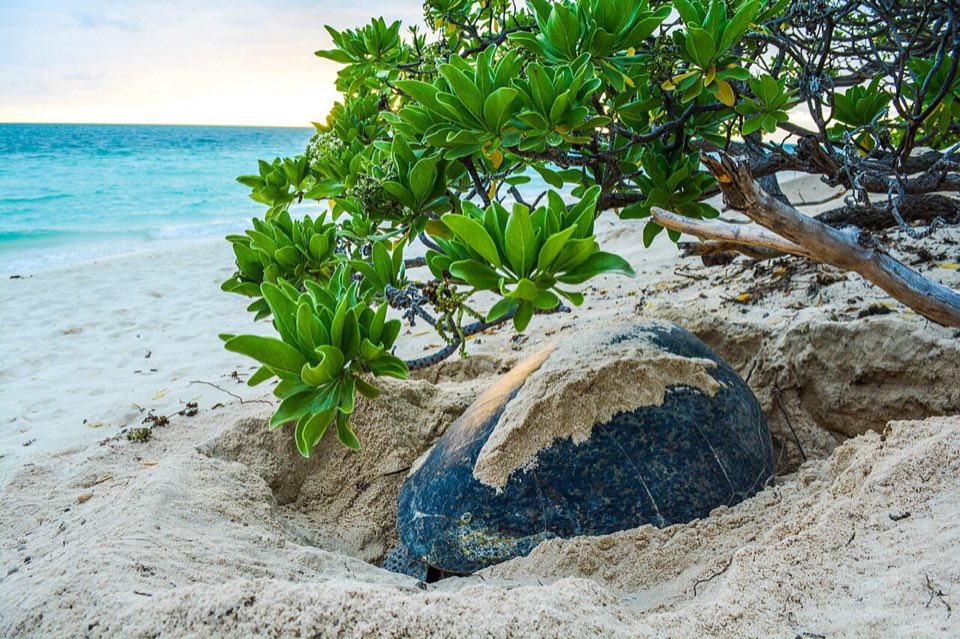
Green turtle (Chelonia mydas) and hawksbill (Eretmochelys imbricata) nesting, with olive ridley and leatherback; loggerhead at sea — five species around the islands. South coast (Porto Alegre, Jalé, Inhame) and the north coast at Morro Peixe, São Tomé island, São Tomé and Príncipe.
Best time: 15 Nov – 10 Feb (November to February). Where: Praia Jalé – southern tip beach, Praia Inhame – beach east of Porto Alegre, Morro Peixe – Programa Tatô community and Museu do Mar (São Tomé and Príncipe). Time of day: Females come up from about two hours after dark, most between 22:00 and 02:00.
- Partly on your own
- Low cost
- No binoculars needed
- Sound 2/5
Open it in the interactive calendarSunrise and sunset listening times for the day you pick, and the map.
When is the best time?
Peak: 15 Nov – 10 Feb. Mid November to early February for nesting females (green turtles peak December–January), with hatchlings on the same beaches about two months later, into March
Active from 1 Oct to 31 Mar (October to March) in a typical year.
Time of day
Females come up from about two hours after dark, most between 22:00 and 02:00; the beach guards wake guests when one is on the beach; hatchling releases with Programa Tatô are at dusk
- Nesting females: 2 h after last light → 02:00
- Hatchling releases: 30 min before sunset → last light
What will you hear?
Surf on a black-sand beach, the scrape and thrown sand of a green turtle digging, her breathing, and the forest behind the beach: São Tomé scops owl, frogs, the squeak of fruit bats in the coconut palms. Quiet beaches without engine noise — the south is the end of the road.
Binoculars?
No binoculars needed. Arm's length in the dark; a red torch matters, binoculars do not.
Where to go
- Praia Jalé – southern tip beach — Community-run bungalows on the island's southern tip (Caué district); a key green-turtle nesting beach, patrolled by Programa Tatô guards. Coordinates approximate. Map
- Praia Inhame – beach east of Porto Alegre — Leatherbacks and greens nest on the beach November–March; the beach guard wakes guests at night when a turtle is spotted. Map
- Morro Peixe – Programa Tatô community and Museu do Mar — North-coast fishing village where the programme runs guided nesting and hatchling watches and a small sea museum. Coordinates approximate. Map
How to go on your own, and what it costs
Stay at Praia Jalé or Praia Inhame (shared minibus São Tomé city–Porto Alegre, then a short taxi) and ask the beach guard to wake you; or book a guided night with Programa Tatô at Morro Peixe (turtlewatching@programatato.pt), 30 minutes north of the city. The beaches are public but night access is through the guards.
Cost: Museu do Mar visit €2 adults (2025); guided turtle-watching price not published — check with Programa Tatô; the Jalé community bungalows are budget.
Free or no-guide alternative: A night on the public beach at Porto Alegre or Jalé away from the bungalows, red torch in hand, during the December–January peak — introduce yourself to the beach guard first and walk with him.
Field-recording notes
Join the Programa Tatô watch rather than walking alone — the guards patrol against egg-takers and a stranger with a torch at night is a problem for them. Red light only; no light on a female until she is laying; stay behind her; no flash. The nesting beaches are quiet apart from surf, so a rig a few metres behind a digging green turtle on a still night records the whole sequence. Hatchling releases at dusk are a community event with children — not a recording moment. Turtle meat and shell are still sold illegally in places; do not buy.
Sources
- Programa Tatô – turtle watching (nesting and hatchling observation with the programme team; contacts)
- Programa Tatô / ATM-MARAPA – SWOT grant for hawksbill nesting surveys (2015)
Similar spectacles
 Bioko's southern beaches: leatherbacks, green turtles and the Caldera primatesBlack-sand surf, then the scrape and sigh of a leatherback digging a few metres away. At dawn the forest behind Moaba is one of the richest primate choruses in Africa: drill grunts and crowing, the chatter of red-eared monkeys, colobus roars, hornbills and the Bioko race of the grey parrot. Waterfalls drop straight onto the beach between the nesting bays.
 Mangroves of the Congo mouth: manatees, turtle beaches and the only marine park in the DRCA mangrove dawn: the drip and click of the Rhizophora at low water, kingfishers, herons, fish eagles, the blow of a manatee surfacing in a side channel (a short, sharp exhalation, easy to miss), hippos grunting in the back creeks; at night on the beach, surf and a nesting ridley's scraping — and the Congo's current audible against the sandbanks at Banana.
 Leatherback nesting from Pongara to Mayumba — Gabon's turtle coastA leatherback digging is a slow, heavy scrape and the hiss of thrown sand, with deep sighing breaths — audible from 20 m on a still night between sets of surf. Otherwise the night is surf, the odd nightjar and, at Pongara, hippos and elephants in the forest behind the beach.
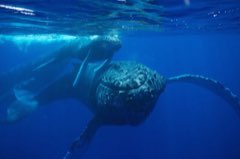 Conkouati-Douli: humpback whales and leatherback nestingBlows and breaches from the beach, humpback song on a hydrophone from a drifting pirogue, and at night the digging and heavy breathing of a leatherback on a wild beach with no lights for 50 km; chimpanzees pant-hooting from the lagoon islands at dawn.
 Kartong — wetland pools, Allahein river mouth and turtle beachCrakes and pygmy geese in the sand-mine pools, a wader roost at the Allahein mouth, and on rainy-season nights the beach with the surf and, if you are lucky, a nesting green turtle's breathing.
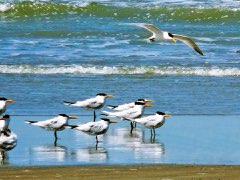 Sherbro and the Turtle Islands — terns, waders and turtle beachesTern and wader roosts on white sandbanks between eight Sherbro-speaking fishing islands, surf, and the villages' evening singing; dolphins in the channels.
More: all spectacles in São Tomé and Príncipe · sea turtles · wildlife at night · São Tomé and Príncipe in January · São Tomé and Príncipe in February · November · São Tomé and Príncipe in December