
Elbe beavers at dusk, Mittelelbe
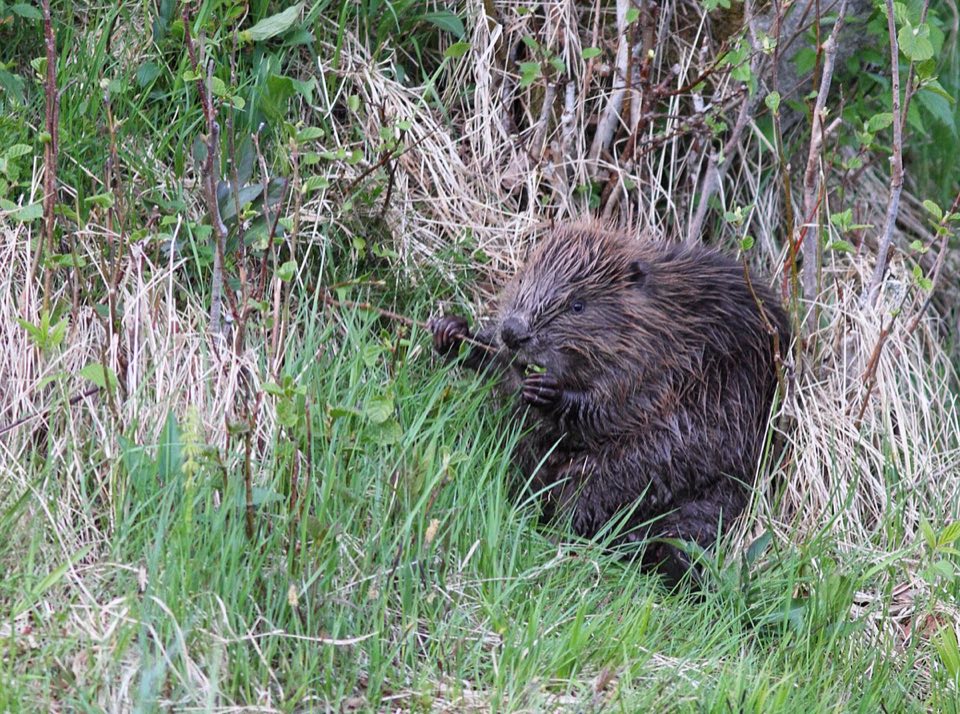
Elbe beaver (Castor fiber albicus) — the source population of all German beavers; otter, bittern, corncrake, cranes in the floodplain. Biosphärenreservat Mittelelbe (Dessau – Wörlitz – Steckby), Germany.
Best time: 15 May – 15 Jul (May to July). Where: Auenhaus and Biberfreianlage (between Dessau and Oranienbaum), Steckby – Lödderitzer Forst floodplain, Wörlitz Park lakes and the Elbe dyke (Germany). Time of day: Beavers emerge from about 30 min before sunset and are active through the first 2 h of dusk and dark.
- You can go on your own
- Free
- Binoculars helpful
- Sound 3/5
Open it in the interactive calendarSunrise and sunset listening times for the day you pick, and the map.
When is the best time?
Peak: 15 May – 15 Jul. Mid May to mid July (kits out of the lodge, long dusks); autumn activity peaks again in October for lodge building
Active from 1 Apr to 31 Oct (April to October) in a typical year.
Time of day
Beavers emerge from about 30 min before sunset and are active through the first 2 h of dusk and dark; a shorter pre-dawn bout in the hour before sunrise as they return.
- Evening emergence: 30 min before sunset → 90 min after last light
- Pre-dawn return: 1 h before sunrise → sunrise
What will you hear?
Tail-slaps, gnawing on willow at water level, kits whining inside the lodge, splashy feeding; with a hydrophone the gnawing and the underwater entries are excellent; oriole, nightingale and marsh frogs at the same hour.
Binoculars?
Binoculars helpful. Beavers 20 m off in the dusk; binoculars help in the last light, a thermal imager after dark.
Where to go
- Auenhaus and Biberfreianlage (between Dessau and Oranienbaum) — Information centre with an observation tower and a semi-natural beaver enclosure — reference sound and a reliable evening sighting. Map
- Steckby – Lödderitzer Forst floodplain — The original refuge where the Elbe beaver survived; oxbows and floodplain forest, public dykes. Map
- Wörlitz Park lakes and the Elbe dyke — Wild beavers in the UNESCO garden lakes; paths open until dusk, the dyke all night. Map
How to go on your own, and what it costs
The Elbe dykes are public paths day and night: Steckby–Lödderitz from the village, the Wörlitz dyke (the garden park itself closes at dusk). Auenhaus (between Dessau and Oranienbaum): information centre with tower and beaver enclosure, daytime hours (check entry). Sit still 20 m from a lodge; never approach it.
Cost: Free on the dykes; Auenhaus enclosure/exhibition entry (check current prices).
Field-recording notes
Beavers are strictly protected; lodges may not be approached or disturbed, but sitting still on the bank 20 m away is fine. The Elbe dykes are public paths day and night; the biosphere core zones are closed off-path. Noise: barges on the Elbe at night (slow), the A9 near Dessau in west wind, mosquitoes. A hydrophone dropped near a feeding bank in June gives the gnawing directly. Kits mew inside the lodge from late May — a contact mic on a nearby root, never on the lodge itself.
Sources
- Biosphärenreservat Mittelelbe – Biberland
- Nationale Naturlandschaften – Biosphärenreservat Mittelelbe
Similar spectacles
 Manx shearwaters returning at nightHundreds of thousands of birds crashing in, with cackling, choking, hoarse calls from the air and burrows all around you.
 Nightjars churringContinuous mechanical churring with changes of gear, wing-claps, 'coo-ick' flight calls, with tree pipits and woodlarks at dusk.
 Corncrakes calling on Tory, Inishbofin and the MulletThe rasping 'crex-crex' of corncrakes from iris beds and nettle patches, several males answering across the island, with snipe drumming, the Atlantic on the rocks and sheep — one of the last places in western Europe you can still hear a corncrake night.
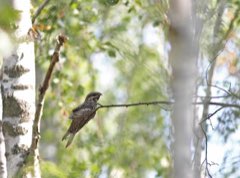 Nightjars churring on the Kalmthoutse HeideThe dry, sustained churr of nightjars from the pine edges, rising and falling as the bird turns its head, broken by 'kwik' calls and wing-claps; woodlarks' song at dusk, natterjacks rasping from the fens; the hum of the port of Antwerp on the horizon.
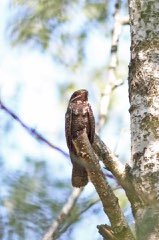 Nightjars and woodlarks of the Landes pine forestChurring nightjars from every clear-fell in Europe's largest planted forest, woodlarks still singing at dusk, and the surf from the Atlantic dunes if you are near the coast.
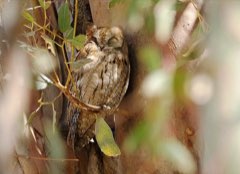 Provençal nights: nightingale, scops owl & stone-curlewNightingales in every tamarisk, scops owls' 'tiu' on a 2–3 s metronome, stone-curlew wails from the Crau, nightjars churring on the garrigue, tree frogs from the marsh.
More: all spectacles in Germany · wildlife at night · Germany in May · Germany in June · Germany in July