
Scopoli's & Yelkouan shearwater colonies
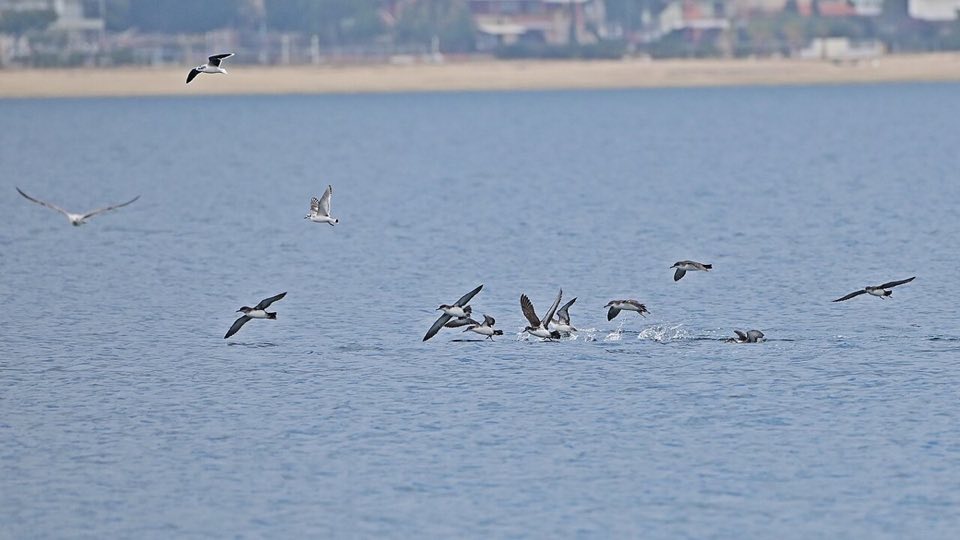
Scopoli's shearwater (Calonectris diomedea), Yelkouan shearwater (Puffinus yelkouan). Sicilian islands, Tremiti, Sardinia, Italy.
Best time: 1 May – 31 Jul (May to July). Where: Linosa, Pelagie Islands, Isole Tremiti (San Domino), Puglia, Tavolara, Sardinia (Italy). Time of day: Only after full dark: first birds about 1 h after sunset, the wailing peaks from 23:00 to 02:00 and fades before first light.
- You can go on your own
- Free
- No binoculars needed
- Sound 5/5
Open it in the interactive calendarSunrise and sunset listening times for the day you pick, and the map.
When is the best time?
Peak: 1 May – 31 Jul. May to July, moonless nights
Active from 15 Mar to 30 Sep (March to September) in a typical year.
Time of day
Only after full dark: first birds about 1 h after sunset, the wailing peaks from 23:00 to 02:00 and fades before first light. Moonless nights.
- Colony return: 30 min after last light → 02:30
What will you hear?
Scopoli's 'crying baby' wails from thousands of birds arriving over cliffs — one of the Mediterranean's strangest sounds.
Binoculars?
No binoculars needed. Moonless nights on the cliff path; the wails are the event. Red torch, off the colony.
Where to go
- Linosa, Pelagie Islands — One of the largest Scopoli's colonies in the world; the coast path is walkable at night. Map
- Isole Tremiti (San Domino), Puglia — Accessible by ferry; walk the cliff paths at night. Map
- Tavolara, Sardinia — Yelkouan shearwater stronghold; boat access only, night landing not permitted — record from a boat or Capo Coda Cavallo. Map
How to go on your own, and what it costs
Linosa: Siremar ferry from Porto Empedocle or Lampedusa; the coast path (Sentiero della Costa) is walkable at night — red torch, stay on the path. Tremiti: ferries from Termoli to San Domino; the cliff paths are open at night. Tavolara: no night landing — hire a boat from Porto San Paolo or record from the Capo Coda Cavallo headland (free).
Cost: Free on foot; ferry fares to Linosa and the Tremiti apply (check current prices).
Field-recording notes
Dark moon nights have the most activity. Keep torches off the colony; burrows are on the cliff edge, so stay on paths. Sea swell is part of the scene. Linosa's colony has had rat control and light-pollution work — the LIPU/ISPRA teams welcome coordination.
Sources
Similar spectacles
 Manx shearwaters returning at nightHundreds of thousands of birds crashing in, with cackling, choking, hoarse calls from the air and burrows all around you.
 Cory's shearwater colonies of the CanariesThe wailing, sobbing 'pardela' chorus from thousands of birds over sea cliffs — the sound behind the Canarian mermaid legends — with the Atlantic swell and Bulwer's petrels' soft barking.
 Zino's petrel calling over Pico do Arieiro at nightOne of Europe's rarest sounds: the long, mournful, tawny-owl-like moan of Zino's petrels circling the summit ridge in the dark, answered from the nesting ledges, with the occasional whimper and the quieter cackle of Manx shearwaters lower down — above a sea of cloud, in total silence otherwise.
 Shearwater colonies: Îles d'Hyères and LavezziWailing and cackling shearwaters arriving over the cliffs at night to their burrows — Port-Cros holds about 90% of France's Yelkouan population — with the Mediterranean swell below.
 Shearwater colonies at night, Lastovo archipelagoScopoli's shearwaters wailing and cackling overhead and from burrows — the 'crying baby' chorus of Mediterranean islets; Yelkouan's higher nasal calls; waves on rock, cicadas fading at dusk.
 Berlengas: Cory's shearwaters calling over the island at nightHundreds of Cory's shearwaters wailing and sobbing over the island in the dark — the Atlantic's strangest chorus — with the yellow-legged gull colony grumbling, shags croaking on the ledges and the swell in the sea caves. On the mainland, the same birds raft silently off Cabo Carvoeiro at dusk.
More: all spectacles in Italy · shearwaters · wildlife at night · Italy in May · Italy in June · Italy in July