
Nightjars churring on the Kalmthoutse Heide
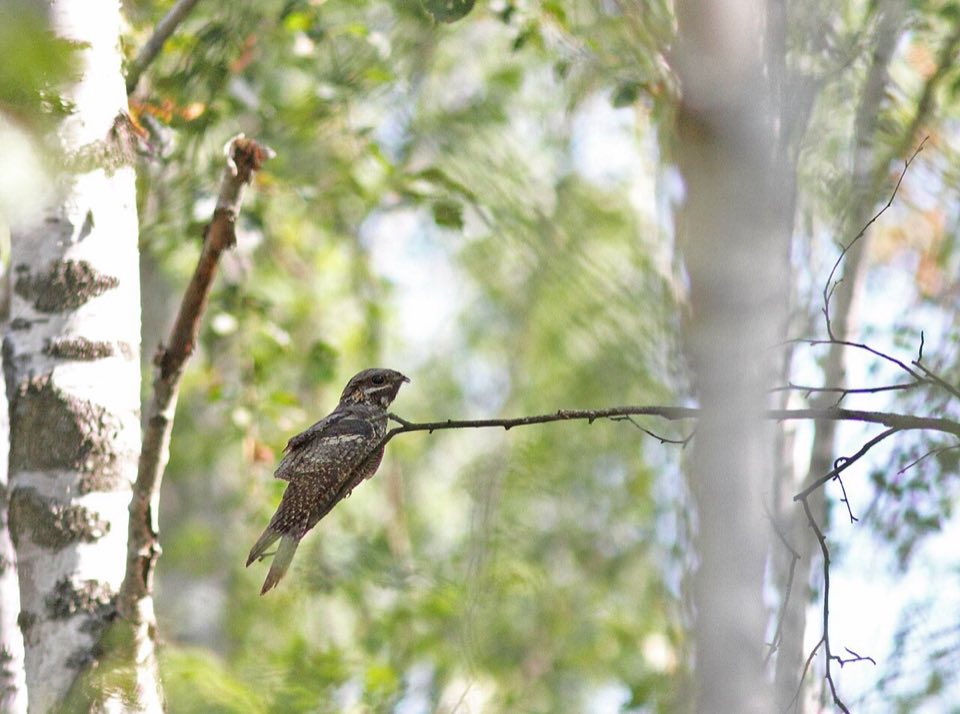
European nightjar (Caprimulgus europaeus) — close to 100 pairs in the cross-border Grenspark; woodlark, tree pipit, cuckoo, natterjack toad in the dune pools. Grenspark Kalmthoutse Heide (Antwerp province / Dutch border), Belgium.
Best time: 1 Jun – 10 Jul (June to July). Where: De Vroente – Grenspark gateway, Putsesteenweg 129, Kalmthout, Stappersven and the central heath (Belgium). Time of day: Churring starts 20–30 min after sunset and runs for an hour or two, with another bout before dawn — but the Grenspark is officially open only between sunrise and sunset, so listen from the public roads and tracks along its edge or join a guided evening walk.
- Partly on your own
- Free
- No binoculars needed
- Sound 5/5
Open it in the interactive calendarSunrise and sunset listening times for the day you pick, and the map.
When is the best time?
Peak: 1 Jun – 10 Jul. June to the first ten days of July; males churr from late May
Active from 15 May to 10 Aug (May to August) in a typical year.
Time of day
Churring starts 20–30 min after sunset and runs for an hour or two, with another bout before dawn — but the Grenspark is officially open only between sunrise and sunset, so listen from the public roads and tracks along its edge or join a guided evening walk.
- Evening churring (from the park edge / guided walk): 20 min after sunset → 90 min after last light
- Pre-dawn churring: 1 h before first light → sunrise
What will you hear?
The dry, sustained churr of nightjars from the pine edges, rising and falling as the bird turns its head, broken by 'kwik' calls and wing-claps; woodlarks' song at dusk, natterjacks rasping from the fens; the hum of the port of Antwerp on the horizon.
Binoculars?
No binoculars needed. A churring male is heard 500 m off; the wing-clapping display passes overhead at dusk. Light from the Antwerp port to the south keeps the sky bright enough to see silhouettes.
Where to go
- De Vroente – Grenspark gateway, Putsesteenweg 129, Kalmthout — Free car park and visitor centre (Mon–Fri 09:00–17:00, weekends 10:00–17:00; closes 16:00 Oct–Mar); heath walks start here; 1.5 km from Heide station. Map
- Stappersven and the central heath — Large fen and heath with pine edges in the heart of the park; reached on the marked walking routes (day access only). Map
How to go on your own, and what it costs
Train to Heide (Kalmthout) and walk 1.5 km to De Vroente, or drive to its free car park; the heath is free and open sunrise to sunset on marked routes (dogs on leads). For the churring itself use the public boundary roads after sunset or join an evening walk organised by the Grenspark or Natuurpunt when one is scheduled.
Cost: Free.
Free or no-guide alternative: Stand on a public lane along the park boundary 30 minutes after sunset in June — the churring carries out of the heath; no entry to the park needed.
Field-recording notes
The honest problem: the heath closes at sunset and nightjars start after it. Options are the public roads and tracks that form the park boundary (Putsesteenweg side, the lanes towards Nieuwmoer and the Dutch border), an official evening walk organised by the park or Natuurpunt, or the Dutch side of the Grenspark where rules differ — check locally. Nightjars nest on bare ground: never leave the tracks and no playback (the species is protected and heavily studied here — researchers use mist nets and tags). Port of Antwerp industrial hum is the noise floor to the south-east; the north and west edges are quieter. Fire-risk closures of the whole heath happen in dry summers.
Sources
- Vroege Vogels (BNNVARA) – Jagende nachtzwaluwen boven de heide (2021; ~100 pairs, Ruben Evens)
- Grenspark Kalmthoutse Heide – plan je bezoek (open sunrise–sunset)
- Grenspark Kalmthoutse Heide – toegangspoort De Vroente
- Visit Kalmthout – nature guides (free calendar walks)
Similar spectacles
 Nightjars churringContinuous mechanical churring with changes of gear, wing-claps, 'coo-ick' flight calls, with tree pipits and woodlarks at dusk.
 Nightjars and woodlarks of the Landes pine forestChurring nightjars from every clear-fell in Europe's largest planted forest, woodlarks still singing at dusk, and the surf from the Atlantic dunes if you are near the coast.
 Karst nights: scops owl, nightjar and cicadasScops owl's monotone 'tyuh' every 2–3 s from village edges, nightjar churring on the dry meadows, sub-Mediterranean bush-cricket wall of sound, cicadas at 90+ dB at midday in July, eagle owl from the Vipava cliffs in late winter.
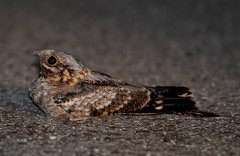 Red-necked nightjar nightsThe Iberian nightjar's knocking 'kutuk-kutuk-kutuk' — slower and woodier than the European nightjar's churr — from dozens of birds in stone-pine and dehesa, with scops owls and stone-curlews, and the birds sitting on the warm tracks in the headlights.
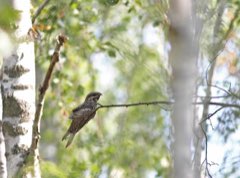 Nightjars and woodlarks in the dune plantationsNightjar churring from clear-fell edges, wing-claps and 'coo-ick' flight calls, woodlark's cascading song at dusk, long-eared owl chicks squeaking, roe deer barking; the North Sea surf behind the Thy dunes.
 Nightjars and owls of the coastal woodland — Brufut and KotuThe long-tailed nightjar's engine-like churr from every clearing, standard-winged nightjar's insect-like trill as males circle with their pennants, the deep grunts of Verreaux's eagle-owl in the big trees and white-faced scops owl's bubbling call.
More: all spectacles in Belgium · nightjars · wildlife at night · June · July