
Saltwater hippos of Orango
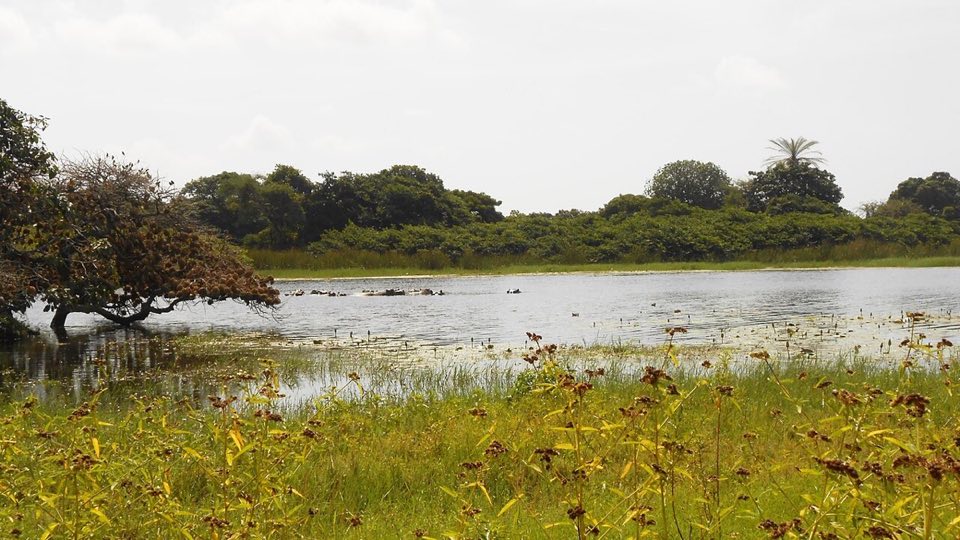
Hippopotamus (Hippopotamus amphibius) — the Bijagós population that swims between islands and grazes on the beaches. Orango National Park, Bijagós, Guinea-Bissau.
Best time: 1 Dec – 30 Apr (December to April). Where: Anor lagoon, Orango (from Eticoga), Eticoga beach, Orango (Guinea-Bissau). Time of day: Guided walk to the lagoon in the last 2 hours of daylight.
- Guide, ranger or boat needed
- Entry fee
- Binoculars helpful
- Sound 3/5
Open it in the interactive calendarSunrise and sunset listening times for the day you pick, and the map.
When is the best time?
Peak: 1 Dec – 30 Apr. December to April, when the freshwater lagoons shrink and the hippos are concentrated in the Anor lagoon and on the beaches at night
Active from 1 Nov to 31 May (November to May) in a typical year.
Time of day
Guided walk to the lagoon in the last 2 hours of daylight; the animals leave for the beaches and the sea after dark and grunt through the night
- Lagoon walk: 2 h before sunset → sunset
- Night grazing: last light → sunrise
What will you hear?
Hippo grunts and blows from a lagoon inside island forest, then the same animals walking past the village beach at night and surfacing in the sea in the morning — the world's only regularly marine hippos.
Binoculars?
Binoculars helpful. Hippos in the Anor lagoon at 50–100 m in the last light; binoculars help, ears do the night.
Where to go
- Anor lagoon, Orango (from Eticoga) — Freshwater lagoon in the island interior reached by a 1–2 hour guided walk from Eticoga village; the sacred hippo site — a park guide is compulsory. Map
- Eticoga beach, Orango — Hippo tracks on the beach most mornings; night listening from the shore. Map
How to go on your own, and what it costs
The Anor lagoon is inside the national park and sacred to the village: park rule is a local guide from Eticoga. Cheapest legal way: get yourself to Eticoga (boat from Bubaque), pay the park fee and hire a village guide at the park post rather than a packaged tour.
Cost: IBAP park entry 5,000 CFA foreign / 2,000 CFA Guinean per person per day, hippo-observation fee 10,000 CFA per person, village guide 10,000 CFA per outing for a group of up to 5 (IBAP tariff, 2021) — about 17,000–25,000 CFA per person for the Anor lagoon.
Free or no-guide alternative: From the public beach at Eticoga and the neighbouring shore you see hippo tracks at dawn and can hear the animals grunting at sea and in the mangrove at night, free — the lagoon itself is guide-only.
Field-recording notes
Hippos are dangerous on foot, and the park does not allow you to the lagoon without its guide — accept it. A static rig at the lagoon edge left overnight (with the guide's placement) is the way to catch the full night; humidity and insects are the enemy. No village, no engine: this is as quiet as the region gets. Park entry fee, guide fee and a contribution to the village apply.
Sources
Similar spectacles
 Pendjari: lions, elephants and hippos at the dry-season poolsLions roaring across the Pendjari plain in the small hours — one of the few places in West Africa where this is still likely — hippos bellowing at Mare Bali, elephants at the pools, hyena whoops and a savanna dawn of francolins, ground hornbills and doves.
 Niokolo-Koba — hippos, lions and the Gambia river in the dry seasonHippo pods bellowing on the Gambia river below the Simenti terrace, lions roaring across the dry savanna, hyenas, and at dawn the booming of ground hornbills and the calls of spur-winged geese and Egyptian plovers on the sandbars.
 Hippos and the chimpanzee islands of the River Gambia National ParkHippo pods grunting and blowing on the river bends below Janjanbureh, chimpanzee pant-hoots carrying across the water from the Baboon Islands, baboon troops on the banks and fish eagles at every bend.
 Outamba-Kilimi — hippos, chimps and the northern savanna at nightHippo pods on the Little Scarcies river, chimps and colobus in the gallery forests at dawn, ground hornbills booming, and savanna nights with nightjars and hyenas — Sierra Leone's oldest park and its emptiest.
 Hippos on the Mono riverHippo laughing-grunts and blows from the river pools at dusk, carrying up the gallery forest, with nightjars and the fishing villages beyond.
 Kainji Lake: hippos and savanna nights on the Oli riverHippo choruses on the Oli river pools at dusk, hyena and nightjars around the camp, baboon barks, and the wide Guinea-savanna dawn of francolins, hornbills and doves.
More: all spectacles in Guinea-Bissau · hippos · wildlife at night · Guinea-Bissau in January · Guinea-Bissau in February · March · April · Guinea-Bissau in December