
Storm petrels at Mousa Broch
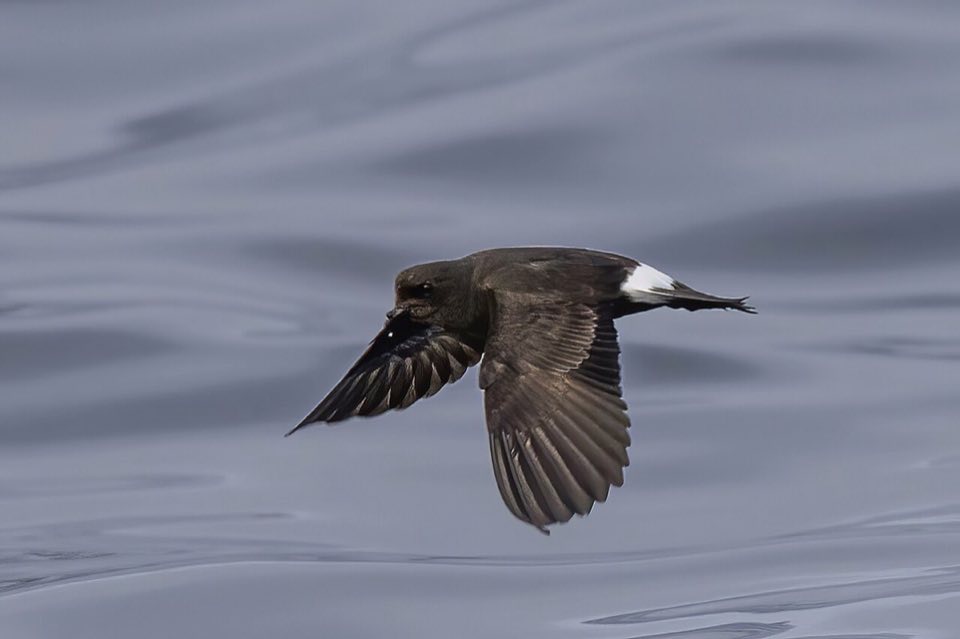
European storm petrel (Hydrobates pelagicus). Shetland, United Kingdom.
Best time: 5 Jun – 20 Jul (June to July). Where: RSPB Mousa, Shetland (United Kingdom). Time of day: Boat leaves Sandwick about 22:30.
- Guide, ranger or boat needed
- Paid trip only
- No binoculars needed
- Sound 4/5
Open it in the interactive calendarSunrise and sunset listening times for the day you pick, and the map.
When is the best time?
Peak: 5 Jun – 20 Jul. June–July
Active from 20 May to 15 Aug (May to August) in a typical year.
Time of day
Boat leaves Sandwick about 22:30; birds return to the broch in the 'simmer dim' from about 23:15 to 01:00, when the group leaves. Ask the operator about a private later sailing.
- Petrel return: 23:00 → 01:00
What will you hear?
Purring and hiccupping from inside the Iron Age broch walls, and the bat-like flutter of returning birds passing your head.
Binoculars?
No binoculars needed. Birds flutter past your head in the simmer dim; nothing needed.
Where to go
- RSPB Mousa, Shetland — Late-night boat trips from Sandwick; the trip is timed and the group walks together. Map
How to go on your own, and what it costs
Mousa is an uninhabited RSPB reserve with no scheduled ferry: the only access is the licensed passenger boat from Sandsayre pier, Sandwick, which runs the late-night storm petrel trips (booking required) and daytime island trips. There is no way to be on the island at night on your own.
Cost: Storm petrel boat trip from Sandwick — booking required, check current prices (2026); daytime island trip cheaper.
Free or no-guide alternative: No legal free route: Mousa has no public ferry and the broch colony can only be reached with the Sandwick boat. Cheapest option is the daytime island trip, which shows the broch but not the petrels.
Field-recording notes
The broch's stone chambers give an extraordinary natural acoustic — small omnis pushed into wall crevices work well. Time on the island is limited by the boat, so set up fast; ask the operator about a private late sailing. It never gets fully dark, so activity is lower than at southern colonies but very accessible.
Sources
Similar spectacles
 Corncrakes calling on Tory, Inishbofin and the MulletThe rasping 'crex-crex' of corncrakes from iris beds and nettle patches, several males answering across the island, with snipe drumming, the Atlantic on the rocks and sheep — one of the last places in western Europe you can still hear a corncrake night.
 Nightjars churring on the Kalmthoutse HeideThe dry, sustained churr of nightjars from the pine edges, rising and falling as the bird turns its head, broken by 'kwik' calls and wing-claps; woodlarks' song at dusk, natterjacks rasping from the fens; the hum of the port of Antwerp on the horizon.
 Nightjars and woodlarks of the Landes pine forestChurring nightjars from every clear-fell in Europe's largest planted forest, woodlarks still singing at dusk, and the surf from the Atlantic dunes if you are near the coast.
 Provençal nights: nightingale, scops owl & stone-curlewNightingales in every tamarisk, scops owls' 'tiu' on a 2–3 s metronome, stone-curlew wails from the Crau, nightjars churring on the garrigue, tree frogs from the marsh.
 Corncrakes and curlews of the Styrian EnnstalRasping corncrakes from the wet meadows, curlew bubbling and snipe drumming at dawn, quail, tree frogs from the raised bog, cowbells and the Enns.
 Corncrakes and wet-meadow night chorus, Ljubljana MarshCorncrake's rasping 'crex-crex' from several males at once, quail 'wet-my-lips', curlew bubbling at dawn, frog chorus from ditches, grasshopper warbler reeling; church bells and dogs from the villages.
More: all spectacles in the United Kingdom · wildlife at night · the United Kingdom in June · the United Kingdom in July