
Golden jackal choruses on the Karst
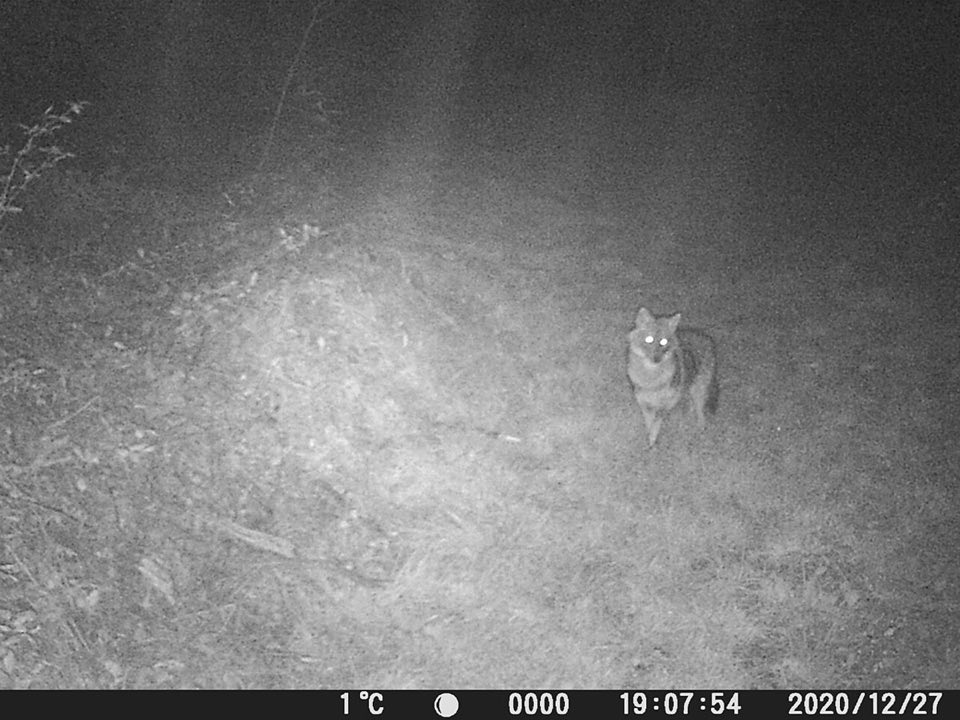
Golden jackal (Canis aureus). Trieste & Gorizia Karst, Friuli Venezia Giulia, Italy.
Best time: 15 Jan – 31 Mar and 15 Jul – 31 Aug (January to March, July to August). Where: Doberdò del Lago / Carso Isontino, Val Rosandra, Trieste (Italy). Time of day: Group howls peak in the first 2 h after dark and again in the hour before dawn.
- You can go on your own
- Free
- No binoculars needed
- Sound 4/5
Open it in the interactive calendarSunrise and sunset listening times for the day you pick, and the map.
When is the best time?
- Peak 1: 15 Jan – 31 Mar — Late winter: pair formation and territory claiming — playback responses on the Carso concentrated February–April
- Peak 2: 15 Jul – 31 Aug — Mid July to August: pups join the family chorus — second response peak
Active from 1 Jan to 31 Dec (all year) in a typical year.
Time of day
Group howls peak in the first 2 h after dark and again in the hour before dawn; a rig left on a ridge from dusk covers both.
- Evening choruses: last light → 2 h after last light
- Pre-dawn choruses: 1 h before first light → first light
What will you hear?
Rising yelping group howls — faster and higher than wolves — answered by neighbouring families across the limestone plateau; the densest population in Italy.
Binoculars?
No binoculars needed. Night choruses from a ridge track; the jackals stay unseen.
Where to go
- Doberdò del Lago / Carso Isontino — Core of the Isonzo Karst population; quiet karst woodland once the A4 and rail corridor are behind you. Map
- Val Rosandra, Trieste — Nature reserve on the Slovenian border; town lights but a deep, quiet valley. Map
How to go on your own, and what it costs
Karst plateau tracks around Doberdò del Lago (Riserva dei Laghi di Doberdò e Pietrarossa) and the Val Rosandra reserve are free and open at night; park at Doberdò village or the Bagnoli della Rosandra car park and walk 15–20 minutes onto a ridge track before dusk. Stay off private land.
Cost: Free.
Field-recording notes
Researchers at the University of Udine estimate density with howl playback — leave that to them; a rig on a ridge track at dusk gets spontaneous choruses on many nights. Hunting is active on the Karst (autumn–winter, daytime) and the species is protected in Italy.
Sources
Similar spectacles
 Manx shearwaters returning at nightHundreds of thousands of birds crashing in, with cackling, choking, hoarse calls from the air and burrows all around you.
 Nightjars churringContinuous mechanical churring with changes of gear, wing-claps, 'coo-ick' flight calls, with tree pipits and woodlarks at dusk.
 Nightjars churring on the Kalmthoutse HeideThe dry, sustained churr of nightjars from the pine edges, rising and falling as the bird turns its head, broken by 'kwik' calls and wing-claps; woodlarks' song at dusk, natterjacks rasping from the fens; the hum of the port of Antwerp on the horizon.
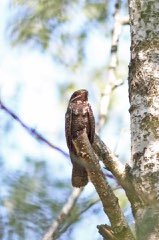 Nightjars and woodlarks of the Landes pine forestChurring nightjars from every clear-fell in Europe's largest planted forest, woodlarks still singing at dusk, and the surf from the Atlantic dunes if you are near the coast.
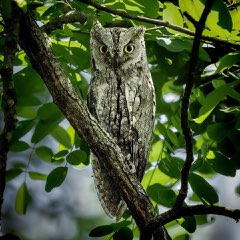 Karst nights: scops owl, nightjar and cicadasScops owl's monotone 'tyuh' every 2–3 s from village edges, nightjar churring on the dry meadows, sub-Mediterranean bush-cricket wall of sound, cicadas at 90+ dB at midday in July, eagle owl from the Vipava cliffs in late winter.
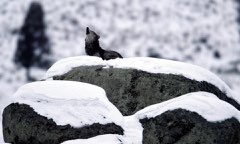 Wolf howling and Ural owls, Kočevski Rog nightsPack howls with high pup yips from rendezvous sites, carrying several km across karst dolines; Ural owl's deep barking 'wuh-wuh-wuho' and female's hoarse calls; Tengmalm's owl in late winter; red deer in the same windows from mid September.
More: all spectacles in Italy · wildlife at night · Italy in January · Italy in February · Italy in March · Italy in July · Italy in August