
Leatherback nesting from Pongara to Mayumba — Gabon's turtle coast
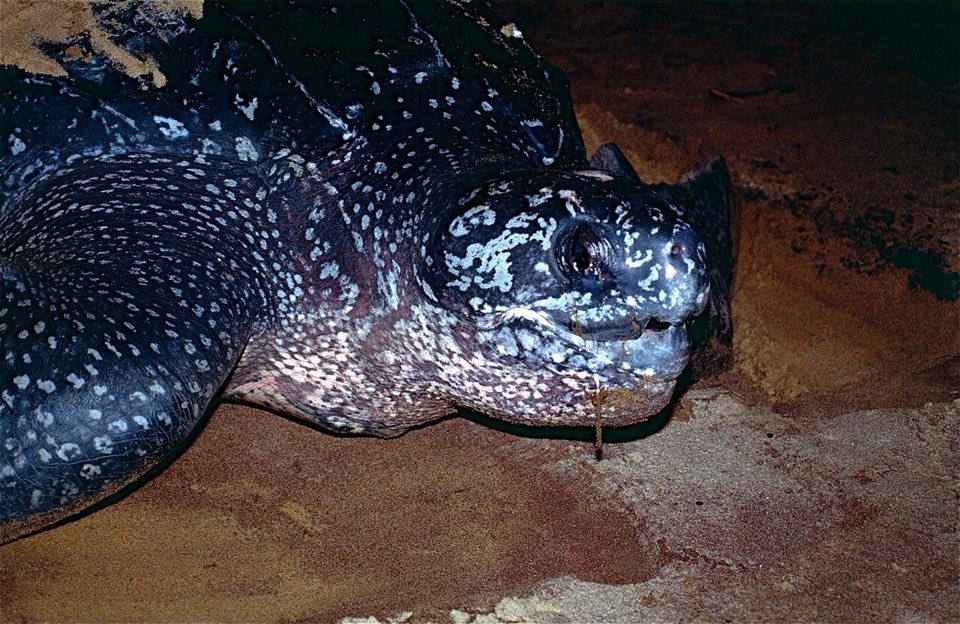
Leatherback turtle (Dermochelys coriacea) — Gabon hosts the largest nesting population on earth — with olive ridley (Lepidochelys olivacea); green and hawksbill in the estuaries. Pongara National Park (Pointe Denis) and Mayumba National Park, Estuaire / Nyanga, Gabon.
Best time: 1 Dec – 31 Jan (December to January). Where: Pointe Denis – Pongara beaches, Pongara – ocean beach south of Pointe Denis, Mayumba – national park beach (Gabon). Time of day: Females come up from about two hours after dark until an hour before dawn, most between 22:00 and 03:00 on a rising tide.
- Partly on your own
- Low cost
- No binoculars needed
- Sound 2/5
Open it in the interactive calendarSunrise and sunset listening times for the day you pick, and the map.
When is the best time?
Peak: 1 Dec – 31 Jan. December and January: the Pongara monitoring data put the peak here, with 1,800–2,000 nests a season on the Pointe Denis beaches alone and aerial counts of up to 1,500 nests a night along the whole coast at the peak
Active from 1 Oct to 15 Apr (October to April) in a typical year.
Time of day
Females come up from about two hours after dark until an hour before dawn, most between 22:00 and 03:00 on a rising tide; hatchlings emerge at night about 60 days later (February–April)
- Nesting females: 2 h after last light → 03:00
- Tracks and hatchlings: 1 h before sunrise → 30 min after sunrise
What will you hear?
A leatherback digging is a slow, heavy scrape and the hiss of thrown sand, with deep sighing breaths — audible from 20 m on a still night between sets of surf. Otherwise the night is surf, the odd nightjar and, at Pongara, hippos and elephants in the forest behind the beach.
Binoculars?
No binoculars needed. Everything happens within 20 m in the dark; a red torch matters, binoculars do not.
Where to go
- Pointe Denis – Pongara beaches — Weekend resort on the peninsula facing Libreville; the beach south of the hotels is monitored by Aventures Sans Frontières, which has a research station and hatchery on the sand. Map
- Pongara – ocean beach south of Pointe Denis — The 35 km Atlantic shore of the park, inside the boundary; walked from the Pointe Denis end with the ASF patrol. Map
- Mayumba – national park beach — 60 km of nesting beach south of the town, the single most important leatherback shore in the world; remote, reached by road from Tchibanga or a long coastal track. Map
- Libreville – Port Môle boat departures — Public and hotel boats to Pointe Denis cross the estuary in about 30 minutes. Map
How to go on your own, and what it costs
Public boat from Port Môle in Libreville to Pointe Denis (about 30 minutes), stay in one of the small hotels or camp with permission, and walk the beach south after dark with a red torch; introduce yourself to the Aventures Sans Frontières station on the beach and join their patrol if they allow it. Mayumba: road from Tchibanga (4x4), then the park office in Mayumba town for a ranger escort.
Cost: Boat Libreville–Pointe Denis a few thousand CFA each way; hotel nights at Pointe Denis from about €60; the beach itself is free. Mayumba park fee and ranger per day — check current prices with ANPN.
Free or no-guide alternative: The public beach at Pointe Denis is a leatherback beach in its own right: at the December–January peak a night walk south from the last hotel finds fresh tracks and usually a nesting female without any organised trip.
Field-recording notes
No white light on the beach: red torch only, and no light at all on a female until she is laying. Keep the rig behind the turtle and off the sand she is throwing. Light pollution from the Pointe Denis hotels and quad bikes on the beach are the documented threats at Pongara, so the monitoring team is sensitive to anyone wandering the beach at night — walk with the ASF patrol or at least check in with them. The Pointe Denis side of the peninsula faces Libreville and carries the city's hum across the water; the ocean side is pure surf. Mayumba is a true expedition: no infrastructure on the nesting beach and the park's rangers to be contacted in advance.
Sources
- Pongara National Park (Wikipedia)
- Point Denis — 1,800–2,000 leatherback nests a year (Wikipedia)
- African Aquatic Conservation Fund – a night on the Pongara beach with ASF (2006)
- Mayumba National Park (Wikipedia)
Similar spectacles
 Bioko's southern beaches: leatherbacks, green turtles and the Caldera primatesBlack-sand surf, then the scrape and sigh of a leatherback digging a few metres away. At dawn the forest behind Moaba is one of the richest primate choruses in Africa: drill grunts and crowing, the chatter of red-eared monkeys, colobus roars, hornbills and the Bioko race of the grey parrot. Waterfalls drop straight onto the beach between the nesting bays.
 Mangroves of the Congo mouth: manatees, turtle beaches and the only marine park in the DRCA mangrove dawn: the drip and click of the Rhizophora at low water, kingfishers, herons, fish eagles, the blow of a manatee surfacing in a side channel (a short, sharp exhalation, easy to miss), hippos grunting in the back creeks; at night on the beach, surf and a nesting ridley's scraping — and the Congo's current audible against the sandbanks at Banana.
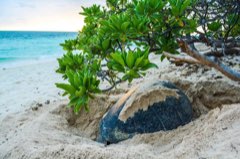 Turtle nights on São Tomé — Praia Jalé, Praia Inhame and Morro PeixeSurf on a black-sand beach, the scrape and thrown sand of a green turtle digging, her breathing, and the forest behind the beach: São Tomé scops owl, frogs, the squeak of fruit bats in the coconut palms. Quiet beaches without engine noise — the south is the end of the road.
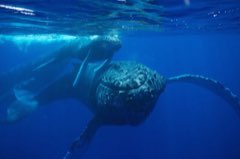 Conkouati-Douli: humpback whales and leatherback nestingBlows and breaches from the beach, humpback song on a hydrophone from a drifting pirogue, and at night the digging and heavy breathing of a leatherback on a wild beach with no lights for 50 km; chimpanzees pant-hooting from the lagoon islands at dawn.
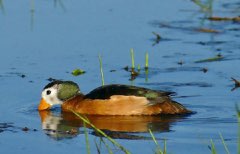 Kartong — wetland pools, Allahein river mouth and turtle beachCrakes and pygmy geese in the sand-mine pools, a wader roost at the Allahein mouth, and on rainy-season nights the beach with the surf and, if you are lucky, a nesting green turtle's breathing.
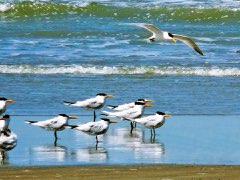 Sherbro and the Turtle Islands — terns, waders and turtle beachesTern and wader roosts on white sandbanks between eight Sherbro-speaking fishing islands, surf, and the villages' evening singing; dolphins in the channels.
More: all spectacles in Gabon · sea turtles · wildlife at night · Gabon in January · Gabon in December