
Bavarian Forest: pygmy and Tengmalm's owls, woodpeckers, lynx country
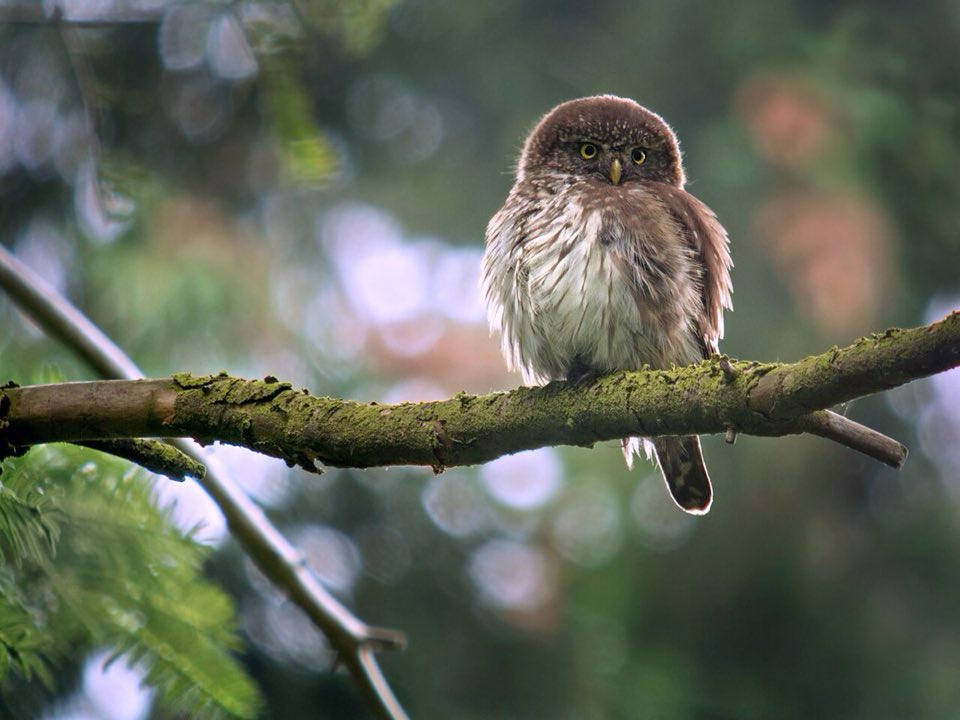
Pygmy owl, Tengmalm's owl, Ural owl (reintroduced), three-toed and white-backed woodpecker, ring ouzel, nutcracker; lynx and wolf present. Nationalpark Bayerischer Wald / Šumava (Czech side), Germany.
Best time: 10 Mar – 20 Apr and 15 Sep – 31 Oct (March to April, September to October). Where: Nationalparkzentrum Lusen, Neuschönau, Rachel – Rachelsee area, Haus zur Wildnis, Ludwigsthal (Falkenstein) (Germany). Time of day: Pygmy owls pipe from about 30 min before sunset into dusk.
- You can go on your own
- Free
- No binoculars needed
- Sound 4/5
Open it in the interactive calendarSunrise and sunset listening times for the day you pick, and the map.
When is the best time?
- Peak 1: 10 Mar – 20 Apr — 10 March to 20 April: owl song and woodpecker drumming on snow
- Peak 2: 15 Sep – 31 Oct — Mid September to October: autumn courtship (Herbstbalz) of pygmy and Tengmalm's owls — territory founding
Active from 1 Sep to 31 May (September to May) in a typical year.
Time of day
Pygmy owls pipe from about 30 min before sunset into dusk; Tengmalm's and Ural owls in the first 2 h of dark and again in the hour before dawn; woodpecker drumming from first light.
- Dusk owls: 30 min before sunset → 2 h after last light
- Pre-dawn owls and drumming: 1 h before first light → 90 min after sunrise
What will you hear?
Pygmy owl's piping series at dusk, Tengmalm's 'po-po-po-po' from the bark-beetle deadwood forest, Ural owl barking, three-toed woodpecker drumming rolls, nutcrackers; the loudest silence in Germany in the dead-spruce stands.
Binoculars?
No binoculars needed. Owls call from the dark deadwood forest; ears only, red torch for the trail.
Where to go
- Nationalparkzentrum Lusen, Neuschönau — Tierfreigelände (free, all year) with captive lynx, wolf, owls for reference; trails into the Lusen deadwood forest. Map
- Rachel – Rachelsee area — Old spruce-beech with deadwood; owls and woodpeckers; winter closures for capercaillie above 1,100 m. Map
- Haus zur Wildnis, Ludwigsthal (Falkenstein) — Northern park centre; Zwieslerwaldhaus old-growth; wolf enclosure nearby. Map
How to go on your own, and what it costs
Park at the Nationalparkzentrum Lusen (Neuschönau) or Haus zur Wildnis (Ludwigsthal, train station) and walk the marked trails at night — allowed; closed high-altitude zones and wind closures are signposted. Igelbus shuttle in season. No playback.
Cost: Free (car parks pay-and-display in season, check).
Field-recording notes
Owls sing in the closed-season zones — the park allows marked trails only, and the bark-beetle deadwood stands are officially dangerous in wind (falling snags), which the park uses to close trails. Night use of open trails is allowed. Traffic: the Nationalparkstraße and the B85 at Zwiesel; nothing at night. Snow to April at 1,000 m+; pygmy owls call at -5 °C on still evenings. No playback for any owl (the park is explicit), and note that Czech Šumava across the border has the same rules. Lynx are silent except brief calling in Feb–Mar — a lucky drop-rig.
Sources
Similar spectacles
 Provençal nights: nightingale, scops owl & stone-curlewNightingales in every tamarisk, scops owls' 'tiu' on a 2–3 s metronome, stone-curlew wails from the Crau, nightjars churring on the garrigue, tree frogs from the marsh.
 Wolf howling and Ural owls, Kočevski Rog nightsPack howls with high pup yips from rendezvous sites, carrying several km across karst dolines; Ural owl's deep barking 'wuh-wuh-wuho' and female's hoarse calls; Tengmalm's owl in late winter; red deer in the same windows from mid September.
 Mediterranean nights: nightingale & scops owlNightingales everywhere, the metronomic 'tiu' of scops owls (often several in duet), stone-curlew wails, tree frogs.
 Príncipe after dark: the scops owl described in 2022, and the island's endemics at dawnA fast, insect-like 'tuu-tuu-tuu' at about one note a second, often as a duet with the female higher-pitched, from the old-growth forest of the uninhabited south — a sound nobody had named until 2022. Before dark, the island's grey parrots screaming to roost; at dawn, the thrush, the thrush-babbler, the speirops and the Príncipe sunbird in a forest with no roads.
 Tawny owl territorial callingHoots and 'ke-wick' duets and disputes as young birds try to settle territories; sometimes three or four birds answering.
 Ural owls in the Wienerwald and Dürrenstein wildernessUral owl's deep barking 'wuh-wuh... wu-wuhuh' series, female's hoarse heron-like calls, tawny owl duets, pygmy owl piping in the Dürrenstein old growth; snow-quiet beech forest.
More: all spectacles in Germany · owls · wildlife at night · Germany in March · Germany in April · Germany in September · Germany in October