
Pendjari: lions, elephants and hippos at the dry-season pools
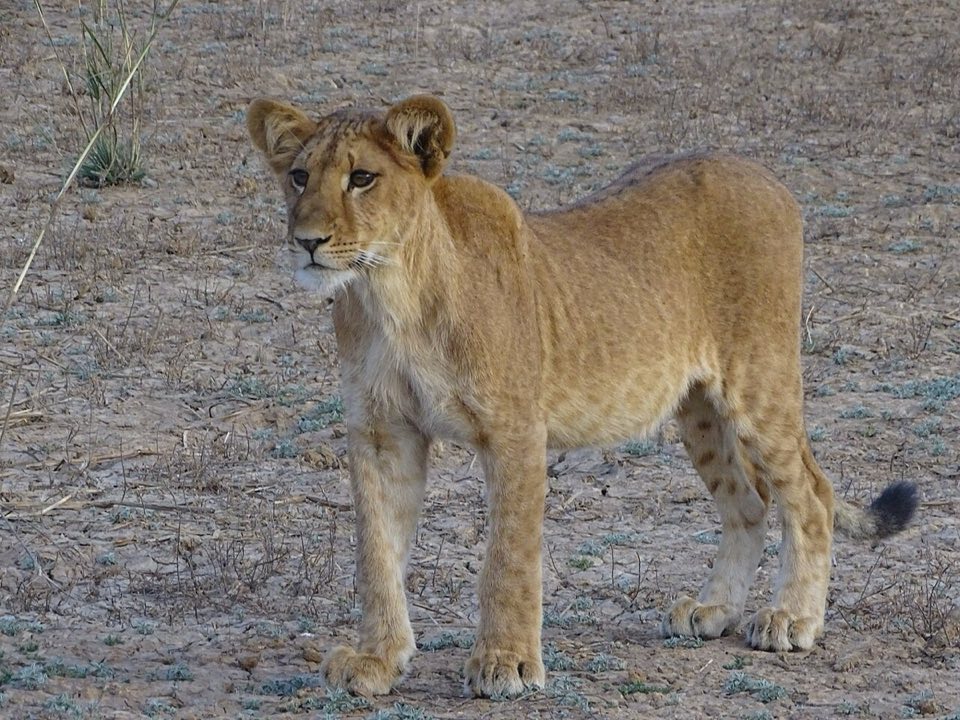
West African lion (Panthera leo), savanna elephant, hippopotamus, buffalo, roan, hartebeest, kob, spotted hyena, Abyssinian ground hornbill. Parc national de la Pendjari, Atakora, Benin.
Best time: 15 Jan – 15 Apr (January to April). Where: Mare Bali, Mare Bori, Batia gate / Tanougou falls (Benin). Time of day: Lions roar from about 03:00 to sunrise and again after dusk.
- Guide, ranger or boat needed
- Entry fee
- Binoculars essential
- Sound 5/5
Open it in the interactive calendarSunrise and sunset listening times for the day you pick, and the map.
When is the best time?
Peak: 15 Jan – 15 Apr. Mid January to mid April: late dry season, when the Mare Bori and Mare Bali pools hold the game; lions roar most in the cool hours before dawn
Active from 1 Dec to 15 May (December to May) in a typical year.
Time of day
Lions roar from about 03:00 to sunrise and again after dusk; hippos chorus from the last hour of light; game drives from sunrise to 10:00 and 16:00 to sunset
- Roaring hours: 03:00 → sunrise
- Morning drive: sunrise → 10:00
- Afternoon drive: 16:00 → sunset
- Hippos & hyena: 1 h before sunset → 90 min after last light
What will you hear?
Lions roaring across the Pendjari plain in the small hours — one of the few places in West Africa where this is still likely — hippos bellowing at Mare Bali, elephants at the pools, hyena whoops and a savanna dawn of francolins, ground hornbills and doves.
Binoculars?
Binoculars essential. Game at the pools is watched from the vehicle at 100–500 m; binoculars needed, a scope from camp. Lions at night are ears only.
Where to go
- Mare Bali — Hippo pool and the classic lion and elephant water; close to the park's Pendjari Lodge and the Bali camp. Map
- Mare Bori — The other big dry-season pool, further north-west. Map
- Batia gate / Tanougou falls — Main entrance from Tanguiéta; the falls have a swimming pool and gallery-forest birds. Map
- Porga – Pendjari river — Northern access and the river crossing to Burkina Faso's Arly. Map
How to go on your own, and what it costs
Entry fee, a park-registered guide in the vehicle and no leaving the vehicle outside camps (African Parks rules); self-drive with your own 4x4 is allowed with the guide. Cheapest legal way: bus to Tanguiéta, hire a guide at the Batia gate office and camp at the park campsites rather than the lodge.
Cost: Daily entry plus guide fee and camping; check current prices with African Parks Benin.
Free or no-guide alternative: Tanougou village and the Tanguiéta–Batia road are outside the boundary: on still harmattan nights lions and hyena carry to Batia, and the falls at Tanougou are a community site with a small fee. The pools themselves are inside the park.
Who runs access
- African Parks – Pendjari (park guides, lodge and camps) (park authority) — Park-run; guides assigned at the gate
Field-recording notes
African Parks runs the park with strict rules: no leaving the vehicle outside camps, no night driving without a park guide, no off-track driving, and drones are banned. That means the night spectacle is recorded from camp — Pendjari Lodge, the Bali and Mare Yangouali camps — or from a rig left with the rangers' agreement. Filming permits for commercial work go through African Parks Benin in advance. Harmattan brings cold, dry, dusty nights with excellent propagation. The park borders Burkina Faso and its northern sectors have had security restrictions in recent years; check current travel advice and the park's own notices before booking, and expect ranger escort to be required in some sectors.
Sources
Similar spectacles
 Niokolo-Koba — hippos, lions and the Gambia river in the dry seasonHippo pods bellowing on the Gambia river below the Simenti terrace, lions roaring across the dry savanna, hyenas, and at dawn the booming of ground hornbills and the calls of spur-winged geese and Egyptian plovers on the sandbars.
 Sapo National Park — pygmy hippo, elephants and the deepest forest in West AfricaPrimary Upper Guinea rainforest with nothing man-made within a day's walk: casqued hornbills, chimps, Diana monkeys, the whistles of duikers, elephants rumbling at night, tree hyrax, and the full insect and frog layer of a forest that has never been logged.
 Comoé: elephants, hippos and the savanna-forest mosaicHippos bellowing on the Comoé at dusk, elephants at the river pools, lions are not to be expected but spotted hyena whoop; the ground hornbill's booming duet at dawn and the harmattan wind in the gallery forest.
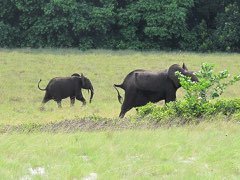 Loango: forest elephants, buffalo and hippos on the ocean beachSurf behind everything. Elephants are near-silent on sand, but the rumbles and the crack of branches at the forest edge carry at dawn; hippo grunts from the lagoons at dusk; red river hog groups snuffling through the leaf litter; the chatter of river-martin flocks over the water in August–October and chimpanzee pant-hoots from the forest behind Akaka in the wet season.
 Hippos and the chimpanzee islands of the River Gambia National ParkHippo pods grunting and blowing on the river bends below Janjanbureh, chimpanzee pant-hoots carrying across the water from the Baboon Islands, baboon troops on the banks and fish eagles at every bend.
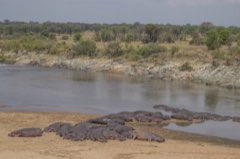 Outamba-Kilimi — hippos, chimps and the northern savanna at nightHippo pods on the Little Scarcies river, chimps and colobus in the gallery forests at dawn, ground hornbills booming, and savanna nights with nightjars and hyenas — Sierra Leone's oldest park and its emptiest.
More: all spectacles in Benin · elephants · hippos · lions · wildlife at night · Benin in January · Benin in February · Benin in March · April