
Mangroves of the Congo mouth: manatees, turtle beaches and the only marine park in the DRC
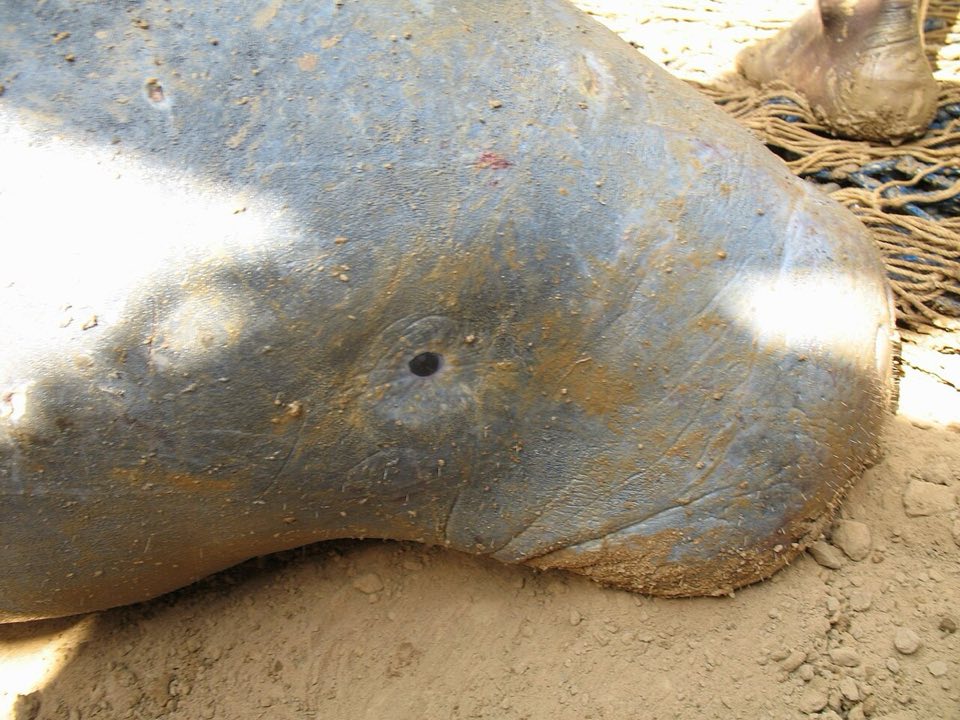
African manatee (Trichechus senegalensis), olive ridley and leatherback turtles nesting on the Muanda shore, hippopotamus and Nile crocodile in the channels, southern reedbuck on the savanna; mangrove herons, kingfishers, African skimmer, Palearctic waders on the flats. Mangroves National Park (Parc marin des Mangroves), Muanda and Banana, Kongo-Central, DR Congo.
Best time: 15 Nov – 31 Jan (November to January). Where: Muanda – town, airstrip and ICCN park office, Banana – Congo mouth and the mangrove channels, Muanda beaches – turtle nesting shore north of the town (DR Congo). Time of day: Turtles come up from two hours after dark to the small hours.
- Guide, ranger or boat needed
- Entry fee
- Binoculars helpful
- Sound 3/5
Open it in the interactive calendarSunrise and sunset listening times for the day you pick, and the map.
When is the best time?
Peak: 15 Nov – 31 Jan. Mid November to January, by the regional olive ridley and leatherback timing shared with the Gabon–Congo coast; the park's seasonal patrol and hatchery programme runs through these months (the park does not publish nesting dates — check with the ICCN office in Muanda)
Active from 15 Oct to 15 Mar (October to March) in a typical year.
Time of day
Turtles come up from two hours after dark to the small hours; manatee and bird trips by pirogue are at dawn on a rising tide, when the animals surface in the quiet channels and the mangrove birds are calling
- Mangrove dawn by pirogue: first light → 09:00
- Nesting turtles: 2 h after last light → 03:00
What will you hear?
A mangrove dawn: the drip and click of the Rhizophora at low water, kingfishers, herons, fish eagles, the blow of a manatee surfacing in a side channel (a short, sharp exhalation, easy to miss), hippos grunting in the back creeks; at night on the beach, surf and a nesting ridley's scraping — and the Congo's current audible against the sandbanks at Banana.
Binoculars?
Binoculars helpful. Manatees show a nostril for a second at 20–50 m; binoculars for the mangrove birds and the sandbank flocks at Banana.
Where to go
- Muanda – town, airstrip and ICCN park office — Oil town with flights from Kinshasa; the park's management, its partner CBBC and the turtle programme (ACODES) are contacted here. Map
- Banana – Congo mouth and the mangrove channels — Port and village on the spit at the river mouth; pirogues into the park's mangrove channels and island villages (Kimwabi, built on oyster shells) leave from here. Map
- Muanda beaches – turtle nesting shore north of the town — The Atlantic beach between Muanda and the Angolan (Cabinda) border, patrolled in the nesting season by community guards with hatcheries. Coordinates approximate. Map
How to go on your own, and what it costs
Through the park: ICCN office in Muanda for the entry fee, a guide and a pirogue (or the CBBC partner's boat). Cheapest legal way: fly or bus Kinshasa–Matadi–Boma–Muanda, a guesthouse in Muanda, then the park fee plus a village pirogue from Banana with the park's guide; turtle nights with the ACODES community patrol.
Cost: Park entry and guide — no published tariff; visitors (mostly expatriates flying in from Kinshasa) contribute about $25,000 a year to the park, so expect to pay tens of dollars a day; check current prices.
Free or no-guide alternative: The Banana spit and the Muanda town beach are public: waders, terns and skimmers on the sandbanks at low tide and the Congo mouth itself, without a boat; the manatees and turtle beaches need the park.
Field-recording notes
Nothing here is independent: go through the ICCN park office in Muanda (or its partner, Congo Basin Biodiversity Conservation) for a pirogue, a guide and the right to be on the beach at night — a foreigner with a torch and a recorder on a beach after dark is a police matter in the DRC. Photography permits are a recurring problem; ask what is allowed before pointing a rig at the port or the oil installations at Banana. Muanda's beaches carry oil-industry and port noise and a lot of litter; the quiet work is in the mangrove channels at dawn with the engine off. Manatees are shy and hunted; the blow is the record, not a sighting. Seven villages live inside the park — fishing pirogues at dawn are part of the soundscape. Check current travel advice for Kongo-Central.
Sources
- Mangroves National Park (Wikipedia) — Ramsar site 788, manatees, hippos, ICCN
- Rufford Foundation – sea turtle monitoring and protection along the Muanda shoreline (hatcheries, ACODES)
- Roads & Kingdoms – Seeing the forest for the trees (the park, its villages, the turtle programme; 2017)
Similar spectacles
 Douala-Edéa and Lake Ossa: manatees, mangroves and the Sanaga mouthGrey parrot roost flights whistling over the mangroves at dusk, egrets and herons settling, the Sanaga estuary's terns, and at Lake Ossa the soft blows of manatees surfacing in the dark.
 Bioko's southern beaches: leatherbacks, green turtles and the Caldera primatesBlack-sand surf, then the scrape and sigh of a leatherback digging a few metres away. At dawn the forest behind Moaba is one of the richest primate choruses in Africa: drill grunts and crowing, the chatter of red-eared monkeys, colobus roars, hornbills and the Bioko race of the grey parrot. Waterfalls drop straight onto the beach between the nesting bays.
 Turtle nights on São Tomé — Praia Jalé, Praia Inhame and Morro PeixeSurf on a black-sand beach, the scrape and thrown sand of a green turtle digging, her breathing, and the forest behind the beach: São Tomé scops owl, frogs, the squeak of fruit bats in the coconut palms. Quiet beaches without engine noise — the south is the end of the road.
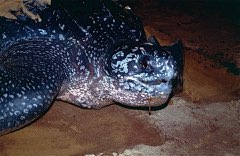 Leatherback nesting from Pongara to Mayumba — Gabon's turtle coastA leatherback digging is a slow, heavy scrape and the hiss of thrown sand, with deep sighing breaths — audible from 20 m on a still night between sets of surf. Otherwise the night is surf, the odd nightjar and, at Pongara, hippos and elephants in the forest behind the beach.
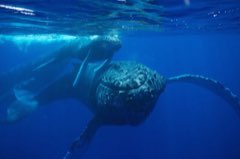 Conkouati-Douli: humpback whales and leatherback nestingBlows and breaches from the beach, humpback song on a hydrophone from a drifting pirogue, and at night the digging and heavy breathing of a leatherback on a wild beach with no lights for 50 km; chimpanzees pant-hooting from the lagoon islands at dawn.
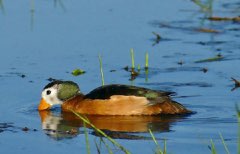 Kartong — wetland pools, Allahein river mouth and turtle beachCrakes and pygmy geese in the sand-mine pools, a wader roost at the Allahein mouth, and on rainy-season nights the beach with the surf and, if you are lucky, a nesting green turtle's breathing.
More: all spectacles in the DR Congo · sea turtles · manatees · wildlife at night · January · November · December