
Okavango headwaters: the Cuito source lakes and the Cuando
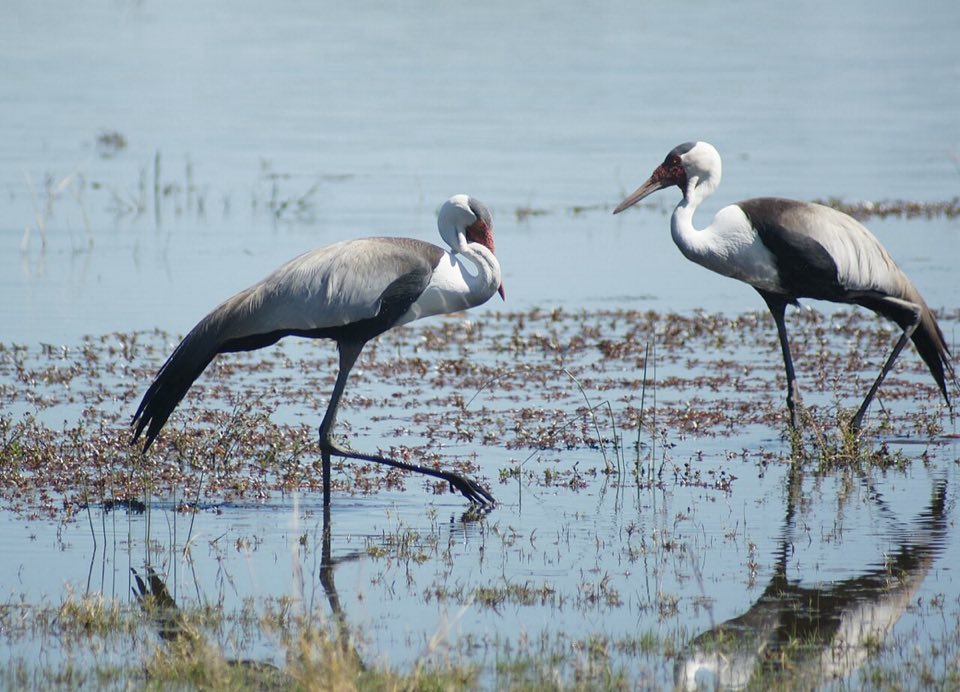
480 bird species recorded by the Okavango Wilderness Project — wattled crane, slaty egret, African skimmer, Pel's fishing owl, carmine bee-eater colonies; hippo, elephant, lion, wild dog returning; frogs of the peatland source lakes. Cuito, Cuanavale and Cuando rivers, Cuando Cubango and Moxico provinces, Angola.
Best time: 15 Jun – 30 Sep (June to September). Where: Cuito source lake (Lisima lya Mwono), Cuito Cuanavale – Cuito river, Cuando river – Luengue-Luiana National Park (Rivungo) (Angola). Time of day: River dawn from first light.
- Partly on your own
- Low cost
- Binoculars helpful
- Sound 4/5
Open it in the interactive calendarSunrise and sunset listening times for the day you pick, and the map.
When is the best time?
Peak: 15 Jun – 30 Sep. Mid June to September: the dry season, when the sand tracks are passable and the rivers are low; the first rains (Oct–Nov) bring the miombo breeding chorus and carmine bee-eater colonies
Active from 1 May to 31 Oct (May to October) in a typical year.
Time of day
River dawn from first light; hippos, Pel's fishing owl and frogs from dusk through the first hours of dark
- River dawn: first light → 09:00
- Hippos, owls & frogs: 30 min before sunset → 150 min after last light
What will you hear?
One of the least-recorded soundscapes in Africa: hippos and Pel's fishing owl on the Cuito, frog choruses on peat-edged source lakes, wattled cranes over the floodplains, the miombo dawn with its cuckoos and barbets, and no engine for days.
Binoculars?
Binoculars helpful. Hippos and cranes on the river at 50–200 m; binoculars help by day, Pel's fishing owl at night is ears only.
Where to go
- Cuito source lake (Lisima lya Mwono) — The Cuito's peatland source lake at the top of the system; reached by rough 4x4 track from Tempué, part of the Lisima Lya Mwono protected-area proposal. Map
- Cuito Cuanavale – Cuito river — Town with fuel and a bridge over the Cuito; boats can be arranged on the river. Map
- Cuando river – Luengue-Luiana National Park (Rivungo) — The Angolan side of KAZA; wildlife recovering, access by 4x4 from Menongue or from Namibia. Map
How to go on your own, and what it costs
Own or shared 4x4 from Menongue (bus from Lubango/Huambo); the river banks at Cuito Cuanavale and the villages along the Cuito are open land, and pirogues are negotiated with the village. The Luengue-Luiana park has posts where entry is registered; no guide requirement in practice, but a local companion is wise for the mines and the language.
Cost: Free on the rivers; pirogue and local guide by negotiation; park registration where posts exist; check current prices.
Free or no-guide alternative: The Cuito river at the Cuito Cuanavale bridge and the town's river bank are public and cleared: hippos, Pel's fishing owl and the river dawn cost nothing.
Field-recording notes
Genuine expedition territory: no lodges, no park infrastructure to speak of, fuel from Menongue or Cuito Cuanavale, and a self-sufficient 4x4 or a pirogue trip organised with villages on the river. Landmines from the war remain off the cleared tracks around Cuito Cuanavale and the Cuando — use the roads HALO has cleared, ask locally and never leave a used track. Nights are cold (frost in July) and silent. Research recording in the proposed protected areas is worth clearing with the provincial authorities; ask the Okavango Wilderness Project / Wild Bird Trust for current contacts.
Sources
- National Geographic Okavango Wilderness Project – river system
- National Geographic Okavango Wilderness Project – Wild Bird Trust
- Saving the Okavango – The Nature Conservancy (Angola)
Similar spectacles
 Vejlerne: bitterns, cranes and Northern Europe's largest reedbedsBittern booming from several directions at once, spotted crake whiplashes, water rail squeals, cranes trumpeting at dawn, bearded reedlings pinging, greylag families, black terns over the lagoons; wind in 8 km of reed.
 Müritz: cranes, ospreys and sea eagles in summerCrane pairs duetting at dawn from the bogs, bittern booming, osprey whistles over the lakes, eagle calls, woodlark and nightjar on the sandy heaths at dusk, marsh frogs; in autumn thousands of cranes flying into Rederangsee.
 Pyrenean passes: raptor, stork, pigeon & crane migrationMostly visual, but woodpigeon flocks pass with a rush of wings, cranes bugle over the pass, and pre-dawn passerine flight calls stream through — with gunfire from the neighbouring hunting passes.
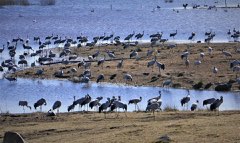 Spring crane staging: Hornborgasjön and PulkenThousands of cranes bugling in chorus — trumpeting that carries for kilometres, rising to a roar when a flock lifts; unison calls of pairs, wing noise of landing flocks, whooper swans and lapwings in the background.
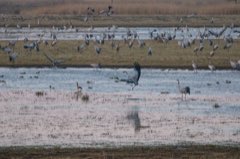 Cranes dancing on the dune heaths and bogsCrane pairs duetting and bugling across the wet dune slacks at first light, the dance's wing-flaps, curlew, golden plover and snipe drumming around them; ravens; the North Sea in Thy.
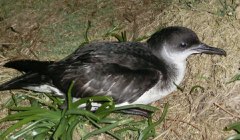 Manx shearwaters returning at nightHundreds of thousands of birds crashing in, with cackling, choking, hoarse calls from the air and burrows all around you.
More: all spectacles in Angola · cranes · wildlife at night · Angola in June · Angola in July · Angola in August · Angola in September