
Whales, dolphins and seals
29 whales, dolphins and seals along the East Atlantic Flyway, from Norway to Angola: when each one peaks, where to go on your own, what it costs and what you will hear. Wild animals only, no zoos.
Best time, place by place
| Spectacle | Country | Peak | On your own? |
|---|---|---|---|
| Sperm whales of the Bleik canyon, Andenes | Norway | 1 Jun – 31 Aug | Guide, ranger or boat needed |
| Orcas and humpbacks on the winter herring, Skjervøy | Norway | 10 Nov – 10 Jan | Guide, ranger or boat needed |
| Harbour porpoises in the Little Belt | Denmark | 1 Jun – 31 Aug | You can go on your own |
| Seals at Hvide Sande and on the Wadden Sea sandbanks | Denmark | 15 Jun – 31 Aug and 20 Nov – 15 Jan | You can go on your own |
| Bottlenose dolphins from the shore | United Kingdom | 1 Jun – 31 Aug | You can go on your own |
| Grey seal pupping | United Kingdom | 10 Nov – 15 Dec and 10 Sep – 20 Oct | You can go on your own |
| Fin and humpback whales from the south-coast headlands | Ireland | 1 Nov – 31 Jan | You can go on your own |
| Baie de Somme: harbour seals & wader roosts | France | 15 Jun – 15 Sep | You can go on your own |
| Fin whales & sperm whales off the Côte d'Azur | France | 15 Jun – 15 Sep | Guide, ranger or boat needed |
| Iroise: grey seals of Molène and Sein dolphins | France | 15 Sep – 15 Dec | Partly on your own |
| Bottlenose dolphins of the Kvarnerić, Lošinj | Croatia | 1 Jun – 15 Sep | Partly on your own |
| Fin whales & sperm whales, Pelagos Sanctuary | Italy | 1 Jul – 31 Aug | Guide, ranger or boat needed |
| Pilot whales of Teno–Rasca, Tenerife | Spain | 1 Jan – 31 Dec | Guide, ranger or boat needed |
| Orcas hunting bluefin tuna in the Strait | Spain | 1 Jul – 31 Aug | Guide, ranger or boat needed |
| The Sado's resident bottlenose dolphins | Portugal | 1 May – 15 Oct | Partly on your own |
| Humpback whales breeding in Sal Rei bay, Boa Vista | Cabo Verde | 1 Mar – 30 Apr | Guide, ranger or boat needed |
| Loggerhead turtles nesting on Boa Vista, Sal and Maio | Cabo Verde | 15 Jul – 15 Sep | Guide, ranger or boat needed |
| Mediterranean monk seal colony, Cap Blanc | Mauritania | 1 Sep – 30 Nov | You can go on your own |
| Imraguen mullet fishing with dolphins, Banc d'Arguin | Mauritania | 1 Nov – 31 Dec | Partly on your own |
| Atlantic humpback dolphins of the Saloum delta — the species' last stronghold | Senegal | 15 Oct – 31 Mar | Partly on your own |
| Green turtle nesting on Poilão — Africa's largest rookery | Guinea-Bissau | 1 Aug – 15 Oct | Guide, ranger or boat needed |
| Sea turtle nesting on Liberia's beaches | Liberia | 1 Nov – 15 Feb | You can go on your own |
| Humpback whales off Cape Three Points | Ghana | 15 Aug – 31 Oct | You can go on your own |
| Humpback whales off Ouidah and Grand-Popo | Benin | 15 Aug – 15 Oct | Guide, ranger or boat needed |
| Humpback whales off Kribi | Cameroon | 15 Aug – 31 Oct | Guide, ranger or boat needed |
| Humpback mothers and calves off São Tomé and Príncipe | São Tomé and Príncipe | 1 Aug – 30 Sep | Partly on your own |
| Humpback whales off Loango — the Gulf of Guinea breeding ground | Gabon | 15 Jul – 15 Sep | Partly on your own |
| Conkouati-Douli: humpback whales and leatherback nesting | Republic of the Congo | 1 Aug – 15 Oct and 15 Nov – 31 Jan | Guide, ranger or boat needed |
| Humpback whales off Namibe and Benguela | Angola | 15 Jul – 15 Oct | You can go on your own |
Where to go, north to south
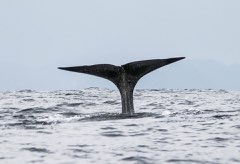 Sperm whales of the Bleik canyon, AndenesWith a hydrophone: sperm whale click trains and creaks from 1,000 m down (the operators locate whales acoustically), occasional codas; above water, the explosive blow every 10–15 s at the surface and the tail-fluke dive; fulmars and gannets around the boat.
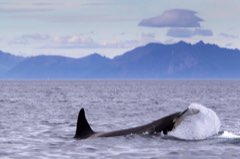 Orcas and humpbacks on the winter herring, SkjervøyWith a hydrophone: orca calls, whistles and echolocation from several pods carousel-feeding, humpback social sounds and feeding calls, the hiss of a herring ball being tail-slapped; above water, blows, tail-slaps and the roar of a humpback lunge; fishing vessels' sonar and engines.
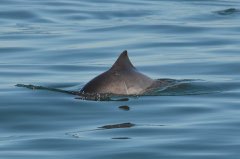 Harbour porpoises in the Little BeltPorpoises are silent to the ear (their clicks are at 130 kHz) — a hydrophone with a wideband recorder gets the click trains; audibly, the sharp puff of a surfacing blow a few metres off the rocks at Røjle Klint, and the Old Little Belt Bridge traffic.
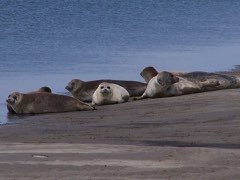 Seals at Hvide Sande and on the Wadden Sea sandbanksHarbour seals are quiet — snorts, splashes, pups bleating on a haul-out; grey seal bulls moaning and roaring in winter; with a hydrophone, seal vocalisations and the tide; oystercatchers and the surf.
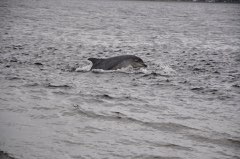 Bottlenose dolphins from the shoreWith a hydrophone: whistles, clicks, and burst pulses. Above water: blows and splashes very close to shore.
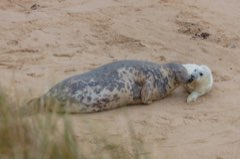 Grey seal puppingEerie wailing 'singing' of cows, bawling pups and bull snarls, with the surf.
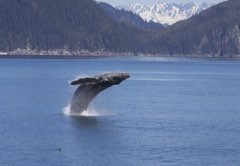 Fin and humpback whales from the south-coast headlandsFrom the cliffs: surf, gulls, choughs and the wind; on the calmest days a distant blow can be heard. The whales are a visual event; underwater sound needs a boat and a hydrophone.
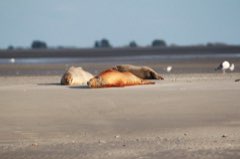 Baie de Somme: harbour seals & wader roostsSeal pups bawling and adults grunting from the sandbanks at 300 m, oystercatcher and curlew roosts, and spoonbills clattering in the Marquenterre heronry.
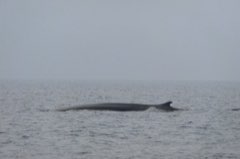 Fin whales & sperm whales off the Côte d'AzurWith a hydrophone: sperm whale clicks and codas, striped dolphin whistles and the shipping lane behind. Fin whale 20 Hz pulses need a hydrophone with real LF extension.
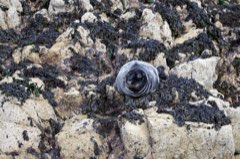 Iroise: grey seals of Molène and Sein dolphinsSeal moans and pup calls from the reef islets, a resident bottlenose pod around Sein and Molène, and the Iroise swell — France's most oceanic soundscape.
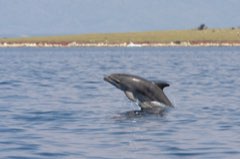 Bottlenose dolphins of the Kvarnerić, LošinjWith a hydrophone: whistles, echolocation click trains and burst-pulse squawks; above water, blows and tail-slaps; unfortunately also every outboard within 10 km.
 Fin whales & sperm whales, Pelagos SanctuaryWith a hydrophone: sperm whale clicks and codas, dolphin whistles. Fin whale calls are infrasonic (about 20 Hz) and need a suitable hydrophone.
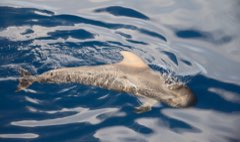 Pilot whales of Teno–Rasca, TenerifeWith a hydrophone: pilot whale whistles and clicks from a resident population of about 500 animals in deep water only 2–3 km offshore; above water, resting groups blowing quietly between boats.
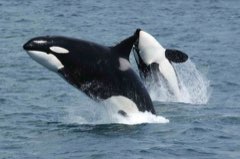 Orcas hunting bluefin tuna in the StraitWith a hydrophone: orca calls and echolocation, pilot whale whistles, and the tuna-boat engines they hunt around. Above water: blows, and the shouts from the fishing boats.
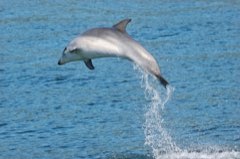 The Sado's resident bottlenose dolphinsA visual spectacle above water — blows and the slap of a breach — but a hydrophone over the side of the ferry or a kayak in the channel catches the clicks and whistles of a small, closely studied pod; the estuary is otherwise ferry engines, the Setúbal docks and the Atlantic swell at the bar.
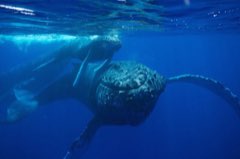 Humpback whales breeding in Sal Rei bay, Boa VistaThe only place on the flyway to put a hydrophone on singing North Atlantic humpbacks: long structured songs that carry kilometres through the bay, plus the slap and crack of breaches and pectoral slaps on calm mornings. Above water it is wind, surf and the outboard.
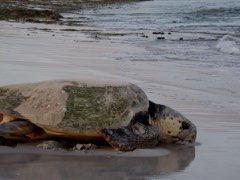 Loggerhead turtles nesting on Boa Vista, Sal and MaioMostly a visual and tactile night: the rasp and thump of a 100 kg female digging, sand flung against her shell, the long sighing breaths as she lays, then the surf. Hatchling nights add a faint rustle as a hundred animals break the surface together. The beaches are dark, empty and wind-blown.
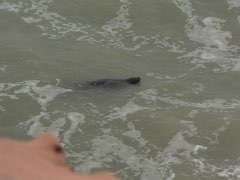 Mediterranean monk seal colony, Cap BlancThe world's largest monk seal colony (around 300 animals) in a few sea caves and cliff-foot beaches: barks, snorts and pup bleats over surf — but mostly heard from above, at a distance, on the viewing platforms.
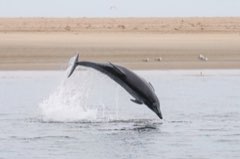 Imraguen mullet fishing with dolphins, Banc d'ArguinMen slapping the surface with sticks to call the dolphins, the dolphins' blows as they drive the shoal into the shallows, and the whole village on the beach hauling nets. Rare now — most mullet are taken by lanche — so ask in the village whether a beach net is planned.
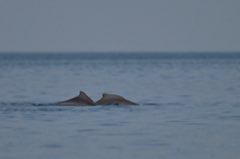 Atlantic humpback dolphins of the Saloum delta — the species' last strongholdThrough a hydrophone: whistles and click-trains of a species almost never recorded (the surveys deploy SoundTraps and F-PODs to build its first sound library). Above water: blows, the slap of a fluke, pied kingfishers, and the mangrove's own chorus of herons and fiddler crabs at low water.
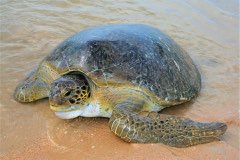 Green turtle nesting on Poilão — Africa's largest rookeryA beach with hundreds of females digging at once: sand thrown against the vegetation, the long sighs of turtles breathing, flippers on wet sand, and surf — with the forest's night birds and fruit bats behind. Sacred island: no other human sound at all.
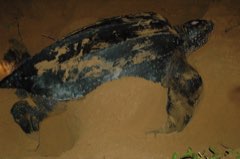 Sea turtle nesting on Liberia's beachesA leatherback's long sighing breaths and flippers throwing sand on an empty Atlantic beach with surf and, behind, the forest's night — a sighting spectacle first, but the breathing of a two-metre animal beside you is a sound to keep.
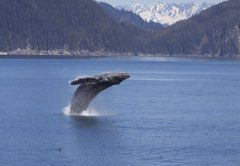 Humpback whales off Cape Three PointsBlows and breaches from the headland; with a hydrophone from a canoe, song from singing males in the breeding season — the reason to come. Above water this is mostly a sighting.
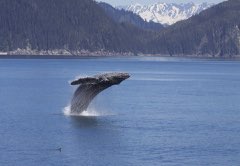 Humpback whales off Ouidah and Grand-PopoBlows, breaches and tail slaps from the boat; with a hydrophone over the side and the engine off, humpback song in the breeding season.
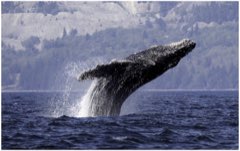 Humpback whales off KribiBlows, breaches and tail slaps; with a hydrophone over the side and the engine cut, male song in the breeding season. Sousa dolphins hunt in the surf line off the estuaries.
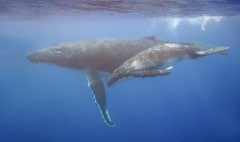 Humpback mothers and calves off São Tomé and PríncipeBlows, tail-slaps and the slap of a breach carry over a flat sea; a hydrophone from a drifting boat in September finds singing males at depth. From the headlands it is a visual spectacle against the surf; the islands are quiet enough that a blow is heard from the cliff on a still evening.
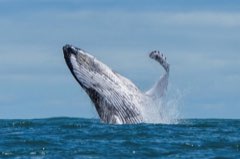 Humpback whales off Loango — the Gulf of Guinea breeding groundBlows and tail-slaps carry over a flat sea; a hydrophone over the side of a drifting boat in August picks up singing males — the real sound event is underwater. On shore, surf and the roar of the Atlantic swell dominate; the whales are a visual spectacle from the beach.
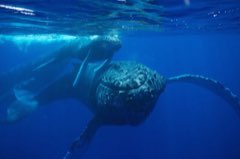 Conkouati-Douli: humpback whales and leatherback nestingBlows and breaches from the beach, humpback song on a hydrophone from a drifting pirogue, and at night the digging and heavy breathing of a leatherback on a wild beach with no lights for 50 km; chimpanzees pant-hooting from the lagoon islands at dawn.
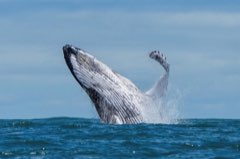 Humpback whales off Namibe and BenguelaBlows and breaches close inshore below desert cliffs, with a hydrophone over the side of a fishing boat: humpback song. Above water the Namib coast is fog, surf and cormorants.