
Fin whales & sperm whales off the Côte d'Azur
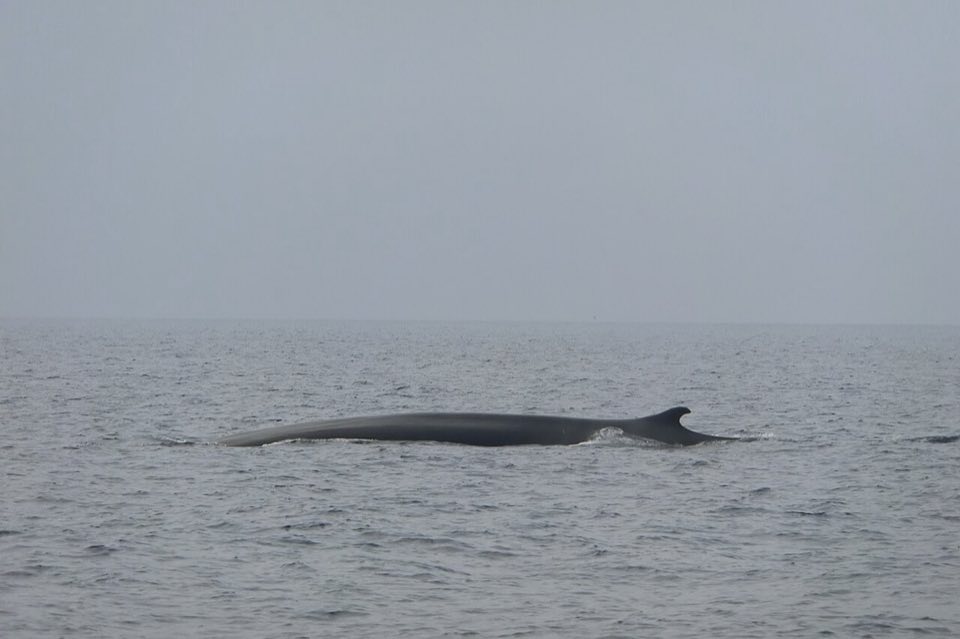
Fin whale, sperm whale, striped dolphin, Risso's dolphin, long-finned pilot whale. Pelagos Sanctuary, Var & Alpes-Maritimes, France.
Best time: 15 Jun – 15 Sep (June to September). Where: Sanary-sur-Mer / Toulon whale-watching, Nice / Villefranche (France). Time of day: Day trips typically sail 08:00–09:00 and return mid afternoon.
- Guide, ranger or boat needed
- Paid trip only
- Binoculars helpful
- Sound 3/5
Open it in the interactive calendarSunrise and sunset listening times for the day you pick, and the map.
When is the best time?
Peak: 15 Jun – 15 Sep. Mid June to mid September
Active from 1 May to 15 Oct (May to October) in a typical year.
Time of day
Day trips typically sail 08:00–09:00 and return mid afternoon; the listening is at engine-off drifts, and the sea is calmest in the morning. Check operator sailing times.
- Boat trip (check times): 08:00 → 15:00
What will you hear?
With a hydrophone: sperm whale clicks and codas, striped dolphin whistles and the shipping lane behind. Fin whale 20 Hz pulses need a hydrophone with real LF extension.
Binoculars?
Binoculars helpful. Blows 20–40 km offshore from the boat; binoculars help spot fin whales, a hydrophone matters more.
Where to go
- Sanary-sur-Mer / Toulon whale-watching — Operators with the 'High Quality Whale-Watching' label run to the canyon edge 20–40 km out. Map
- Nice / Villefranche — The continental slope is closest to shore here; research-linked trips. Map
How to go on your own, and what it costs
Boat only — the canyon edge is 20–40 km out. Choose an operator with the 'High Quality Whale-Watching' label (list on the Pelagos Sanctuary site) from Sanary, Toulon or Nice, and ask for engine-off drifts.
Cost: Whale-watching day trips (check current prices).
Free or no-guide alternative: No dependable free option: fin whales stay far offshore. Free headlands with deep water close in — Cap Ferrat, Cap d'Antibes — occasionally give a distant blow in calm weather with a scope, but nothing to plan around.
Field-recording notes
Approach rules in the sanctuary: no approaching within 100 m, no more than one boat, and swimming with cetaceans is banned in French waters. Engine noise dominates — ask for engine-off drifts. Ferry and shipping traffic to Corsica is constant LF noise.
Sources
Similar spectacles
 Sperm whales of the Bleik canyon, AndenesWith a hydrophone: sperm whale click trains and creaks from 1,000 m down (the operators locate whales acoustically), occasional codas; above water, the explosive blow every 10–15 s at the surface and the tail-fluke dive; fulmars and gannets around the boat.
 Fin whales & sperm whales, Pelagos SanctuaryWith a hydrophone: sperm whale clicks and codas, dolphin whistles. Fin whale calls are infrasonic (about 20 Hz) and need a suitable hydrophone.
 Grey seal puppingEerie wailing 'singing' of cows, bawling pups and bull snarls, with the surf.
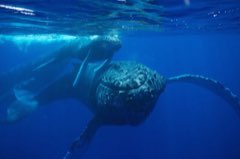 Conkouati-Douli: humpback whales and leatherback nestingBlows and breaches from the beach, humpback song on a hydrophone from a drifting pirogue, and at night the digging and heavy breathing of a leatherback on a wild beach with no lights for 50 km; chimpanzees pant-hooting from the lagoon islands at dawn.
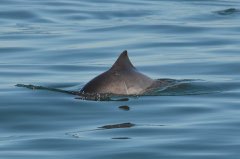 Harbour porpoises in the Little BeltPorpoises are silent to the ear (their clicks are at 130 kHz) — a hydrophone with a wideband recorder gets the click trains; audibly, the sharp puff of a surfacing blow a few metres off the rocks at Røjle Klint, and the Old Little Belt Bridge traffic.
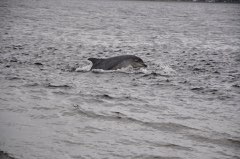 Bottlenose dolphins from the shoreWith a hydrophone: whistles, clicks, and burst pulses. Above water: blows and splashes very close to shore.
More: all spectacles in France · sperm whales · whales, dolphins and seals · France in June · France in July · France in August · France in September