
Humpback whales breeding in Sal Rei bay, Boa Vista
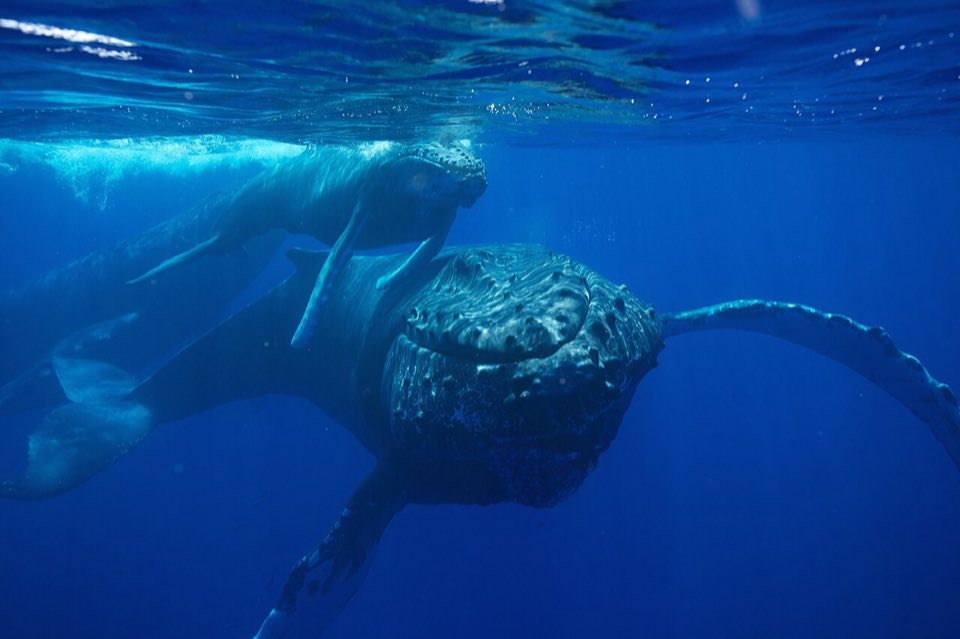
Humpback whale (Megaptera novaeangliae) — the eastern North Atlantic's only known breeding ground; a population of about 260 animals. Boa Vista west coast (Sal Rei bay), with Sal and Maio, Cabo Verde.
Best time: 1 Mar – 30 Apr (March to April). Where: Sal Rei harbour and bay, Praia de Chaves dunes (bay's southern shore), Santa Maria, Sal (Cabo Verde). Time of day: Boats go out in the morning before the trade wind builds (08:00–12:00).
- Guide, ranger or boat needed
- Paid trip only
- Binoculars helpful
- Sound 4/5
Open it in the interactive calendarSunrise and sunset listening times for the day you pick, and the map.
When is the best time?
Peak: 1 Mar – 30 Apr. March and April — mothers with calves in the shallow bay, singing males offshore; whales are seen on almost every boat trip at the peak
Active from 1 Feb to 31 May (February to May) in a typical year.
Time of day
Boats go out in the morning before the trade wind builds (08:00–12:00); singing is heard on a hydrophone at any hour, calmest at dawn
- Morning boat window: 08:00 → 12:00
- Hydrophone at dawn: first light → 2 h after sunrise
What will you hear?
The only place on the flyway to put a hydrophone on singing North Atlantic humpbacks: long structured songs that carry kilometres through the bay, plus the slap and crack of breaches and pectoral slaps on calm mornings. Above water it is wind, surf and the outboard.
Binoculars?
Binoculars helpful. From the boat the whales are within 100 m; from the beach a scope finds blows and breaches 1–3 km out.
Where to go
- Sal Rei harbour and bay — Boats leave from the town quay; the bay south of the islet is the mother-and-calf nursery, with whales in water as shallow as 7 m. Map
- Praia de Chaves dunes (bay's southern shore) — Long public beach and dunes 5 km south of Sal Rei; the best land-based vantage over the nursery bay. Coordinates approximate. Map
- Santa Maria, Sal — Same population passes Sal; whale trips from the Santa Maria pier in the same months. Map
- Cidade do Maio (Porto Inglês) — Maio's west coast is also used; fewer boats, more quiet. Map
How to go on your own, and what it costs
The whales are in the bay but you need a boat: 2–3 h whale-watching trips run from Sal Rei quay most mornings in season (two trips a day at the peak). Book at the quay in Sal Rei. On your own, walk the Chaves dunes with a scope on a calm morning.
Cost: Whale-watching trips from Sal Rei roughly €50–70 per person (about 5,500–7,700 CVE; check current prices); land-based watching free.
Free or no-guide alternative: Walk the public beach and dunes of Praia de Chaves or the headland north of Sal Rei at first light with binoculars: blows, breaches and mother–calf pairs are visible from the shore on calm March–April mornings, free.
Who runs access
- BIOS.CV — research NGO, Boa Vista (research project) — Runs the humpback study with Loro Parque Fundación; information on the season.
Field-recording notes
No national whale-watching regulation yet (as of the IWDG field reports) — the boats that carry BIOS.CV biologists keep distance and short encounters by their own code, so pick a boat with a biologist on board. Hydrophone: drop it with the engine off; boat traffic in the bay is the main noise, and the bay's sand bottom gives a clean, reverberant song at 20–40 m depth. The trade wind makes sea-state 4 normal from late morning. Mother–calf pairs show avoidance quickly — no chasing, no swimming with whales. Drones need a permit.
Sources
- Ryan et al., J. Cetacean Res. Manage. – Breeding habitat of humpback whales in Boa Vista (Sal Rei bay the key nursery)
- Loro Parque Fundación – Humpback whale project with BIOS.CV (season Feb–May, c. 260 whales)
- IWDG – The view from Cabo Verde (March 2020 field reports, boat practice, no legislation)
- IWDG – Biologist recruitment for Boa Vista (mid-March to end May; two trips a day)
Similar spectacles
 Orcas and humpbacks on the winter herring, SkjervøyWith a hydrophone: orca calls, whistles and echolocation from several pods carousel-feeding, humpback social sounds and feeding calls, the hiss of a herring ball being tail-slapped; above water, blows, tail-slaps and the roar of a humpback lunge; fishing vessels' sonar and engines.
 Conkouati-Douli: humpback whales and leatherback nestingBlows and breaches from the beach, humpback song on a hydrophone from a drifting pirogue, and at night the digging and heavy breathing of a leatherback on a wild beach with no lights for 50 km; chimpanzees pant-hooting from the lagoon islands at dawn.
 Humpback whales off Cape Three PointsBlows and breaches from the headland; with a hydrophone from a canoe, song from singing males in the breeding season — the reason to come. Above water this is mostly a sighting.
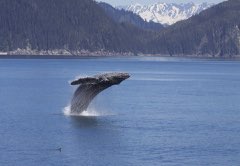 Humpback whales off Ouidah and Grand-PopoBlows, breaches and tail slaps from the boat; with a hydrophone over the side and the engine off, humpback song in the breeding season.
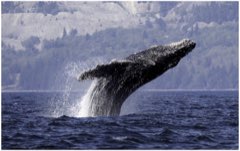 Humpback whales off KribiBlows, breaches and tail slaps; with a hydrophone over the side and the engine cut, male song in the breeding season. Sousa dolphins hunt in the surf line off the estuaries.
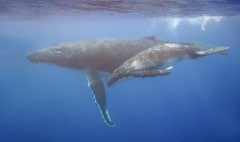 Humpback mothers and calves off São Tomé and PríncipeBlows, tail-slaps and the slap of a breach carry over a flat sea; a hydrophone from a drifting boat in September finds singing males at depth. From the headlands it is a visual spectacle against the surf; the islands are quiet enough that a blow is heard from the cliff on a still evening.
More: all spectacles in Cabo Verde · humpback whales · whales, dolphins and seals · March · April