
Sea turtle nesting on Liberia's beaches
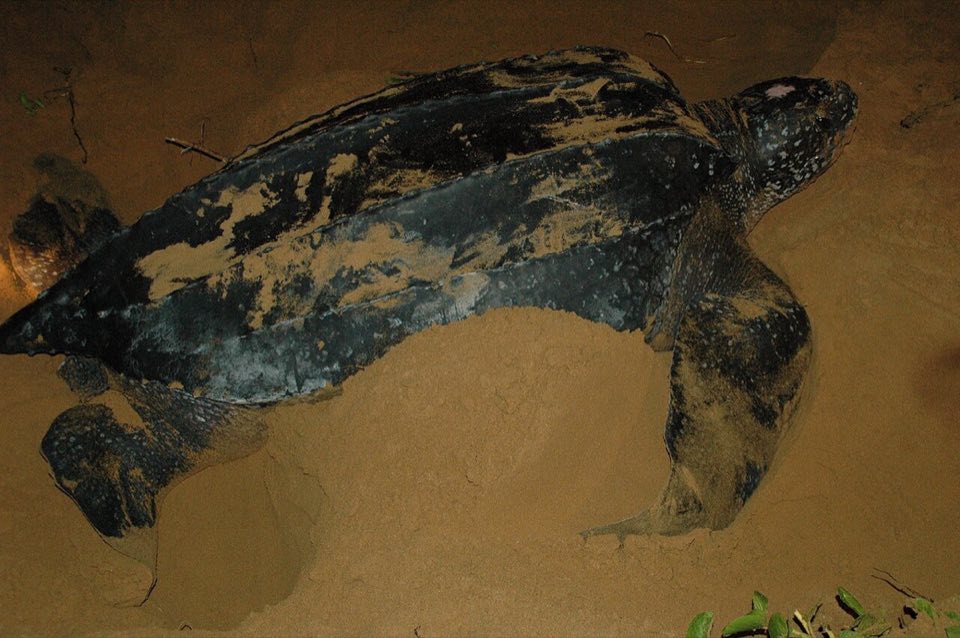
Leatherback (Dermochelys coriacea), olive ridley, green and hawksbill turtles. Atlantic coast — Grand Cape Mount, Grand Bassa, Sinoe, Grand Kru, Liberia.
Best time: 1 Nov – 15 Feb (November to February). Where: Robertsport beaches (Grand Cape Mount), Buchanan – Grand Bassa beaches, Grand Kru coast (Sasstown – Grand Cess) (Liberia). Time of day: From about 2 hours after sunset through the night, following the high tide.
- You can go on your own
- Free
- No binoculars needed
- Sound 2/5
Open it in the interactive calendarSunrise and sunset listening times for the day you pick, and the map.
When is the best time?
Peak: 1 Nov – 15 Feb. Roughly November to mid February for leatherbacks (based on the Gulf of Guinea pattern, October–April in Gabon); the Liberian season is poorly documented — community turtle groups on the coast keep the only records
Active from 1 Oct to 31 Mar (October to March) in a typical year.
Time of day
From about 2 hours after sunset through the night, following the high tide
- Nesting night: 1 h after last light → 30 min before sunrise
Depends on the tide: best around high tide. Check local tide tables.
What will you hear?
A leatherback's long sighing breaths and flippers throwing sand on an empty Atlantic beach with surf and, behind, the forest's night — a sighting spectacle first, but the breathing of a two-metre animal beside you is a sound to keep.
Binoculars?
No binoculars needed. A leatherback at arm's length on a dark beach; red torch only.
Where to go
- Robertsport beaches (Grand Cape Mount) — Long beaches south of the town; local turtle monitors have worked here. Map
- Buchanan – Grand Bassa beaches — Beaches either side of the port town; community turtle protection groups have operated along this coast. Map
- Grand Kru coast (Sasstown – Grand Cess) — Remote south-eastern beaches with the least disturbance; access by 4x4 only. Map
How to go on your own, and what it costs
All beaches are public: bush taxi to Robertsport or Buchanan and walk the beach at night, ideally with a local. No fee, no permit for the beach.
Cost: Free (2026); a contribution to a community patrol if you join one.
Field-recording notes
Uncertain information: Liberia's turtle monitoring is run by small community and NGO groups whose websites come and go (a 'Sea Turtle Watch Liberia' / 'Save My Future Foundation' presence has existed). Go with a local patrol if one exists, red light only, no flash, stay behind the animal. Turtle egg collection is common on these beaches — be tactful. Surf is loud; the dry season nights are the calm ones.
Sources
- SWOT – State of the World's Sea Turtles (regional data)
- Wikipedia – Leatherback sea turtle (Gabon nesting season)
Similar spectacles
 Conkouati-Douli: humpback whales and leatherback nestingBlows and breaches from the beach, humpback song on a hydrophone from a drifting pirogue, and at night the digging and heavy breathing of a leatherback on a wild beach with no lights for 50 km; chimpanzees pant-hooting from the lagoon islands at dawn.
 Green turtle nesting on Poilão — Africa's largest rookeryA beach with hundreds of females digging at once: sand thrown against the vegetation, the long sighs of turtles breathing, flippers on wet sand, and surf — with the forest's night birds and fruit bats behind. Sacred island: no other human sound at all.
 Loggerhead turtles nesting on Boa Vista, Sal and MaioMostly a visual and tactile night: the rasp and thump of a 100 kg female digging, sand flung against her shell, the long sighing breaths as she lays, then the surf. Hatchling nights add a faint rustle as a hundred animals break the surface together. The beaches are dark, empty and wind-blown.
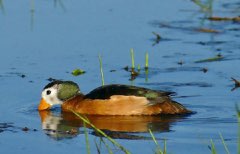 Kartong — wetland pools, Allahein river mouth and turtle beachCrakes and pygmy geese in the sand-mine pools, a wader roost at the Allahein mouth, and on rainy-season nights the beach with the surf and, if you are lucky, a nesting green turtle's breathing.
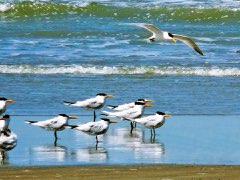 Sherbro and the Turtle Islands — terns, waders and turtle beachesTern and wader roosts on white sandbanks between eight Sherbro-speaking fishing islands, surf, and the villages' evening singing; dolphins in the channels.
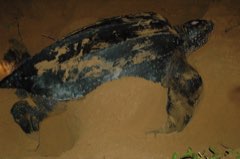 Bioko's southern beaches: leatherbacks, green turtles and the Caldera primatesBlack-sand surf, then the scrape and sigh of a leatherback digging a few metres away. At dawn the forest behind Moaba is one of the richest primate choruses in Africa: drill grunts and crowing, the chatter of red-eared monkeys, colobus roars, hornbills and the Bioko race of the grey parrot. Waterfalls drop straight onto the beach between the nesting bays.
More: all spectacles in Liberia · sea turtles · whales, dolphins and seals · Liberia in January · Liberia in February · Liberia in November · Liberia in December