
Imraguen mullet fishing with dolphins, Banc d'Arguin
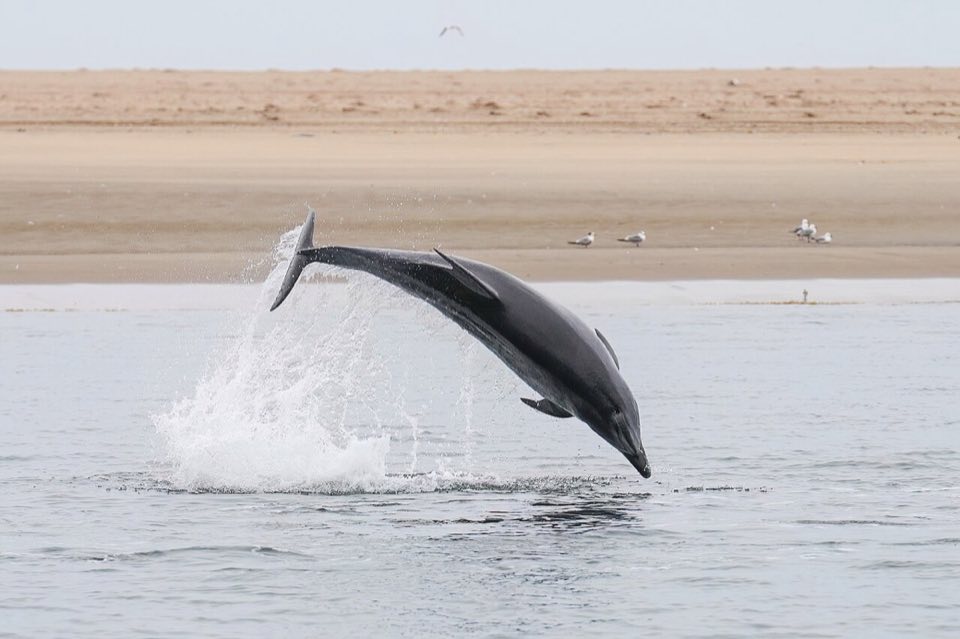
Golden grey mullet run; bottlenose dolphin (Tursiops truncatus) and Atlantic humpback dolphin (Sousa teuszii). Imraguen villages, southern PNBA, Mauritania.
Best time: 1 Nov – 31 Dec (November to December). Where: Mamghar (Nouamghar), R'Gueiba, Iwik (Mauritania). Time of day: Daylight, when a shoal is spotted from the beach — usually mornings.
- Partly on your own
- Entry fee
- No binoculars needed
- Sound 3/5
Open it in the interactive calendarSunrise and sunset listening times for the day you pick, and the map.
When is the best time?
Peak: 1 Nov – 31 Dec. November–December, when the big mullet shoals run south along the shore
Active from 15 Oct to 15 Jan (October to January) in a typical year.
Time of day
Daylight, when a shoal is spotted from the beach — usually mornings; the traditional call-in with sticks slapped on the water happens at that moment
- Beach fishing: sunrise → 12:00
What will you hear?
Men slapping the surface with sticks to call the dolphins, the dolphins' blows as they drive the shoal into the shallows, and the whole village on the beach hauling nets. Rare now — most mullet are taken by lanche — so ask in the village whether a beach net is planned.
Binoculars?
No binoculars needed. Dolphins drive the shoal into the shallows a few metres off the beach; naked eye.
Where to go
- Mamghar (Nouamghar) — Southern Imraguen village where the beach-net method is still occasionally used. Map
- R'Gueiba — Small village north of Mamghar on the same beach. Map
- Iwik — Lanche fishing from the beach; dolphins follow the boats. Map
How to go on your own, and what it costs
With the park permit you can stay in Mamghar or Iwik (village campements) and simply be on the beach when a haul happens — there is nothing to book. Ask the village chief's permission to record. Mamghar is reached along the beach from Nouakchott at low tide (4x4 or taxi-brousse).
Cost: Park access fee 200 MRU per person per night (PNBA, 2026); no charge for watching the beach.
Free or no-guide alternative: Wait on the Mamghar village beach in November–December mornings; the event itself is free and public, only the park permit applies.
Field-recording notes
This is a documentary rather than a wildlife recording: a fishing community, so ask permission on the beach, keep to the edge of the haul and expect it to be over in twenty minutes. A hydrophone dropped from the beach or a lanche during a drive is the shot no one has — dolphins' whistles plus the stick slaps under water. Women's bottarga work happens at the village after the haul. Park permit required; the beach north of Mamghar is only driveable at low tide.
Sources
- Ecology & Society – The chronology of overfishing in a remote West-African coastal ecosystem (Banc d'Arguin)
- Wikipedia – Imraguen people
Similar spectacles
 Iroise: grey seals of Molène and Sein dolphinsSeal moans and pup calls from the reef islets, a resident bottlenose pod around Sein and Molène, and the Iroise swell — France's most oceanic soundscape.
 Atlantic humpback dolphins of the Saloum delta — the species' last strongholdThrough a hydrophone: whistles and click-trains of a species almost never recorded (the surveys deploy SoundTraps and F-PODs to build its first sound library). Above water: blows, the slap of a fluke, pied kingfishers, and the mangrove's own chorus of herons and fiddler crabs at low water.
 Bottlenose dolphins from the shoreWith a hydrophone: whistles, clicks, and burst pulses. Above water: blows and splashes very close to shore.
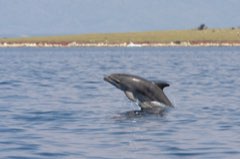 Bottlenose dolphins of the Kvarnerić, LošinjWith a hydrophone: whistles, echolocation click trains and burst-pulse squawks; above water, blows and tail-slaps; unfortunately also every outboard within 10 km.
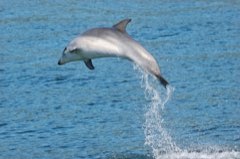 The Sado's resident bottlenose dolphinsA visual spectacle above water — blows and the slap of a breach — but a hydrophone over the side of the ferry or a kayak in the channel catches the clicks and whistles of a small, closely studied pod; the estuary is otherwise ferry engines, the Setúbal docks and the Atlantic swell at the bar.
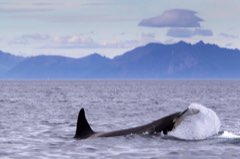 Orcas and humpbacks on the winter herring, SkjervøyWith a hydrophone: orca calls, whistles and echolocation from several pods carousel-feeding, humpback social sounds and feeding calls, the hiss of a herring ball being tail-slapped; above water, blows, tail-slaps and the roar of a humpback lunge; fishing vessels' sonar and engines.
More: all spectacles in Mauritania · dolphins · whales, dolphins and seals · Mauritania in November · Mauritania in December