
Loggerhead turtles nesting on Boa Vista, Sal and Maio
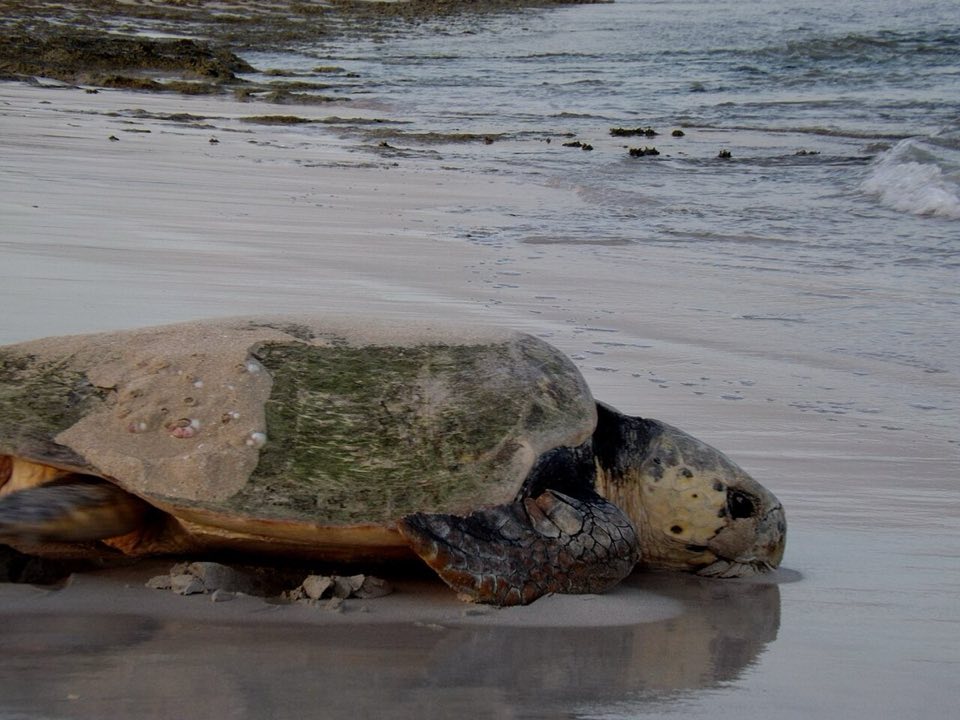
Loggerhead turtle (Caretta caretta) — one of the world's largest rookeries; occasional green and hawksbill. Boa Vista (east and south beaches), Sal (Serra Negra) and Maio, Cabo Verde.
Best time: 15 Jul – 15 Sep (July to September). Where: Ervatão / east-coast beaches, Boa Vista, Lacacão, south Boa Vista, Curral Velho, south-east Boa Vista (Cabo Verde). Time of day: Females come ashore after dark, mostly between 21:00 and 03:00 on a rising tide.
- Guide, ranger or boat needed
- Paid trip only
- No binoculars needed
- Sound 2/5
Open it in the interactive calendarSunrise and sunset listening times for the day you pick, and the map.
When is the best time?
Peak: 15 Jul – 15 Sep. Mid July to mid September for nesting females (August is the peak); hatchlings emerge from late August into November
Active from 1 Jun to 31 Oct (June to October) in a typical year.
Time of day
Females come ashore after dark, mostly between 21:00 and 03:00 on a rising tide; hatchlings scramble to the sea in the first hours after dusk
- Nesting females: 1 h after last light → 03:00
- Hatchling emergence: last light → 2 h after last light
Depends on the tide: best around high tide. Check local tide tables.
What will you hear?
Mostly a visual and tactile night: the rasp and thump of a 100 kg female digging, sand flung against her shell, the long sighing breaths as she lays, then the surf. Hatchling nights add a faint rustle as a hundred animals break the surface together. The beaches are dark, empty and wind-blown.
Binoculars?
No binoculars needed. Turtles are a few metres away on the sand; no white light at all — a very dim red torch only, and only the guide uses it.
Where to go
- Ervatão / east-coast beaches, Boa Vista — The core nesting coast south of Sal Rei along the east side; Turtle Foundation / Fundação Tartaruga camps (Boa Esperança, Canto, Cruz do Morto) patrol it nightly in season. Coordinates for the Ervatão river mouth; access only with the NGO. Map
- Lacacão, south Boa Vista — Southern nesting beach with a seasonal NGO camp (hundreds of nests mapped); reached by 4x4 track. Map
- Curral Velho, south-east Boa Vista — Abandoned village and camp on the SE coast; nesting beach and islet seabirds offshore. 4x4 track from the EN3. Map
- Serra Negra reserve, Sal — Sal's main nesting beach and natural reserve east of Santa Maria; Project Biodiversity patrols and the guided 'turtle walks' start here. Map
How to go on your own, and what it costs
Fly to Boa Vista (BVC) or Sal (SID); taxis and aluguer minibuses from Sal Rei / Santa Maria. In season, book a guided night turtle walk with the conservation NGO or one of the licensed guides working under its rules (Sal: pick-ups in Santa Maria around 21:00, 2–3 h). On Boa Vista ask at the Turtle Foundation / Fundação Tartaruga office in Sal Rei about walks and the hatchling releases. Nesting beaches are off-limits at night without them.
Cost: Guided turtle walk on Sal about €39–49 (about 4,300–5,400 CVE) per person with hotel pickup (2026 listings); NGO volunteer placements are a separate programme. Check current prices.
Free or no-guide alternative: No legal or decent way to sit on a nesting beach alone at night in season. The free version: hatchling releases announced by the NGOs at dusk (public, on the beach), and daytime walks on the public beaches of Sal Rei bay and Santa Maria where tracks from the night before are plain to see.
Who runs access
- Project Biodiversity (Sal) — turtle walks and volunteering (NGO) — The Sal NGO; operators run walks under its guidelines.
- Turtle Foundation / Fundação Tartaruga (Boa Vista) (NGO) — Patrols five beach camps June–October; volunteer programme since 2009.
Field-recording notes
The nesting beaches are closed to unaccompanied visitors at night in season and patrolled by rangers (some are ex-poachers) with dogs and drones — walking them alone will get you turned back and is bad for the turtles. Go as an NGO volunteer (weeks) or on an official walk (hours). Rules on the walk: no white light, no flash, approach from behind, stay low, keep behind the guide, no touching. Wind is the enemy: the NE trade blows most nights, so a contact mic or a well-dressed shotgun low on the sand behind a dune lip works better than open capsules. Hydrophone or not, the sea is loud; the digging and breathing are only recordable within 1–2 m, which only the guide decides. Drones need a national permit and are banned on nesting beaches at night.
Sources
- Mongabay (June 2026) – Cabo Verde ex-hunters now protect sea turtles (season June–Oct, poaching figures)
- Oceanographic – Sea turtles of Cape Verde (night patrols, red-light rules, Boa Vista)
- Turtle Foundation – Program Boa Vista (camps, two-thirds of national nesting)
- Project Biodiversity – Sal (25,193 nests in 2023)
Similar spectacles
 Conkouati-Douli: humpback whales and leatherback nestingBlows and breaches from the beach, humpback song on a hydrophone from a drifting pirogue, and at night the digging and heavy breathing of a leatherback on a wild beach with no lights for 50 km; chimpanzees pant-hooting from the lagoon islands at dawn.
 Green turtle nesting on Poilão — Africa's largest rookeryA beach with hundreds of females digging at once: sand thrown against the vegetation, the long sighs of turtles breathing, flippers on wet sand, and surf — with the forest's night birds and fruit bats behind. Sacred island: no other human sound at all.
 Sea turtle nesting on Liberia's beachesA leatherback's long sighing breaths and flippers throwing sand on an empty Atlantic beach with surf and, behind, the forest's night — a sighting spectacle first, but the breathing of a two-metre animal beside you is a sound to keep.
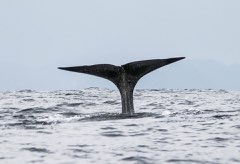 Sperm whales of the Bleik canyon, AndenesWith a hydrophone: sperm whale click trains and creaks from 1,000 m down (the operators locate whales acoustically), occasional codas; above water, the explosive blow every 10–15 s at the surface and the tail-fluke dive; fulmars and gannets around the boat.
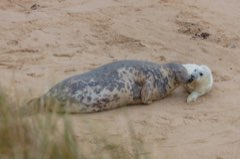 Grey seal puppingEerie wailing 'singing' of cows, bawling pups and bull snarls, with the surf.
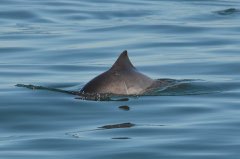 Harbour porpoises in the Little BeltPorpoises are silent to the ear (their clicks are at 130 kHz) — a hydrophone with a wideband recorder gets the click trains; audibly, the sharp puff of a surfacing blow a few metres off the rocks at Røjle Klint, and the Old Little Belt Bridge traffic.
More: all spectacles in Cabo Verde · sea turtles · whales, dolphins and seals · July · August · September