
Conkouati-Douli: humpback whales and leatherback nesting
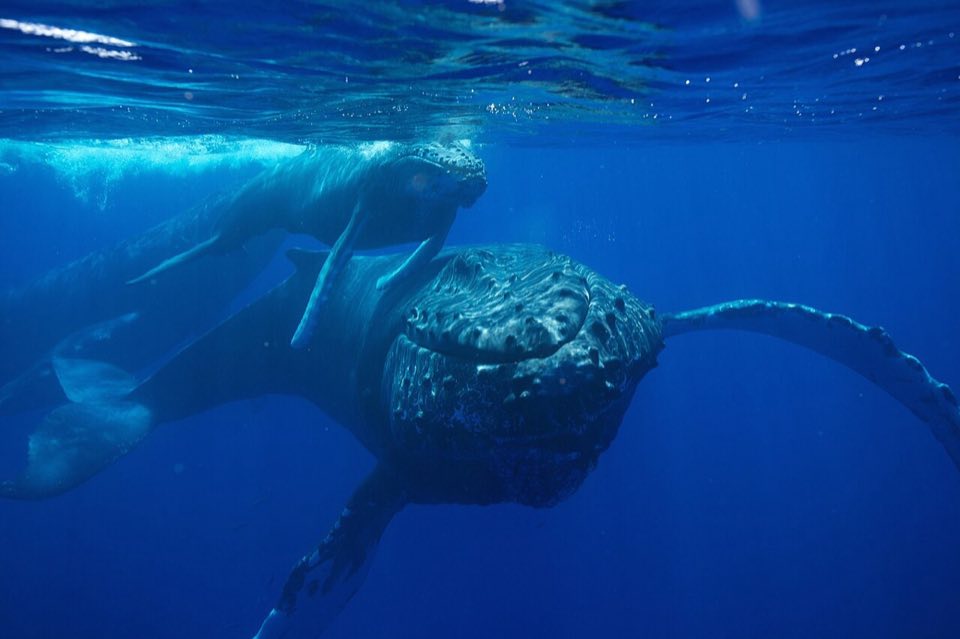
Humpback whale (Megaptera novaeangliae); leatherback (Dermochelys coriacea) and olive ridley turtles; chimpanzees on the HELP Congo islands; hippos, manatees in the lagoon. Conkouati-Douli National Park, Kouilou (coast north of Pointe-Noire), Republic of the Congo.
Best time: 1 Aug – 15 Oct and 15 Nov – 31 Jan (August to January). Where: Conkouati lagoon and beach – park headquarters area, Tchissanga / Bas-Kouilou – beaches towards Pointe-Noire, Pointe-Noire – boat departures (Republic of the Congo). Time of day: Whales from the beach and by boat in the calm first hours after sunrise.
- Guide, ranger or boat needed
- Entry fee
- Binoculars helpful
- Sound 4/5
Open it in the interactive calendarSunrise and sunset listening times for the day you pick, and the map.
When is the best time?
- Peak 1: 1 Aug – 15 Oct — August to mid October: humpback whales
- Peak 2: 15 Nov – 31 Jan — Mid November to January: leatherback and olive ridley nesting (season runs September–March)
Active from 15 Jun to 28 Feb (June to February) in a typical year.
Time of day
Whales from the beach and by boat in the calm first hours after sunrise; turtles come ashore after dark, mostly 21:00–03:00
- Whales: sunrise → 3 h after sunrise
- Turtle patrol: 21:00 → 03:00
Depends on the tide: best around high tide. Check local tide tables.
What will you hear?
Blows and breaches from the beach, humpback song on a hydrophone from a drifting pirogue, and at night the digging and heavy breathing of a leatherback on a wild beach with no lights for 50 km; chimpanzees pant-hooting from the lagoon islands at dawn.
Binoculars?
Binoculars helpful. Whales pass 300 m+ off the beach (binoculars or scope); turtles at night are red torch only.
Where to go
- Conkouati lagoon and beach – park headquarters area — Park base and Rénatura's turtle programme; the lagoon islands hold HELP Congo's released chimpanzees. Map
- Tchissanga / Bas-Kouilou – beaches towards Pointe-Noire — Turtle beaches monitored by Rénatura on the way north from Pointe-Noire. Map
- Pointe-Noire – boat departures — Whale-watching boats run in season from the city; the park is 150 km north by rough road. Map
How to go on your own, and what it costs
Park entry and eco-guides are required inside the park, and turtles may only be approached with the Rénatura patrol (protected species). Cheapest legal way: shared 4x4 from Pointe-Noire to the park village, pay entry and the guide at the park base, camp; join a Rénatura patrol for a donation.
Cost: Park entry and eco-guide per day; Rénatura patrol by donation; whale boats from Pointe-Noire per person; check current prices.
Free or no-guide alternative: The beaches outside the park between Pointe-Noire and Bas-Kouilou are public: whales are seen for free from the shore on calm mornings in August–October, and hatchling releases by Rénatura are open to the public.
Who runs access
- Noé – Conkouati-Douli National Park (park authority) — Park co-manager; eco-guides and visits
- Rénatura Congo (NGO) — Turtle patrols and hatchling releases; ask at the park base (no working website found)
Field-recording notes
The park is managed with the NGO Noé; entry fee and eco-guides through the park (rule). Turtles only with Rénatura's patrols — red light, rear approach, no flash. Whales: 100 m, engine off near animals. Offshore oil platforms, seismic surveys and Pointe-Noire's port are the underwater noise floor along this coast; the park's stretch is the cleanest. The road north from Pointe-Noire needs 4x4 in the rains (Oct–May).
Sources
- Preserve the Conkouati-Douli National Park – Noé
- Conkouati-Douli National Park (Wikipedia)
- HELP Congo – chimpanzee sanctuary and release
Similar spectacles
 Orcas and humpbacks on the winter herring, SkjervøyWith a hydrophone: orca calls, whistles and echolocation from several pods carousel-feeding, humpback social sounds and feeding calls, the hiss of a herring ball being tail-slapped; above water, blows, tail-slaps and the roar of a humpback lunge; fishing vessels' sonar and engines.
 Green turtle nesting on Poilão — Africa's largest rookeryA beach with hundreds of females digging at once: sand thrown against the vegetation, the long sighs of turtles breathing, flippers on wet sand, and surf — with the forest's night birds and fruit bats behind. Sacred island: no other human sound at all.
 Humpback whales off Cape Three PointsBlows and breaches from the headland; with a hydrophone from a canoe, song from singing males in the breeding season — the reason to come. Above water this is mostly a sighting.
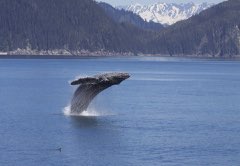 Humpback whales off Ouidah and Grand-PopoBlows, breaches and tail slaps from the boat; with a hydrophone over the side and the engine off, humpback song in the breeding season.
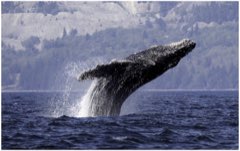 Humpback whales off KribiBlows, breaches and tail slaps; with a hydrophone over the side and the engine cut, male song in the breeding season. Sousa dolphins hunt in the surf line off the estuaries.
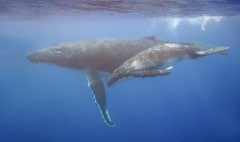 Humpback mothers and calves off São Tomé and PríncipeBlows, tail-slaps and the slap of a breach carry over a flat sea; a hydrophone from a drifting boat in September finds singing males at depth. From the headlands it is a visual spectacle against the surf; the islands are quiet enough that a blow is heard from the cliff on a still evening.
More: all spectacles in the Republic of the Congo · humpback whales · sea turtles · whales, dolphins and seals · the Republic of the Congo in January · the Republic of the Congo in August · the Republic of the Congo in September · October · November · the Republic of the Congo in December