
Green turtle nesting on Poilão — Africa's largest rookery
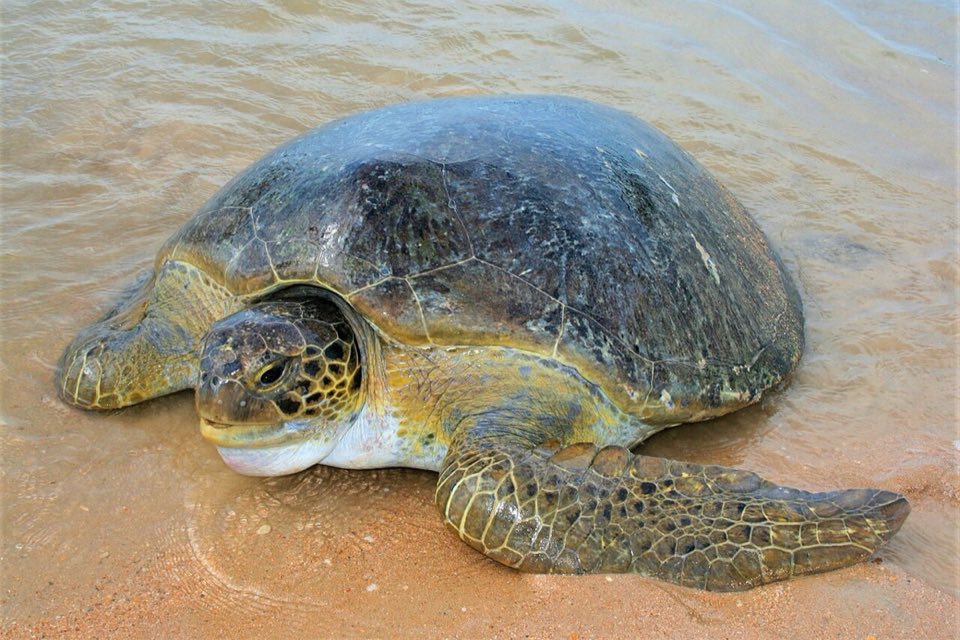
Green turtle (Chelonia mydas); hawksbill and olive ridley in small numbers. João Vieira–Poilão Marine National Park, southern Bijagós, Guinea-Bissau.
Best time: 1 Aug – 15 Oct (August to October). Where: Poilão island, João Vieira island, Bubaque (departure) (Guinea-Bissau). Time of day: From about 2 hours after sunset until the pre-dawn high tide.
- Guide, ranger or boat needed
- Paid trip only
- No binoculars needed
- Sound 3/5
Open it in the interactive calendarSunrise and sunset listening times for the day you pick, and the map.
When is the best time?
Peak: 1 Aug – 15 Oct. August to mid October — on peak nights more than 1,000 females have come ashore; 7,000–40,000 nests a year
Active from 15 Jun to 30 Nov (June to November) in a typical year.
Time of day
From about 2 hours after sunset until the pre-dawn high tide; emergences follow the tide, and hatchlings leave the nest after dark from September
- Nesting night: 1 h after last light → 30 min before sunrise
Depends on the tide: best around high tide. Check local tide tables.
What will you hear?
A beach with hundreds of females digging at once: sand thrown against the vegetation, the long sighs of turtles breathing, flippers on wet sand, and surf — with the forest's night birds and fruit bats behind. Sacred island: no other human sound at all.
Binoculars?
No binoculars needed. Turtles dig at arm's length on a dark beach; red torch only, no optics.
Where to go
- Poilão island — Sacred to the Bijagó people; visits are limited to a few researchers and tourists with IBAP and community permission, beach only, the forest is off limits. Map
- João Vieira island — The park's base island with a small ecolodge and the IBAP post; tern colonies (West African crested, Caspian, black) on the islets. Map
- Bubaque (departure) — Boats to the park take 3–4 hours; weather-dependent. Map
How to go on your own, and what it costs
Poilão is a sacred island inside a marine national park: access is only with an IBAP permit, community agreement and a park guide (law and custom). Cheapest legal route: arrange through the IBAP ecotourism office in Bissau and stay at the João Vieira park lodge, with the park boat to Poilão.
Cost: IBAP park entry 5,000 CFA foreign / 2,000 CFA Guinean per person per day, turtle-observation fee 10,000 CFA per person, guide 10,000 CFA per outing for up to 5 people (IBAP tariff, 2021); João Vieira lodge and park boat extra — check current prices with IBAP.
Free or no-guide alternative: Green and olive ridley turtles also nest in small numbers on the free, public beaches of Bubaque and Orango (and on the mainland at Varela) in the same months; ask fishermen where nests have been seen. The mass nesting itself exists only on Poilão and cannot be visited without the permit.
Who runs access
- IBAP – ecotourism office (João Vieira lodge, permits) (park authority) — The park authority; the only legal route.
Field-recording notes
This is the hardest permit on the list and worth it: an IBAP authorisation plus the community's agreement, arranged weeks ahead through IBAP in Bissau, and a park guide on the beach. Red light only, no flash, stay behind and clear of the digging animals. It rains most nights in the peak — rain covers and a plan for humidity at 100%. No landing without permission; drones prohibited.
Sources
- Wikipedia – Poilão (nesting season, counts, sacred status)
- Wikipedia – João Vieira and Poilão Marine National Park
- IBAP – Instituto da Biodiversidade e das Áreas Protegidas
Similar spectacles
 Conkouati-Douli: humpback whales and leatherback nestingBlows and breaches from the beach, humpback song on a hydrophone from a drifting pirogue, and at night the digging and heavy breathing of a leatherback on a wild beach with no lights for 50 km; chimpanzees pant-hooting from the lagoon islands at dawn.
 Loggerhead turtles nesting on Boa Vista, Sal and MaioMostly a visual and tactile night: the rasp and thump of a 100 kg female digging, sand flung against her shell, the long sighing breaths as she lays, then the surf. Hatchling nights add a faint rustle as a hundred animals break the surface together. The beaches are dark, empty and wind-blown.
 Sea turtle nesting on Liberia's beachesA leatherback's long sighing breaths and flippers throwing sand on an empty Atlantic beach with surf and, behind, the forest's night — a sighting spectacle first, but the breathing of a two-metre animal beside you is a sound to keep.
 Kartong — wetland pools, Allahein river mouth and turtle beachCrakes and pygmy geese in the sand-mine pools, a wader roost at the Allahein mouth, and on rainy-season nights the beach with the surf and, if you are lucky, a nesting green turtle's breathing.
 Sperm whales of the Bleik canyon, AndenesWith a hydrophone: sperm whale click trains and creaks from 1,000 m down (the operators locate whales acoustically), occasional codas; above water, the explosive blow every 10–15 s at the surface and the tail-fluke dive; fulmars and gannets around the boat.
 Grey seal puppingEerie wailing 'singing' of cows, bawling pups and bull snarls, with the surf.
More: all spectacles in Guinea-Bissau · sea turtles · whales, dolphins and seals · August · September · October