
Humpback whales off Namibe and Benguela
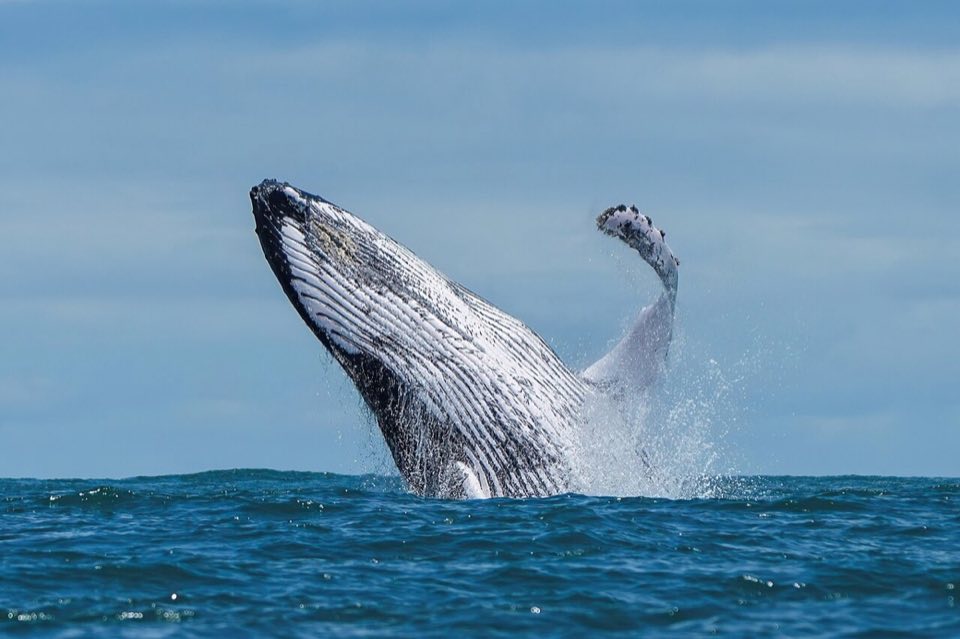
Humpback whale (Megaptera novaeangliae); southern right whale occasional; Heaviside's? no — dusky and bottlenose dolphins, Cape fur seals at Baía dos Tigres. Namibe, Lucira and Benguela coast, Angola.
Best time: 15 Jul – 15 Oct (July to October). Where: Namibe – Praia das Miragens and the fishing port, Fishing-camp coast south of Namibe (towards Iona), Lucira – bay and headlands (Angola). Time of day: From headlands and boats in the calm first hours after sunrise.
- You can go on your own
- Free
- Telescope recommended
- Sound 3/5
Open it in the interactive calendarSunrise and sunset listening times for the day you pick, and the map.
When is the best time?
Peak: 15 Jul – 15 Oct. Mid July to mid October, the southern-winter breeding season off the Benguela current coast
Active from 15 Jun to 30 Nov (June to November) in a typical year.
Time of day
From headlands and boats in the calm first hours after sunrise; the sea breeze builds from late morning
- Calm-sea watch: sunrise → 3 h after sunrise
What will you hear?
Blows and breaches close inshore below desert cliffs, with a hydrophone over the side of a fishing boat: humpback song. Above water the Namib coast is fog, surf and cormorants.
Binoculars?
Telescope recommended. Whales pass below the desert headlands at 300 m to 2 km in fog; a scope from the shore, binoculars from the boat.
Where to go
- Namibe – Praia das Miragens and the fishing port — Boats from the town; the coast road north and south has headlands for shore watching. Map
- Fishing-camp coast south of Namibe (towards Iona) — Fishing camp coast on the way to Iona; a 2008 cetacean survey here recorded humpbacks in both seasons, more in winter. Map
- Lucira – bay and headlands — Fishing village between Namibe and Benguela with sheltered water. Map
How to go on your own, and what it costs
Shore watching from the public headlands along the Namibe–Tômbwa coast road and at Lucira needs nothing; for a boat, negotiate with the fishermen at Namibe or Lucira port at first light.
Cost: Free from shore; fishing-boat hire by negotiation, check current prices.
Field-recording notes
There is no whale-watching industry: it is fishing boats hired for the morning, and the fishermen know where the whales have been. Fishing-fleet engines and the Namibe port are the underwater floor; the coast south of Namibe is cleaner. Fog (cacimbo) most mornings until 10:00 dampens surface noise but hides the animals — listen first. Keep 100 m; the animals here have had little boat contact.
Sources
Similar spectacles
 Conkouati-Douli: humpback whales and leatherback nestingBlows and breaches from the beach, humpback song on a hydrophone from a drifting pirogue, and at night the digging and heavy breathing of a leatherback on a wild beach with no lights for 50 km; chimpanzees pant-hooting from the lagoon islands at dawn.
 Humpback whales off Cape Three PointsBlows and breaches from the headland; with a hydrophone from a canoe, song from singing males in the breeding season — the reason to come. Above water this is mostly a sighting.
 Humpback whales off Ouidah and Grand-PopoBlows, breaches and tail slaps from the boat; with a hydrophone over the side and the engine off, humpback song in the breeding season.
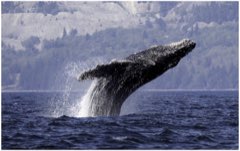 Humpback whales off KribiBlows, breaches and tail slaps; with a hydrophone over the side and the engine cut, male song in the breeding season. Sousa dolphins hunt in the surf line off the estuaries.
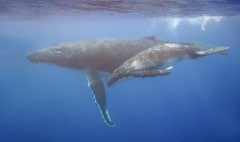 Humpback mothers and calves off São Tomé and PríncipeBlows, tail-slaps and the slap of a breach carry over a flat sea; a hydrophone from a drifting boat in September finds singing males at depth. From the headlands it is a visual spectacle against the surf; the islands are quiet enough that a blow is heard from the cliff on a still evening.
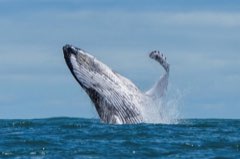 Humpback whales off Loango — the Gulf of Guinea breeding groundBlows and tail-slaps carry over a flat sea; a hydrophone over the side of a drifting boat in August picks up singing males — the real sound event is underwater. On shore, surf and the roar of the Atlantic swell dominate; the whales are a visual spectacle from the beach.
More: all spectacles in Angola · humpback whales · whales, dolphins and seals · Angola in July · Angola in August · Angola in September · Angola in October