
Humpback whales off Cape Three Points
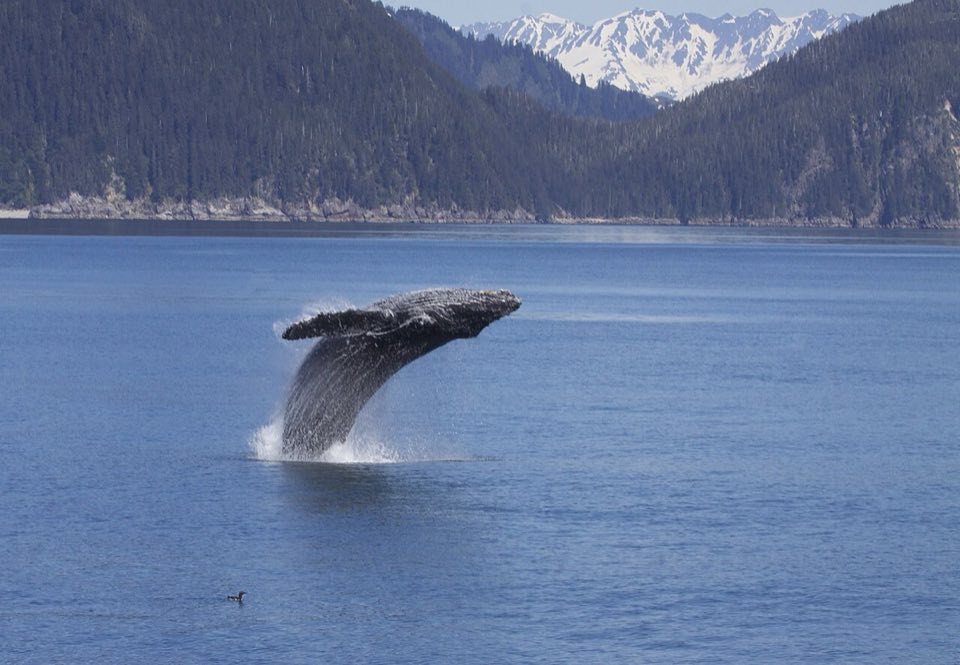
Humpback whale (Megaptera novaeangliae), with Atlantic humpback dolphin and bottlenose dolphin inshore. Western Region coast (Dixcove, Busua, Cape Three Points, Axim), Ghana.
Best time: 15 Aug – 31 Oct (August to October). Where: Cape Three Points – lighthouse headland, Busua / Dixcove – fishing canoes (Ghana). Time of day: Sea-state matters more than clock time: the calmest water is usually the first three hours after sunrise.
- You can go on your own
- Free
- Telescope recommended
- Sound 3/5
Open it in the interactive calendarSunrise and sunset listening times for the day you pick, and the map.
When is the best time?
Peak: 15 Aug – 31 Oct. Mid August to October, the Gulf of Guinea breeding season of the southern-hemisphere population
Active from 15 Jul to 30 Nov (July to November) in a typical year.
Time of day
Sea-state matters more than clock time: the calmest water is usually the first three hours after sunrise
- Calm-sea watch: sunrise → 3 h after sunrise
What will you hear?
Blows and breaches from the headland; with a hydrophone from a canoe, song from singing males in the breeding season — the reason to come. Above water this is mostly a sighting.
Binoculars?
Telescope recommended. Whales pass the headland at 300 m to 2 km; a scope from the lighthouse point, binoculars from the canoe.
Where to go
- Cape Three Points – lighthouse headland — Ghana's southernmost point; whales pass close to the headland. Ecolodge at Akwidaa. Map
- Busua / Dixcove – fishing canoes — Local canoe hire for hydrophone drops; agree the route and engine-off periods before leaving. Map
How to go on your own, and what it costs
Walk to the Cape Three Points lighthouse headland from Akwidaa (public path, tip for the lighthouse keeper) and watch from the point in the first hours after sunrise. Canoe hire from Busua or Dixcove is a private negotiation with the fishermen.
Cost: Free from the headland; canoe hire negotiable, check current prices.
Field-recording notes
Whale watching is not organised in Ghana; it is a matter of hiring a canoe and asking the fishermen where the 'big fish' have been. Canoe outboards, seismic survey and the Jubilee oil-field traffic are the underwater noise floor along this coast. Strandings are followed by the Wildlife Division and local NGOs; report any. Keep 100 m from animals and never put the canoe between a mother and calf. Timing here is less documented than in Gabon or Cameroon — treat the window as a best estimate and ask locally.
Sources
Similar spectacles
 Conkouati-Douli: humpback whales and leatherback nestingBlows and breaches from the beach, humpback song on a hydrophone from a drifting pirogue, and at night the digging and heavy breathing of a leatherback on a wild beach with no lights for 50 km; chimpanzees pant-hooting from the lagoon islands at dawn.
 Humpback whales off Ouidah and Grand-PopoBlows, breaches and tail slaps from the boat; with a hydrophone over the side and the engine off, humpback song in the breeding season.
 Humpback whales off KribiBlows, breaches and tail slaps; with a hydrophone over the side and the engine cut, male song in the breeding season. Sousa dolphins hunt in the surf line off the estuaries.
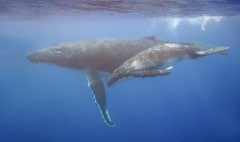 Humpback mothers and calves off São Tomé and PríncipeBlows, tail-slaps and the slap of a breach carry over a flat sea; a hydrophone from a drifting boat in September finds singing males at depth. From the headlands it is a visual spectacle against the surf; the islands are quiet enough that a blow is heard from the cliff on a still evening.
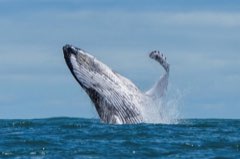 Humpback whales off Loango — the Gulf of Guinea breeding groundBlows and tail-slaps carry over a flat sea; a hydrophone over the side of a drifting boat in August picks up singing males — the real sound event is underwater. On shore, surf and the roar of the Atlantic swell dominate; the whales are a visual spectacle from the beach.
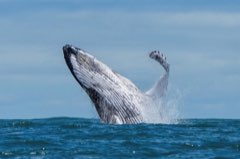 Humpback whales off Namibe and BenguelaBlows and breaches close inshore below desert cliffs, with a hydrophone over the side of a fishing boat: humpback song. Above water the Namib coast is fog, surf and cormorants.
More: all spectacles in Ghana · humpback whales · whales, dolphins and seals · August · Ghana in September · Ghana in October