
Atlantic humpback dolphins of the Saloum delta — the species' last stronghold
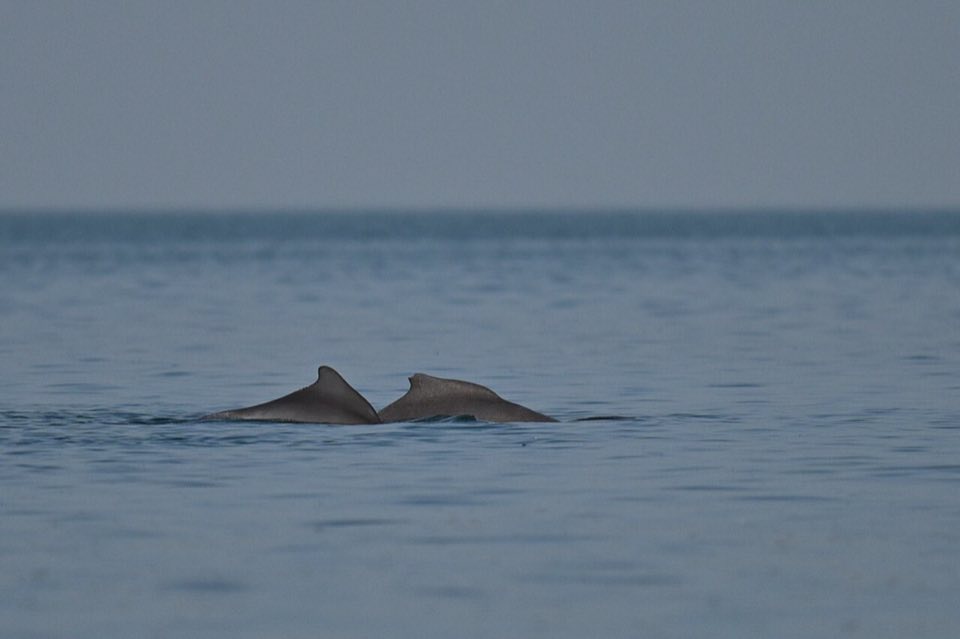
Atlantic humpback dolphin (Sousa teuszii, critically endangered; minimum 103 animals, the largest known population), with bottlenose dolphins at the mouth. Delta du Saloum — Diomboss and Saloum rivers, Toubacouta to Djifer, Senegal.
Best time: 15 Oct – 31 Mar (October to March). Where: Toubacouta, Bétenti and the lower Diomboss, Missirah (Senegal). Time of day: First three hours after sunrise on a rising tide, when groups of up to 30 hunt along the mangrove edges of the Diomboss within a few hundred metres of shore.
- Partly on your own
- Low cost
- Binoculars helpful
- Sound 3/5
Open it in the interactive calendarSunrise and sunset listening times for the day you pick, and the map.
When is the best time?
Peak: 15 Oct – 31 Mar. Resident all year; the calmest water and the most sightings are October to March (newborn calves seen in November; annual surveys run Oct–Nov and Feb–March)
Active from 1 Jan to 31 Dec (all year) in a typical year.
Time of day
First three hours after sunrise on a rising tide, when groups of up to 30 hunt along the mangrove edges of the Diomboss within a few hundred metres of shore; the wind rises by late morning
- Morning pirogue: sunrise → 3 h after sunrise
Depends on the tide: best around high tide. Check local tide tables.
What will you hear?
Through a hydrophone: whistles and click-trains of a species almost never recorded (the surveys deploy SoundTraps and F-PODs to build its first sound library). Above water: blows, the slap of a fluke, pied kingfishers, and the mangrove's own chorus of herons and fiddler crabs at low water.
Binoculars?
Binoculars helpful. Dolphins surface 50–300 m from the pirogue; binoculars help spot the low dorsal hump. Hydrophone matters more than optics.
Where to go
- Toubacouta — Main pirogue base for the Diomboss and the Bamboung marine protected area; lodges hire boats and boatmen. Dolphins recorded 20 km upstream of the Bandiala mouth here. Map
- Bétenti and the lower Diomboss — Island village on the Diomboss, the river with the highest relative abundance in the 2015 survey; pirogue from Toubacouta or Missirah. Map
- Missirah — Fishing village and pirogue base on the southern channel towards the Bandiala mouth. Map
- Djifer point (Saloum mouth) — Sandspit where the Saloum meets the sea: dolphins pass the mouth and are watched free from the beach; bottlenose dolphins here too. Map
How to go on your own, and what it costs
Sept-place or bus to Toubacouta (via Kaolack or Fatick, about 5 h from Dakar) or to Djifer via Joal and Palmarin. Hire a pirogue and boatman at a lodge or in the village for a dawn trip on the Diomboss (3–4 h); the boatmen know where the dolphins were yesterday. No guide required by law outside the park's protected islands, but the community MPAs charge entry.
Cost: Pirogue with boatman about 25,000–40,000 CFA for a half day (negotiated locally, recent trip reports); Bamboung MPA entry a few thousand CFA; free from the Djifer beach. Check current prices.
Free or no-guide alternative: Walk to the end of the Djifer sandspit at sunrise on a rising tide: humpback and bottlenose dolphins work the Saloum mouth a few hundred metres off the beach. Free, no boat.
Who runs access
- African Aquatic Conservation Fund — Saloum Sousa project (research project) — Research NGO running the annual surveys with the park and MPAs; occasional volunteer or training places, not tours.
Field-recording notes
The species is extremely shy of boats: approach slowly, parallel, engine idling or off, never between mother and calf — one disturbance and the group is gone up a bolong. Hydrophone from an anchored pirogue, engine off, on a slack or rising tide; the main noise is other pirogues' outboards and the Foundiougne ferry. Mangrove channels are quiet otherwise. The delta is a national park and biosphere reserve: a DPN permit is needed for research or commercial recording, and the marine protected areas (Bamboung) have their own community rules and fees. Dry-season harmattan haze; mosquitoes at dusk.
Sources
- Sousa teuszii consortium – Atlantic humpback dolphins in the Saloum Delta: distribution, relative abundance and photo-ID (Weir 2016; 103 animals, Diomboss)
- Sousa teuszii consortium – Preliminary results of the 2021 and 2022 Saloum surveys (acoustic recorders, group sizes)
- AACF – Back on the boat in the Saloum Delta (February 2025 survey, 17 sightings, SoundTraps)
- Sousa teuszii consortium – Senegal country page (Djifer, Ndangane, Bandiala, Djinack records)
Similar spectacles
 Iroise: grey seals of Molène and Sein dolphinsSeal moans and pup calls from the reef islets, a resident bottlenose pod around Sein and Molène, and the Iroise swell — France's most oceanic soundscape.
 Imraguen mullet fishing with dolphins, Banc d'ArguinMen slapping the surface with sticks to call the dolphins, the dolphins' blows as they drive the shoal into the shallows, and the whole village on the beach hauling nets. Rare now — most mullet are taken by lanche — so ask in the village whether a beach net is planned.
 The Sado's resident bottlenose dolphinsA visual spectacle above water — blows and the slap of a breach — but a hydrophone over the side of the ferry or a kayak in the channel catches the clicks and whistles of a small, closely studied pod; the estuary is otherwise ferry engines, the Setúbal docks and the Atlantic swell at the bar.
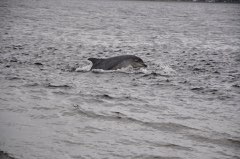 Bottlenose dolphins from the shoreWith a hydrophone: whistles, clicks, and burst pulses. Above water: blows and splashes very close to shore.
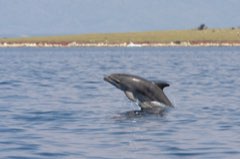 Bottlenose dolphins of the Kvarnerić, LošinjWith a hydrophone: whistles, echolocation click trains and burst-pulse squawks; above water, blows and tail-slaps; unfortunately also every outboard within 10 km.
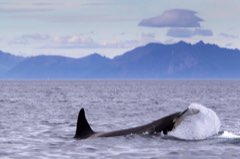 Orcas and humpbacks on the winter herring, SkjervøyWith a hydrophone: orca calls, whistles and echolocation from several pods carousel-feeding, humpback social sounds and feeding calls, the hiss of a herring ball being tail-slapped; above water, blows, tail-slaps and the roar of a humpback lunge; fishing vessels' sonar and engines.
More: all spectacles in Senegal · dolphins · whales, dolphins and seals · Senegal in January · Senegal in February · Senegal in March · Senegal in October · Senegal in November · Senegal in December