
Orcas hunting bluefin tuna in the Strait
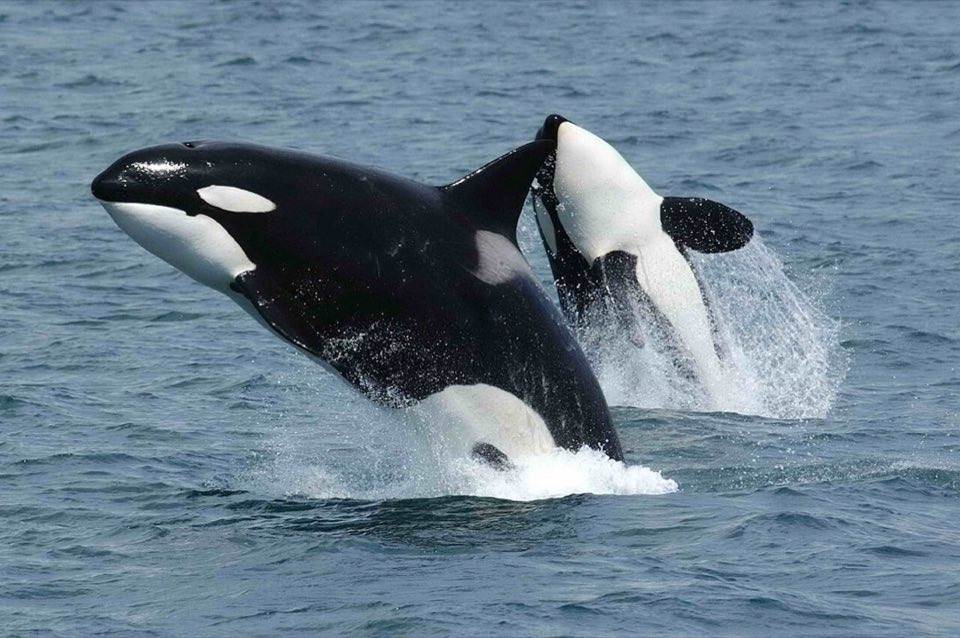
Orca (Orcinus orca), Iberian subpopulation; pilot whales, sperm whales, common & striped dolphins. Strait of Gibraltar, Tarifa / Barbate, Spain.
Best time: 1 Jul – 31 Aug (July to August). Where: Puerto de Tarifa (harbour), Barbate (Spain). Time of day: Half-day trips (typically morning and afternoon sailings, check sailing times) — the morning sailing has the calmest sea.
- Guide, ranger or boat needed
- Paid trip only
- Binoculars helpful
- Sound 3/5
Open it in the interactive calendarSunrise and sunset listening times for the day you pick, and the map.
When is the best time?
Peak: 1 Jul – 31 Aug. July–August (orcas follow the tuna and the Moroccan longliners); spring group off Barbate Apr–May
Active from 1 Apr to 15 Oct (April to October) in a typical year.
Time of day
Half-day trips (typically morning and afternoon sailings, check sailing times) — the morning sailing has the calmest sea; whales are active at any hour, so the boat's engine-off stops are the window.
- Morning boat (check times): 09:00 → 13:00
What will you hear?
With a hydrophone: orca calls and echolocation, pilot whale whistles, and the tuna-boat engines they hunt around. Above water: blows, and the shouts from the fishing boats.
Binoculars?
Binoculars helpful. Orcas within 60 m of the boat when found; binoculars help spot blows, a hydrophone matters more.
Where to go
- Puerto de Tarifa (harbour) — Licensed whale-watching boats leave from here, some research-linked; about 70% orca success in season. Map
- Barbate — Spring orca group and the tuna 'almadraba' nets in May. Map
How to go on your own, and what it costs
Boat only: licensed whale-watching boats sail from Tarifa harbour (trips of about 2 h, several sailings a day from late morning, season to early November) and from Barbate in spring. Ask for engine-off listening stops; 60 m rule and a three-boat limit apply.
Cost: Whale-watching trips from Tarifa about €40–60 per adult for 2 h (2026 season; check current prices).
Free or no-guide alternative: Land-based and free: the Torre del Tajo cliff viewpoint in La Breña park above Barbate overlooks the almadraba waters where the spring orcas hunt tuna (April–May), and Punta Carnero/Tarifa's Isla de las Palomas causeway give the Strait in summer. A scope and luck are needed.
Field-recording notes
Only about 40–50 Iberian orcas remain (Critically Endangered); Spanish law sets a 60 m minimum, no more than three boats, and the Strait's whale-watch operators are licensed. Ferries Tarifa–Tanger and the shipping lane are heavy underwater noise. Ask the skipper for engine-off listening stops; the research-linked boats welcome acoustic work.
Sources
Similar spectacles
 Orcas and humpbacks on the winter herring, SkjervøyWith a hydrophone: orca calls, whistles and echolocation from several pods carousel-feeding, humpback social sounds and feeding calls, the hiss of a herring ball being tail-slapped; above water, blows, tail-slaps and the roar of a humpback lunge; fishing vessels' sonar and engines.
 Sperm whales of the Bleik canyon, AndenesWith a hydrophone: sperm whale click trains and creaks from 1,000 m down (the operators locate whales acoustically), occasional codas; above water, the explosive blow every 10–15 s at the surface and the tail-fluke dive; fulmars and gannets around the boat.
 Conkouati-Douli: humpback whales and leatherback nestingBlows and breaches from the beach, humpback song on a hydrophone from a drifting pirogue, and at night the digging and heavy breathing of a leatherback on a wild beach with no lights for 50 km; chimpanzees pant-hooting from the lagoon islands at dawn.
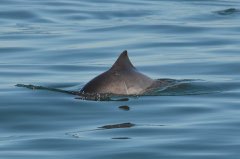 Harbour porpoises in the Little BeltPorpoises are silent to the ear (their clicks are at 130 kHz) — a hydrophone with a wideband recorder gets the click trains; audibly, the sharp puff of a surfacing blow a few metres off the rocks at Røjle Klint, and the Old Little Belt Bridge traffic.
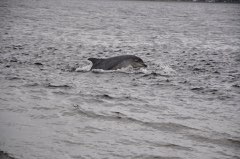 Bottlenose dolphins from the shoreWith a hydrophone: whistles, clicks, and burst pulses. Above water: blows and splashes very close to shore.
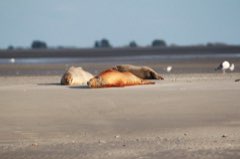 Baie de Somme: harbour seals & wader roostsSeal pups bawling and adults grunting from the sandbanks at 300 m, oystercatcher and curlew roosts, and spoonbills clattering in the Marquenterre heronry.
More: all spectacles in Spain · orcas · whales, dolphins and seals · Spain in July · Spain in August