
Orcas and humpbacks on the winter herring, Skjervøy
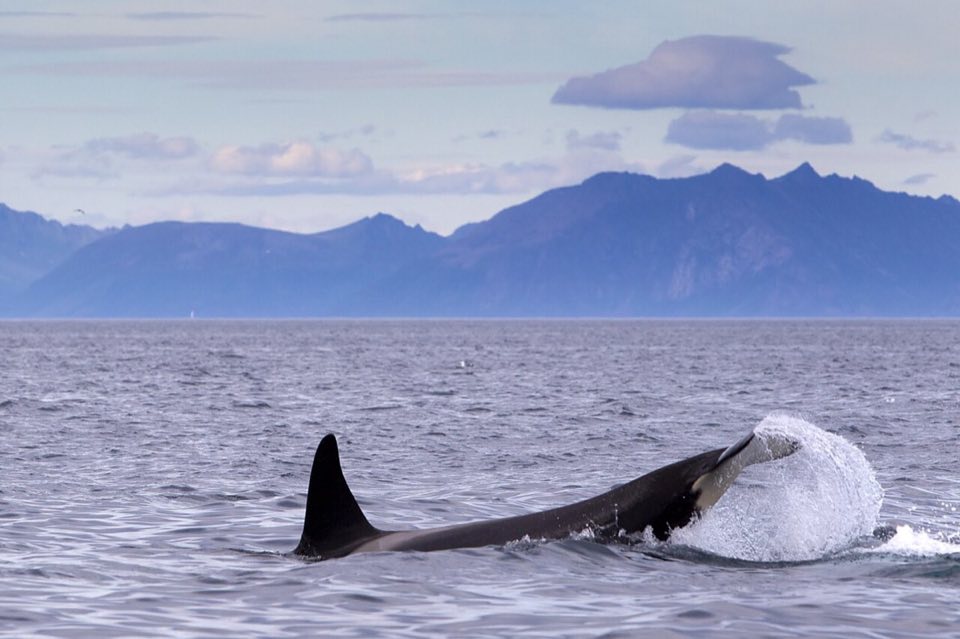
Orca (Orcinus orca), humpback whale (Megaptera novaeangliae), fin whale occasionally; the herring itself. Skjervøy / Kvænangen / Lyngenfjord, north of Tromsø, Norway.
Best time: 10 Nov – 10 Jan (November to January). Where: Skjervøy harbour (departures for Kvænangen), Kvænangen fjord (Burfjord side), Tromsø (long-transit day trips) (Norway). Time of day: Boats sail in the only usable light, about 10:00–14:00 in November–January.
- Guide, ranger or boat needed
- Paid trip only
- Binoculars helpful
- Sound 5/5
Open it in the interactive calendarSunrise and sunset listening times for the day you pick, and the map.
When is the best time?
Peak: 10 Nov – 10 Jan. 10 November to 10 January — in polar night from late November, so the 'day' is a few hours of blue twilight
Active from 25 Oct to 31 Jan (October to January) in a typical year.
Time of day
Boats sail in the only usable light, about 10:00–14:00 in November–January; underwater the fjords are active 24 h, so engine-off drifts anywhere in the sailing window are the recording.
- Daylight sailing: 10:00 → 14:00
What will you hear?
With a hydrophone: orca calls, whistles and echolocation from several pods carousel-feeding, humpback social sounds and feeding calls, the hiss of a herring ball being tail-slapped; above water, blows, tail-slaps and the roar of a humpback lunge; fishing vessels' sonar and engines.
Binoculars?
Binoculars helpful. Whales surface within 50 m of the boat; binoculars help spot blows in the blue light, a hydrophone matters more.
Where to go
- Skjervøy harbour (departures for Kvænangen) — Smaller boats and shorter transits than Tromsø; the herring has wintered here since 2017. Book operators with hydrophones and slow boats. Map
- Kvænangen fjord (Burfjord side) — Feeding grounds; whales follow the herring and the purse-seine fleet. Map
- Tromsø (long-transit day trips) — 3 h each way to the whales in winter; good for hydrophone drops on the way only if the operator idles. Map
How to go on your own, and what it costs
Boat only for close work: operators sail from Skjervøy (short transits) and Tromsø (3 h each way) in the few hours of light, 10:00–14:00; choose a slow boat with hydrophones or a sailing boat that drifts engine-off. 50 m rule, three boats per group, no chasing.
Cost: Whale safaris from Skjervøy (check current prices, 2026).
Free or no-guide alternative: Free, land-based: when the herring is close in, orcas and humpbacks are regularly seen from Skjervøy's waterfront and the Fv866 road along Kvænangen — blows and fins from the shore, no underwater sound.
Field-recording notes
The whales are here because the fishery is here: dozens of purse-seiners with sonar pinging (audible on a hydrophone as constant chirps) and engines — that is the true soundscape and worth documenting, but for clean orca calls you need an operator willing to drift with engine off away from the fleet; sailing-boat expeditions do this. Norwegian guidelines: 50 m for RIBs, no more than 3 boats per group, no chasing; snorkelling operations exist and are controversial — the cleanest acoustic access is from a drifting boat. Conditions: -5 to -15 °C, spray freezes on gear, 3–4 h of light; hydrophone cables stiffen. The herring's arrival varies by weeks — follow operator reports in October.
Sources
Similar spectacles
 Conkouati-Douli: humpback whales and leatherback nestingBlows and breaches from the beach, humpback song on a hydrophone from a drifting pirogue, and at night the digging and heavy breathing of a leatherback on a wild beach with no lights for 50 km; chimpanzees pant-hooting from the lagoon islands at dawn.
 Fin and humpback whales from the south-coast headlandsFrom the cliffs: surf, gulls, choughs and the wind; on the calmest days a distant blow can be heard. The whales are a visual event; underwater sound needs a boat and a hydrophone.
 Humpback whales breeding in Sal Rei bay, Boa VistaThe only place on the flyway to put a hydrophone on singing North Atlantic humpbacks: long structured songs that carry kilometres through the bay, plus the slap and crack of breaches and pectoral slaps on calm mornings. Above water it is wind, surf and the outboard.
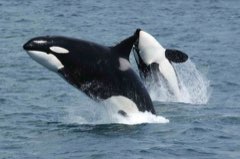 Orcas hunting bluefin tuna in the StraitWith a hydrophone: orca calls and echolocation, pilot whale whistles, and the tuna-boat engines they hunt around. Above water: blows, and the shouts from the fishing boats.
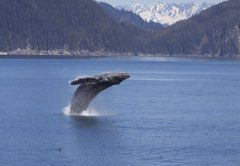 Humpback whales off Cape Three PointsBlows and breaches from the headland; with a hydrophone from a canoe, song from singing males in the breeding season — the reason to come. Above water this is mostly a sighting.
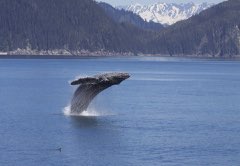 Humpback whales off Ouidah and Grand-PopoBlows, breaches and tail slaps from the boat; with a hydrophone over the side and the engine off, humpback song in the breeding season.
More: all spectacles in Norway · orcas · humpback whales · whales, dolphins and seals · January · November · December