
Fin whales & sperm whales, Pelagos Sanctuary
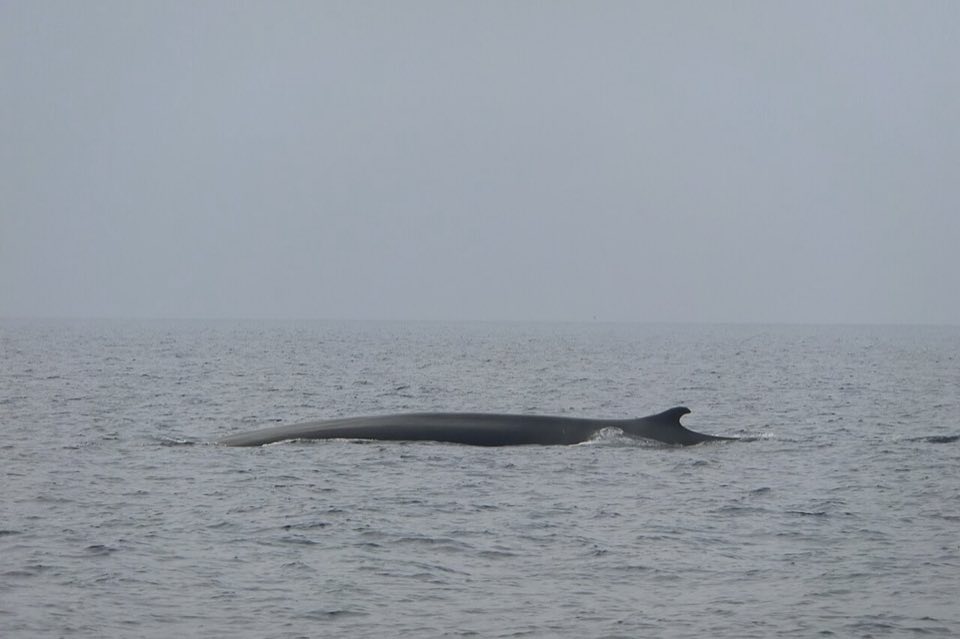
Fin whale, sperm whale, striped dolphin, Risso's dolphin. Ligurian Sea, Italy.
Best time: 1 Jul – 31 Aug (July to August). Where: Genoa – whale-watching departures (Porto Antico), Tethys Research Institute cruises, Imperia (Italy). Time of day: Day trips typically leave 08:00–09:00 and return mid afternoon.
- Guide, ranger or boat needed
- Paid trip only
- Binoculars helpful
- Sound 3/5
Open it in the interactive calendarSunrise and sunset listening times for the day you pick, and the map.
When is the best time?
Peak: 1 Jul – 31 Aug. July–August
Active from 1 May to 30 Sep (May to September) in a typical year.
Time of day
Day trips typically leave 08:00–09:00 and return mid afternoon; the useful listening is at engine-off stops, and morning seas are calmest. Check operator sailing times.
- Boat trip (check times): 08:00 → 15:00
What will you hear?
With a hydrophone: sperm whale clicks and codas, dolphin whistles. Fin whale calls are infrasonic (about 20 Hz) and need a suitable hydrophone.
Binoculars?
Binoculars helpful. Blows 20–40 km offshore from the boat; binoculars help find fin whales, hydrophone matters more.
Where to go
- Genoa – whale-watching departures (Porto Antico) — Research-linked whale-watching day trips sail from the old port. Map
- Tethys Research Institute cruises, Imperia — Volunteer research cruises with acoustic monitoring. Map
How to go on your own, and what it costs
The whales are 20–40 km out over the canyon: the only way is a boat. Research-linked whale-watching day trips run from Genoa and week-long Tethys research cruises sail from Sanremo/Imperia. Ask the skipper for engine-off listening stops.
Cost: Whale-watching day trips from Genoa (check current prices); Tethys Cetacean Sanctuary Research 6-day cruises €800 per person (2026; last-minute offers from €680).
Free or no-guide alternative: No reliable free option: fin and sperm whales stay far offshore. In calm summer weather the Portofino promontory paths (Punta Chiappa, San Fruttuoso) and Capo Noli give a free look over deep water with a scope — occasional distant blows, never guaranteed.
Who runs access
- Tethys Research Institute – Cetacean Sanctuary Research cruises (research project) — Week-long volunteer research cruises with acoustic monitoring.
Field-recording notes
Boat engine noise dominates underwater — ask the skipper to cut the engine during listening stops. Shipping lanes to Genoa add constant low-frequency noise.
Sources
Similar spectacles
 Sperm whales of the Bleik canyon, AndenesWith a hydrophone: sperm whale click trains and creaks from 1,000 m down (the operators locate whales acoustically), occasional codas; above water, the explosive blow every 10–15 s at the surface and the tail-fluke dive; fulmars and gannets around the boat.
 Fin whales & sperm whales off the Côte d'AzurWith a hydrophone: sperm whale clicks and codas, striped dolphin whistles and the shipping lane behind. Fin whale 20 Hz pulses need a hydrophone with real LF extension.
 Conkouati-Douli: humpback whales and leatherback nestingBlows and breaches from the beach, humpback song on a hydrophone from a drifting pirogue, and at night the digging and heavy breathing of a leatherback on a wild beach with no lights for 50 km; chimpanzees pant-hooting from the lagoon islands at dawn.
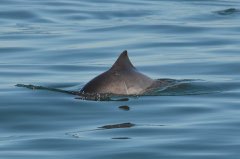 Harbour porpoises in the Little BeltPorpoises are silent to the ear (their clicks are at 130 kHz) — a hydrophone with a wideband recorder gets the click trains; audibly, the sharp puff of a surfacing blow a few metres off the rocks at Røjle Klint, and the Old Little Belt Bridge traffic.
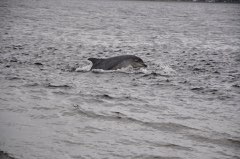 Bottlenose dolphins from the shoreWith a hydrophone: whistles, clicks, and burst pulses. Above water: blows and splashes very close to shore.
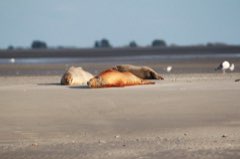 Baie de Somme: harbour seals & wader roostsSeal pups bawling and adults grunting from the sandbanks at 300 m, oystercatcher and curlew roosts, and spoonbills clattering in the Marquenterre heronry.
More: all spectacles in Italy · sperm whales · whales, dolphins and seals · Italy in July · Italy in August