
Wildlife spectacles in France
30 spectacles through the year, ordered by when they peak. Open France in the interactive calendar for the map and listening times.
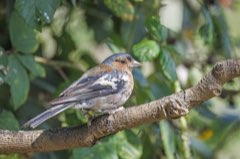 Spring migration counts: Col de l'Escrinet, Pointe de Grave and Le HucelA river of chaffinch flight calls over the col at dawn, meadow pipits, serins and linnets in the flocks, woodpigeon wing-clatter, cranes bugling northwards in March, and at Pointe de Grave the May sound of swifts screaming low over the dunes and bee-eaters calling in off the Gironde — one of the few places in France where spring migration is a sound you can stand under.
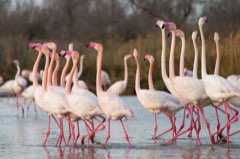 Flamingo colonies of the CamargueGoose-like honking from thousands of birds, the massed 'marching' displays, and flights of hundreds passing low over the étangs at dusk.
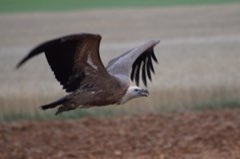 Vulture cliffs of the Jonte, Verdon and OssauWing-rush of griffons passing a few metres over the rim, hissing and grunting from the colony ledges, chough flocks and the river below; more a sight than a sound.
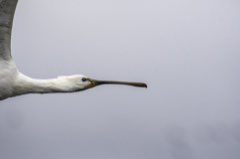 Lac de Grand-Lieu: the great heronry and the spoonbill colonyHeron and egret traffic croaking and barking overhead at dawn and dusk, black terns and whiskered terns squabbling over the water lilies, Savi's warbler reeling and a booming bittern from the reedbeds at Pierre-Aiguë, cuckoos and water rails — the colony itself is heard only as a distant, constant squabble across the water.
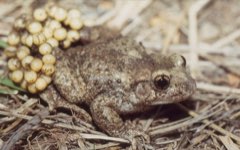 Midwife toad piping in the villagesPure, bell-like single notes at about 1.2 kHz from dozens of males in dry-stone walls and rubble, like an out-of-tune carillon across a whole valley.
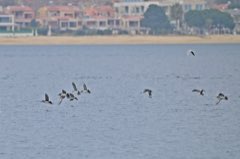 Shearwater colonies: Îles d'Hyères and LavezziWailing and cackling shearwaters arriving over the cliffs at night to their burrows — Port-Cros holds about 90% of France's Yelkouan population — with the Mediterranean swell below.
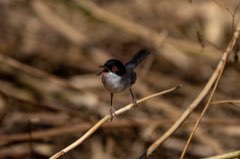 Garrigue dawn chorusA Mediterranean chorus quite different from the north: rattling Sardinian warblers, woodlark descending phrases, hoopoes, nightingales in every gully, bee-eaters overhead and cicada-free silence between.
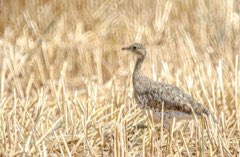 La Crau steppe: little bustard, sandgrouse & stone-curlewLittle bustards' dry 'prrrt' with a foot-stamp and wing-whirr jump, sandgrouse 'catar-catar' flights to drinking pools, calandra larks in continuous song-flight, stone-curlews at dusk.
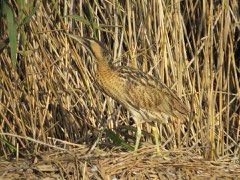 Marsh dawn chorus: Brière and DombesBittern booms across the reed, great reed warbler rasps, bluethroat song from the willows, heronries croaking, whiskered terns overhead, and a marsh frog chorus that runs all night.
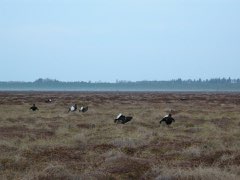 Black grouse leks in the AlpsBubbling 'rookooing' and hissing from males on snow patches at the treeline, ring ouzels, water pipits, and meltwater.
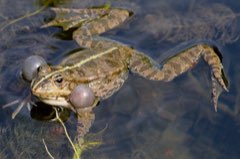 Marsh frog & tree frog chorusesWall-to-wall marsh frog laughter from the Camargue ditches, ratcheting tree frogs from Brenne ponds, and natterjacks rolling across the Landes dune slacks.
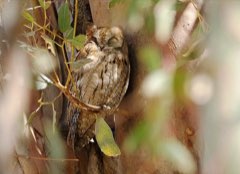 Provençal nights: nightingale, scops owl & stone-curlewNightingales in every tamarisk, scops owls' 'tiu' on a 2–3 s metronome, stone-curlew wails from the Crau, nightjars churring on the garrigue, tree frogs from the marsh.
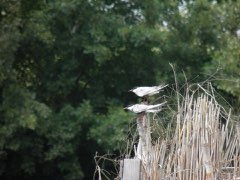 Brenne, land of a thousand pondsWhiskered tern colonies chattering over the water-lily beds, purple herons, little bittern barks, black-necked grebe trills, and at night a tree frog chorus from every pond.
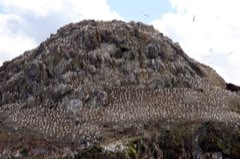 Sept-Îles: gannets on Rouzic, puffins and auksFrance's only gannet colony (about 14,000 pairs on Rouzic) as a wall of grating calls from the boat, puffins and kittiwakes on the sea, and the Atlantic swell against the granite.
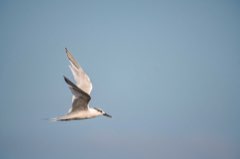 Banc d'Arguin terns & Arcachon brent geeseA grating Sandwich tern colony of thousands of pairs on a sandbank in the Atlantic swell; in winter, the rolling 'rronk' of brent flocks on the eelgrass beds.
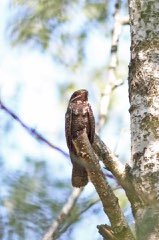 Nightjars and woodlarks of the Landes pine forestChurring nightjars from every clear-fell in Europe's largest planted forest, woodlarks still singing at dusk, and the surf from the Atlantic dunes if you are near the coast.
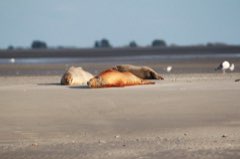 Baie de Somme: harbour seals & wader roostsSeal pups bawling and adults grunting from the sandbanks at 300 m, oystercatcher and curlew roosts, and spoonbills clattering in the Marquenterre heronry.
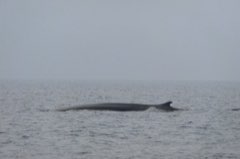 Fin whales & sperm whales off the Côte d'AzurWith a hydrophone: sperm whale clicks and codas, striped dolphin whistles and the shipping lane behind. Fin whale 20 Hz pulses need a hydrophone with real LF extension.
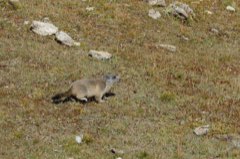 Mercantour summer: marmots, ibex and wolf countryMarmot alarm whistles across high cirques, ibex hooves on rock, alpine choughs and lammergeier wingbeats; wolf howls are possible but rare and never guaranteed.
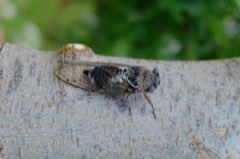 Cicadas of ProvenceThe Provence cliché done properly: Lyristes' continuous saw at 100+ dB from the pines, Cicada orni's pulsing ticks from the oaks, and a shift of species with the hour and the tree.
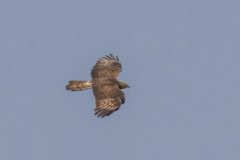 Pyrenean passes: raptor, stork, pigeon & crane migrationMostly visual, but woodpigeon flocks pass with a rush of wings, cranes bugle over the pass, and pre-dawn passerine flight calls stream through — with gunfire from the neighbouring hunting passes.
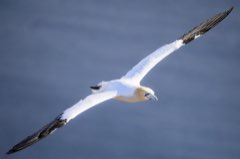 Cap Gris-Nez: seabird passage through the Dover StraitA visual passage — skuas harrying terns, gannet lines, scoter strings — above the one great sound of the place: the Channel breaking on the rocks 50 m below, with kittiwakes and the Gris-Nez foghorn in sea fog. Overland, meadow pipits and finches stream past calling on October mornings.
 Iroise: grey seals of Molène and Sein dolphinsSeal moans and pup calls from the reef islets, a resident bottlenose pod around Sein and Molène, and the Iroise swell — France's most oceanic soundscape.
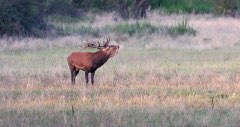 Brame du cerf — the great lowland forestsStags roaring across flat oak forest and heath — long, resonant bellows, antler clashes, hinds and calves moving; tawny owls between the roars.
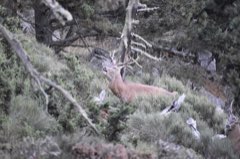 Brame du cerf in the mountainsRoars echoing between forested slopes with 3–4 s of valley reverb; several stags on opposing slopes answering each other.
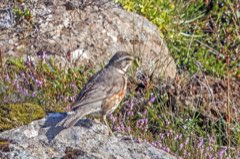 Autumn falls & nocmig on Ouessant and SeinRedwing and song thrush flight calls all night over the lighthouses, dawn passerine falls in the stone-walled fields, and shearwaters and gannets streaming past the headlands in a westerly.
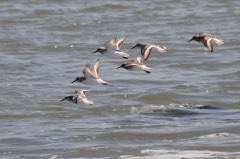 Baie de l'Aiguillon: wader roosts and winter geeseThe roar of 20,000 dunlin and plover lifting off the mud as the tide covers it, godwit and curlew flocks calling as they cross the dyke, wigeon whistling by the thousand on winter mornings, greylags at dawn and, in December, cranes bugling in to roost over the marsh.
 Cranes at Lac du DerTens of thousands of cranes bugling as they leave the lake at first light in wave after wave, then the evening return with the sky full of trumpeting skeins.
 Ibex, chamois & isard rutHorn clashes echoing off rock, snorting and hissing males chasing across scree, and the snow-muffled silence of winter valleys.
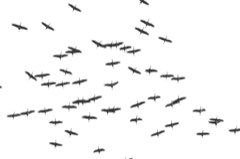 Wintering cranes at ArjuzanxWaves of cranes dropping into the flooded roost after dark, a continuous rolling chorus that carries for kilometres over the pine plantations.