
Lac de Grand-Lieu: the great heronry and the spoonbill colony
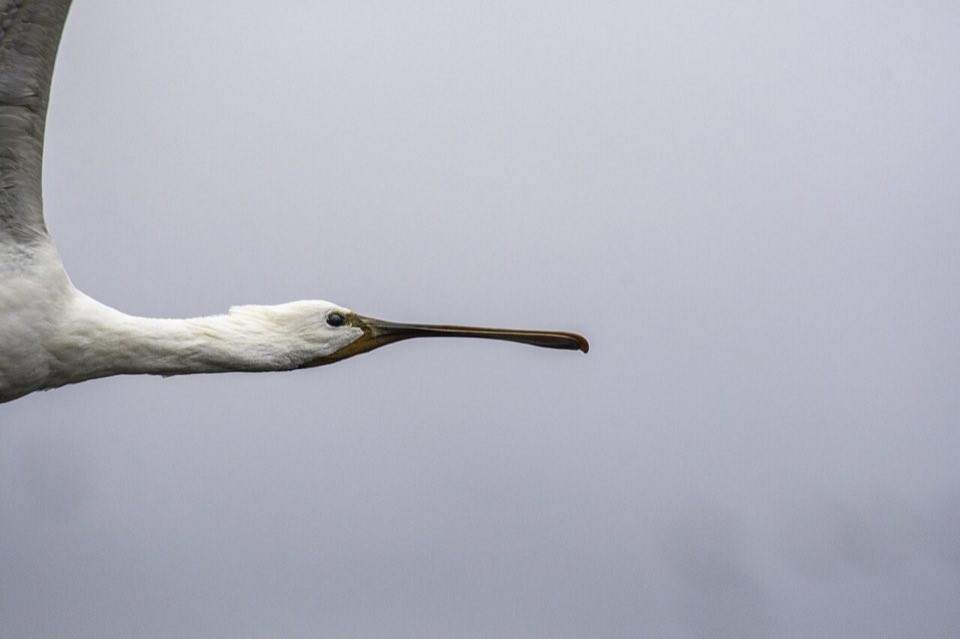
Grey heron (c. 700 pairs), purple & night heron, squacco heron, little & cattle egret, spoonbill (30–50 pairs, France's first colony), black tern (50–120 pairs), black-winged stilt, bittern, Savi's warbler. Lac de Grand-Lieu, Loire-Atlantique (south-west of Nantes), France.
Best time: 1 Apr – 15 Jun (April to June). Where: Maison du Lac de Grand-Lieu, Bouaye, Passay – Maison des Pêcheurs tower, La Chevrolière, Pierre-Aiguë, Saint-Aignan-Grandlieu (France). Time of day: Colony traffic is heaviest in the 2 h after sunrise and the 2 h before sunset.
- Partly on your own
- Low cost
- Telescope recommended
- Sound 3/5
Open it in the interactive calendarSunrise and sunset listening times for the day you pick, and the map.
When is the best time?
Peak: 1 Apr – 15 Jun. April to mid June: herons feeding chicks in the flooded willow forest, spoonbills on the nests, black terns over the lily beds from May
Active from 1 Mar to 31 Jul (March to July) in a typical year.
Time of day
Colony traffic is heaviest in the 2 h after sunrise and the 2 h before sunset; the reed and marsh chorus (Savi's warbler, bittern, water rail) runs from an hour before dawn. Viewing points open at all hours; the Maison du Lac's Pavillon only with a guide in opening hours.
- Dawn chorus and colony flights: 1 h before sunrise → 2 h after sunrise
- Evening return to the colony: 2 h before sunset → sunset
What will you hear?
Heron and egret traffic croaking and barking overhead at dawn and dusk, black terns and whiskered terns squabbling over the water lilies, Savi's warbler reeling and a booming bittern from the reedbeds at Pierre-Aiguë, cuckoos and water rails — the colony itself is heard only as a distant, constant squabble across the water.
Binoculars?
Telescope recommended. The heronry is deep in the flooded forest inside the closed reserve — you see the traffic, not the nests; a scope from Passay's tower or the Pavillon terrace (binoculars provided there).
Where to go
- Maison du Lac de Grand-Lieu, Bouaye — Departmental visitor centre on the north shore: exhibition, sound trail and the guided 'Pavillon' terrace over the lake with binoculars; booking, fee. Map
- Passay – Maison des Pêcheurs tower, La Chevrolière — Fishing village on the east shore with a panoramic observation tower; free access to the shore. Map
- Pierre-Aiguë, Saint-Aignan-Grandlieu — Reedbed shore access on the north side (lieu-dit La Pierre Aiguë, from the village); marsh chorus at dawn. Map
How to go on your own, and what it costs
The heronry is inside the closed national nature reserve; watch from the periphery. Free: Passay (La Chevrolière) — park in the village and climb the Maison des Pêcheurs tower / walk the shore; Pierre-Aiguë — footpath from Saint-Aignan-Grandlieu to the reedbed shore. Paid: the Maison du Lac at Bouaye (exhibition, sound trail, guided Pavillon terrace; book on its site, check hours, closed some days).
Cost: Passay and Pierre-Aiguë free; Maison du Lac entry fee (check current prices).
Free or no-guide alternative: Free: the Passay observation tower and shore on the east side at dawn, or the Pierre-Aiguë reedbed path on the north shore, give the colony flights and the marsh chorus without the visitor centre.
Who runs access
- Maison du Lac de Grand-Lieu (Département de Loire-Atlantique) (park authority) — Exhibition, sound trail and guided Pavillon visit on the lake shore; dawn birdwatching events in autumn
Field-recording notes
The reserve (2,700 ha, SNPN) is closed to all access — no boats, no walking, no drones; the colony cannot be approached and does not need to be: the shore points give the flights and the reedbed chorus. Nantes airport's approach path crosses the lake (first flights from about 06:00); the north shore is noisier than Passay. Hunting is banned on the lake but allowed around it in autumn and winter, not in the heronry season. Pierre-Aiguë at dawn in May is the quiet option.
Sources
- SNPN – Réserve naturelle nationale du lac de Grand-Lieu
- Maison du Lac de Grand-Lieu (Département de Loire-Atlantique)
- Wikipedia (FR) – Lac de Grand-Lieu: colonies (700 pairs grey heron, 30–50 spoonbill, black tern), access points
Similar spectacles
 Seabird and spoonbill colonies on the Banc d'Arguin islandsRoyal and Caspian tern colonies screaming, pelican colonies grunting, spoonbill bill-clacking at the nest, and slender-billed gull chatter across the water from a stationary boat.
 Tree-nesting white stork colony, March floodplainBill-clattering across a colony of 40–50 nests in the oak canopy, chick hissing, black-headed gulls from the oxbows, oriole, nightingale, tree frogs and fire-bellied toads in the flooded meadows, Konik horses.
 Heronries, cormorant colonies and spring flood chorus, Kopački ritCroaking, bill-snapping heronries in flooded willows, cormorant grunts, spoonbill chick begging, eagle yelps, fire-bellied toad and marsh frog choruses under everything, cuckoo, golden oriole.
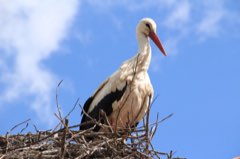 White stork village and floodplain summer, Lonjsko poljeBill-clattering duets from every rooftop, chick hissing and begging, spoonbill and heron colonies, marsh and pool frogs from the oxbows, corncrake and quail in the meadows at night, cattle bells and village life.
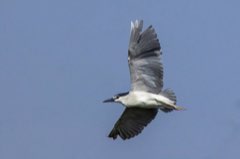 Heron colonies ('garzaie')Croaking, gargling colony noise, night heron 'quok' calls at dusk, begging chicks.
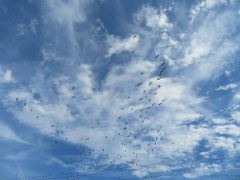 Fuente de Piedra: the great flamingo colonyTwenty thousand flamingos honking, growling and gabbling across a flat salt lagoon — the colony is a continuous roar from kilometres away on a still morning — with the goose-like flight calls of flocks commuting to feed, gull-billed terns and stilts yelping over the shallows.
More: all spectacles in France · spoonbills · stork, heron and flamingo colonies · France in April · France in May · France in June