
Cicadas of Provence
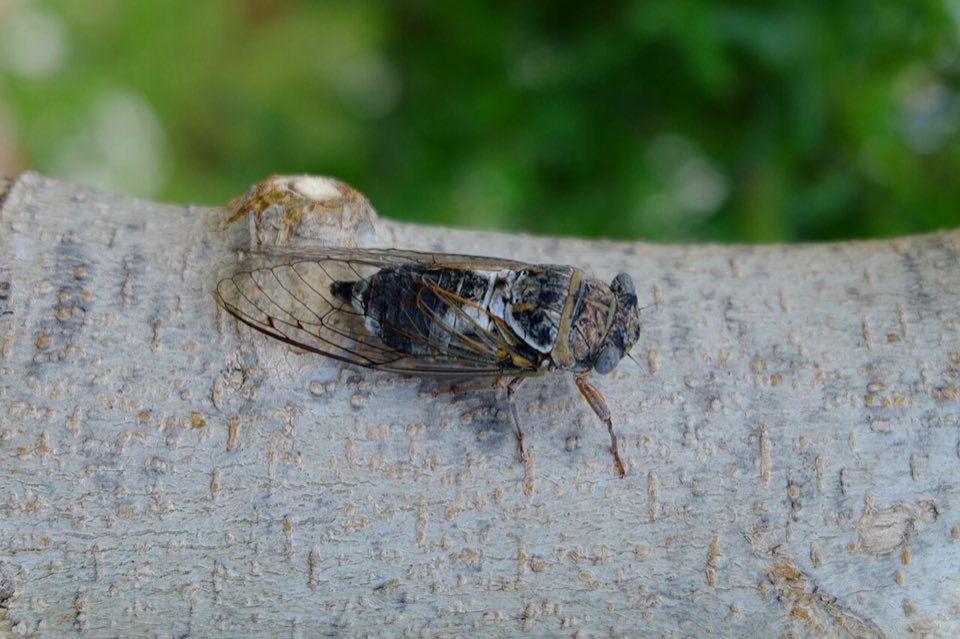
Lyristes plebejus, Cicada orni, Cicadatra atra, Tibicina haematodes. Provence, Var, Luberon, France.
Best time: 1 Jul – 20 Aug (July to August). Where: Luberon (Bonnieux / Forêt des Cèdres), Massif de la Sainte-Baume, Massif des Maures (Collobrières) (France). Time of day: Song starts once the sun warms the trees (about 09:30), builds to a wall from 11:00 to 17:00, and drops with the temperature.
- You can go on your own
- Free
- No binoculars needed
- Sound 5/5
Open it in the interactive calendarSunrise and sunset listening times for the day you pick, and the map.
When is the best time?
Peak: 1 Jul – 20 Aug. July to mid August; song starts above about 22°C
Active from 15 Jun to 10 Sep (June to September) in a typical year.
Time of day
Song starts once the sun warms the trees (about 09:30), builds to a wall from 11:00 to 17:00, and drops with the temperature; Lyristes sings on into dusk.
- Peak chorus: 11:00 → 17:00
What will you hear?
The Provence cliché done properly: Lyristes' continuous saw at 100+ dB from the pines, Cicada orni's pulsing ticks from the oaks, and a shift of species with the hour and the tree.
Binoculars?
No binoculars needed. Wall of sound from every tree; nothing to look through.
Where to go
- Luberon (Bonnieux / Forêt des Cèdres) — Oak and cedar; villages nearby, but the hillsides are quiet by day. Map
- Massif de la Sainte-Baume — Old-growth forest on the north face; pines and garrigue on the south. Map
- Massif des Maures (Collobrières) — Cork oak and chestnut; forest tracks closed to cars in high fire-risk periods. Map
How to go on your own, and what it costs
Forest tracks are free: the Forêt des Cèdres road above Bonnieux, the Sainte-Baume forest car parks, the Maures tracks from Collobrières. Check the prefecture's daily fire-risk map in summer — massifs close on red days.
Cost: Free.
Field-recording notes
Pad the input; self-noise is irrelevant. Distance and a spaced pair give the spatial texture of a hillside; a single tree close-miked gives one species. In summer, Var and Bouches-du-Rhône close forest massifs on red fire-risk days — check the prefecture's daily map before driving in.
Sources
Similar spectacles
 Cicada summer of the Adriatic coastContinuous Cicada orni ticking at 5–8 kHz merging into a shimmer, Lyristes plebejus's louder pulsing song from pines, cricket chorus at night, scops owl, sea.
 Cicada summer chorusWall-of-sound cicada chorus in pinewoods and olive groves, with pulsing, overlapping rhythms of different species.
 Cicadas of the Spanish pinewoodsContinuous cicada chorus from Aleppo and stone pines — Cicada orni's ticking pulses over Lyristes' saw — with the sea and, at dusk, bush-crickets taking over.
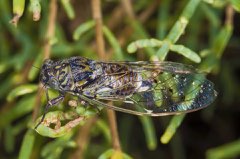 Cicadas of Ticino and the Valais rock steppesCicada orni ticking merging into a wall in the chestnut and oak woods, Lyristes pulsing from pines, grasshoppers on the steppe; in the Valais, bee-eaters and a föhn wind.
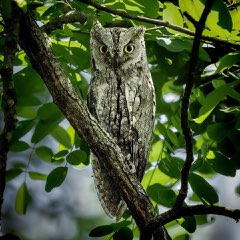 Karst nights: scops owl, nightjar and cicadasScops owl's monotone 'tyuh' every 2–3 s from village edges, nightjar churring on the dry meadows, sub-Mediterranean bush-cricket wall of sound, cicadas at 90+ dB at midday in July, eagle owl from the Vipava cliffs in late winter.
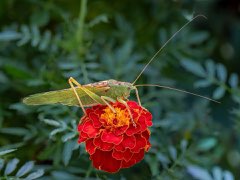 Late-summer bush-cricket & grasshopper chorusLoud sewing-machine buzz of great green bush-crickets from coastal scrub; ticking of dark bush-crickets; the electric drone of Roesel's in rough grassland.
More: all spectacles in France · cicadas · cicadas, crickets and fireflies · France in July · France in August