
Brenne, land of a thousand ponds
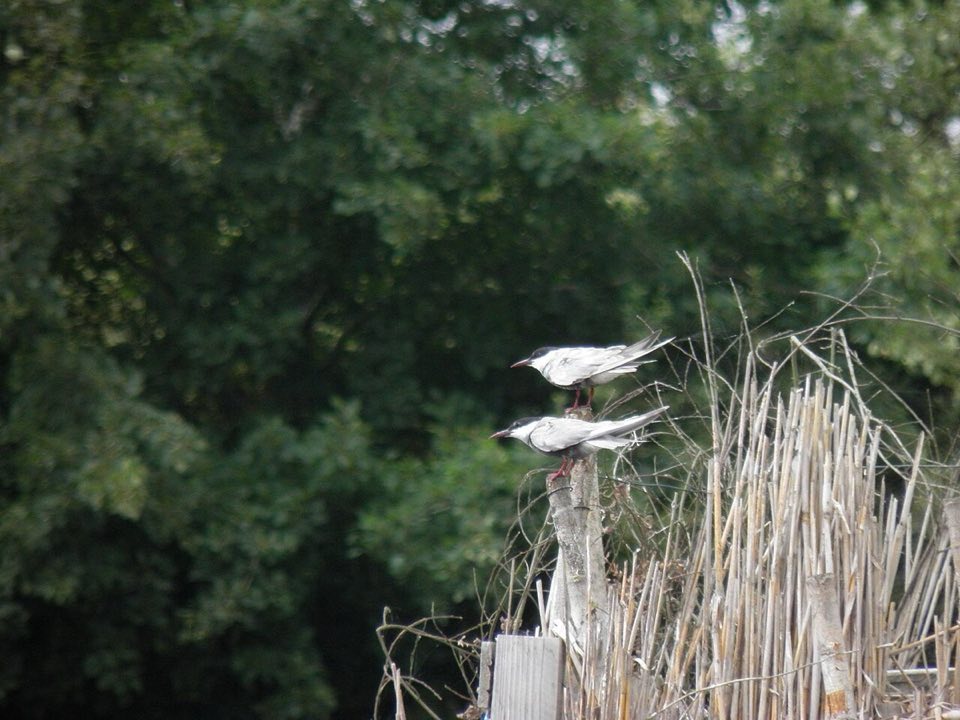
Whiskered tern, purple heron, little bittern, bittern, black-necked grebe, European pond turtle, tree frog. Indre, Centre-Val de Loire, France.
Best time: 1 May – 15 Jun (May to June). Where: Réserve naturelle de Chérine – Étang Purais observatory, Étang de la Mer Rouge, Maison du Parc, Le Bouchet (Rosnay) (France). Time of day: Tern colonies and marsh birds from 45 min before sunrise to mid morning, again in the 90 min before sunset.
- You can go on your own
- Free
- Binoculars helpful
- Sound 5/5
Open it in the interactive calendarSunrise and sunset listening times for the day you pick, and the map.
When is the best time?
Peak: 1 May – 15 Jun. May to mid June
Active from 1 Apr to 15 Jul (April to July) in a typical year.
Time of day
Tern colonies and marsh birds from 45 min before sunrise to mid morning, again in the 90 min before sunset; tree frogs start at dusk and peak 1–2 h after dark.
- Dawn chorus: 45 min before sunrise → 150 min after sunrise
- Dusk and tree frogs: 90 min before sunset → 2 h after last light
What will you hear?
Whiskered tern colonies chattering over the water-lily beds, purple herons, little bittern barks, black-necked grebe trills, and at night a tree frog chorus from every pond.
Binoculars?
Binoculars helpful. Terns hawk close over the lily beds; binoculars from the Purais observatories for herons and grebes.
Where to go
- Réserve naturelle de Chérine – Étang Purais observatory — Two public observatories; the reserve's core is closed. Guided outings by the reserve team. Map
- Étang de la Mer Rouge — Largest pond in the Brenne; roadside viewing. Map
- Maison du Parc, Le Bouchet (Rosnay) — Park information, maps of the observatories. Map
How to go on your own, and what it costs
Chérine: two free public observatories on the Étang Purais, reached from the D17 car park; the reserve core is closed and the reserve team runs paid guided outings. Étang de la Mer Rouge and the other observatories listed by the park are free roadside stops; the Maison du Parc at Le Bouchet has maps.
Cost: Free; Chérine guided outings paid (check current prices).
Field-recording notes
Ponds are private fish farms: observatories and roads only, no walking the banks. The Brenne is sparsely populated and dark at night — one of the quietest lowland areas in France. Hunting on the ponds from August; spring is clean apart from occasional light aircraft from Châteauroux.
Sources
Similar spectacles
 Midnight-sun taiga chorus in PasvikBluethroat and redwing song across bog and pine, brambling, cuckoo, whooper swans and cranes from the lakes, red-necked phalarope, spotted redshank, hawk owl screeching, the Pasvik river; a bear may pass — Norway's densest brown bear population.
 Tåkern: booming bitterns in Europe's biggest reedbedsThe deep, bottle-blown 'whump' of bitterns booming across the reeds, several males answering; reed, sedge and Savi's warblers, water rail squeals, cranes and geese; at Väversunda in late May the strange clicking display of great snipe towards nightfall.
 Thrush nightingale nights in eastern DenmarkThe thrush nightingale's slower, more percussive song than its southern cousin — loud whistles, clacking and rattles — from damp scrub, often several males in earshot; marsh warblers mimicking, woodcock roding overhead, cuckoo, grasshopper warbler.
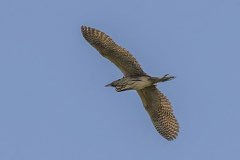 Vejlerne: bitterns, cranes and Northern Europe's largest reedbedsBittern booming from several directions at once, spotted crake whiplashes, water rail squeals, cranes trumpeting at dawn, bearded reedlings pinging, greylag families, black terns over the lagoons; wind in 8 km of reed.
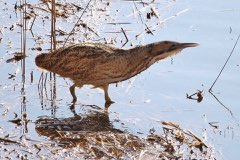 Bitterns boomingThe deep boom (fundamental around 150 Hz, carrying over 3 km), plus water rail squeals, reed and sedge warblers, and marsh harriers.
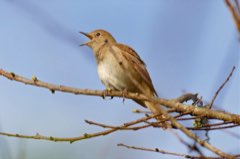 Nightingales singingFull nocturnal nightingale song, often with several males counter-singing; tawny owls and the first dawn birds behind.
More: all spectacles in France · dawn choruses · France in May · France in June