
Stork, heron and flamingo colonies
16 stork, heron and flamingo colonies along the East Atlantic Flyway, from Norway to Angola: when each one peaks, where to go on your own, what it costs and what you will hear. Wild animals only, no zoos.
Best time, place by place
Where to go, north to south
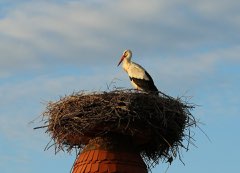 Stork villages: Rühstädt and BergenhusenBill-clattering duets from nests on every roof, hissing chicks begging in June, the whoosh of adults landing; swallows, village sparrows and church bells; cranes and geese on the Elbe floodplain behind.
 Lac de Grand-Lieu: the great heronry and the spoonbill colonyHeron and egret traffic croaking and barking overhead at dawn and dusk, black terns and whiskered terns squabbling over the water lilies, Savi's warbler reeling and a booming bittern from the reedbeds at Pierre-Aiguë, cuckoos and water rails — the colony itself is heard only as a distant, constant squabble across the water.
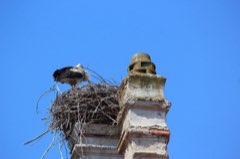 Tree-nesting white stork colony, March floodplainBill-clattering across a colony of 40–50 nests in the oak canopy, chick hissing, black-headed gulls from the oxbows, oriole, nightingale, tree frogs and fire-bellied toads in the flooded meadows, Konik horses.
 Heronries, cormorant colonies and spring flood chorus, Kopački ritCroaking, bill-snapping heronries in flooded willows, cormorant grunts, spoonbill chick begging, eagle yelps, fire-bellied toad and marsh frog choruses under everything, cuckoo, golden oriole.
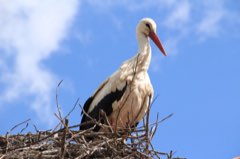 White stork village and floodplain summer, Lonjsko poljeBill-clattering duets from every rooftop, chick hissing and begging, spoonbill and heron colonies, marsh and pool frogs from the oxbows, corncrake and quail in the meadows at night, cattle bells and village life.
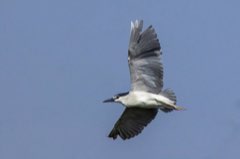 Heron colonies ('garzaie')Croaking, gargling colony noise, night heron 'quok' calls at dusk, begging chicks.
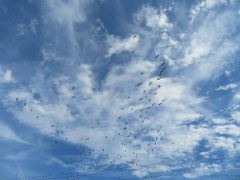 Fuente de Piedra: the great flamingo colonyTwenty thousand flamingos honking, growling and gabbling across a flat salt lagoon — the colony is a continuous roar from kilometres away on a still morning — with the goose-like flight calls of flocks commuting to feed, gull-billed terns and stilts yelping over the shallows.
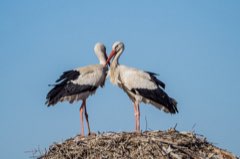 White storks bill-clattering on the Chellah walls, RabatDozens of pairs bill-clattering with heads thrown back on the minaret and the medieval walls, wings thumping on landing, and below them the cattle egret roost and the Bou Regreg valley.
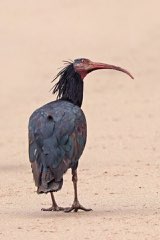 Northern bald ibis colonies, Souss-Massa & TamriGuttural 'hrump' and hissing calls at the cliff, and the low grunting chatter of a feeding flock working the coastal steppe. The world's last truly wild population — around 95% of it — lives on these few kilometres of cliff.
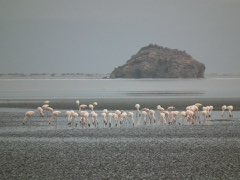 Aftout es Saheli — West Africa's only lesser flamingo breeding colonyFourteen thousand flamingo chicks and their parents: a continuous honking, growling roar from the colony islets that carries over a kilometre of flat water at dawn, the wing-thunder of a few thousand adults lifting at a jackal, and the lesser flamingos' higher yapping among the greater flamingos' goose-like calls. Around it, the silence of the Sahel coast.
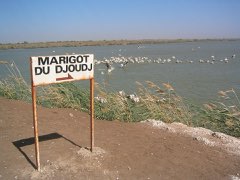 Great white pelican colony at DjoudjA wall of pelican grunts and chick begging from a few thousand pairs packed onto low islets a boat-length away, wings slapping water as flotillas fish in formation, and darters and cormorants in the tamarisks.
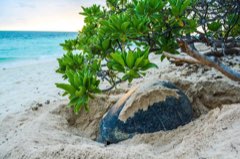 Sea turtles nesting at Grand-BérébyMostly a sight, but the sound is worth having: the heavy breathing and sand-throwing of a leatherback digging, flippers slapping wet sand, and the surf of the Gulf of Guinea behind it.
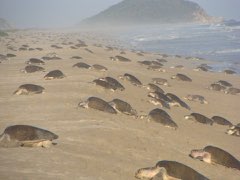 Sea turtles on the Togo coastA sighting more than a sound: the heavy breathing and sand-scraping of a nesting female against the surf, and the patrol team's low talk.
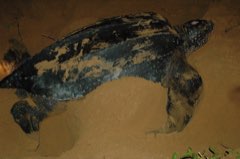 Sea turtles nesting at Grand-Popo and OuidahA sight more than a sound, but with a close mic: sand thrown by a leatherback's flippers, the deep exhalations of a nesting female, and the Bight of Benin surf behind.
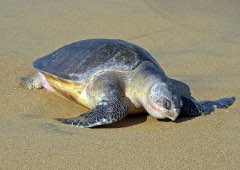 Sea turtles at Ebodjé and the Campo Ma'an coastA visual event with a good close-mic moment: the digging and heavy breathing of a nesting turtle against the surf; behind the beach the Campo Ma'an forest at night.
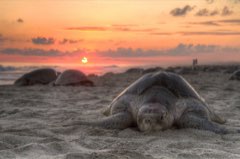 Olive ridley nesting on the Angolan coast — the Atlantic's largest populationA sighting with a close-mic moment: the scraping and heavy breathing of a nesting ridley — a small turtle, a quick nest — against the Atlantic surf, and the Kitabanga patrol's low voices.