
Sea turtles nesting at Grand-Popo and Ouidah
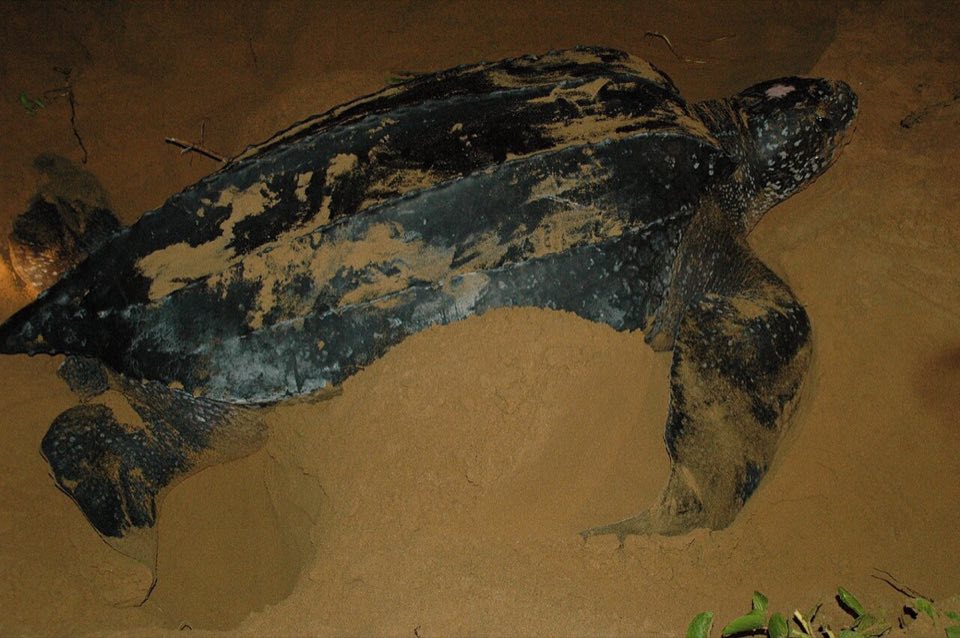
Olive ridley (Lepidochelys olivacea) and leatherback (Dermochelys coriacea); green and hawksbill turtles occasionally. Grand-Popo to Ouidah coast, Mono & Atlantique, Benin.
Best time: 1 Nov – 31 Jan (November to January). Where: Grand-Popo – Nature Tropicale patrol beaches and hatchery, Avlo / Bouche du Roy beach, Ouidah – Plage de la Porte du Non-Retour (Benin). Time of day: Females come ashore after dark, mostly 21:00–03:00.
- Guide, ranger or boat needed
- Low cost
- No binoculars needed
- Sound 2/5
Open it in the interactive calendarSunrise and sunset listening times for the day you pick, and the map.
When is the best time?
Peak: 1 Nov – 31 Jan. November to January; hatchling releases at the hatchery run through January–February, with a turtle festival in early January
Active from 15 Aug to 31 Mar (August to March) in a typical year.
Time of day
Females come ashore after dark, mostly 21:00–03:00; patrols walk the beach through the night
- Nesting patrol: 21:00 → 03:00
Depends on the tide: best around high tide. Check local tide tables.
What will you hear?
A sight more than a sound, but with a close mic: sand thrown by a leatherback's flippers, the deep exhalations of a nesting female, and the Bight of Benin surf behind.
Binoculars?
No binoculars needed. A nesting turtle at arm's length on a dark beach; red torch only with the patrol.
Where to go
- Grand-Popo – Nature Tropicale patrol beaches and hatchery — Nature Tropicale ONG runs the patrols, a hatchery and public hatchling releases; join through them. Map
- Avlo / Bouche du Roy beach — Beach spit of the Mono mouth inside the Bouche du Roy community reserve; boat access from Grand-Popo. Map
- Ouidah – Plage de la Porte du Non-Retour — Nesting beach east of Grand-Popo, patrolled by local eco-guards. Map
How to go on your own, and what it costs
Approaching a nesting turtle without the Nature Tropicale patrol is prohibited (protected species); join a patrol for a donation through the NGO's base in Grand-Popo.
Cost: Donation to the patrol; check current prices.
Free or no-guide alternative: The beach is public and the hatchling releases and the early-January turtle festival at Grand-Popo are free; walk the beach at night without lights and do not approach a nesting animal.
Field-recording notes
Patrol only, red light only, approach from behind once laying has started; eggs are collected by the patrols to the hatchery because poaching on unpatrolled beaches is near-total. The beaches are eroding and are also used at night by fishermen hauling seine nets — that is part of the soundscape. Surf and wind are constant; a low directional mic at the nest is the only way to get the animal above them.
Sources
- Grand-Popo – Bouche du Roy community biodiversity conservation area (Wikipedia)
- Bouche du Roy – Réserve de biosphère du Mono
Similar spectacles
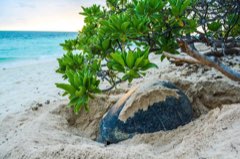 Sea turtles nesting at Grand-BérébyMostly a sight, but the sound is worth having: the heavy breathing and sand-throwing of a leatherback digging, flippers slapping wet sand, and the surf of the Gulf of Guinea behind it.
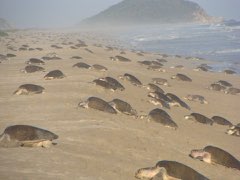 Sea turtles on the Togo coastA sighting more than a sound: the heavy breathing and sand-scraping of a nesting female against the surf, and the patrol team's low talk.
 Sea turtles at Ebodjé and the Campo Ma'an coastA visual event with a good close-mic moment: the digging and heavy breathing of a nesting turtle against the surf; behind the beach the Campo Ma'an forest at night.
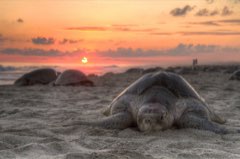 Olive ridley nesting on the Angolan coast — the Atlantic's largest populationA sighting with a close-mic moment: the scraping and heavy breathing of a nesting ridley — a small turtle, a quick nest — against the Atlantic surf, and the Kitabanga patrol's low voices.
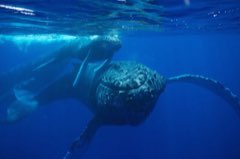 Conkouati-Douli: humpback whales and leatherback nestingBlows and breaches from the beach, humpback song on a hydrophone from a drifting pirogue, and at night the digging and heavy breathing of a leatherback on a wild beach with no lights for 50 km; chimpanzees pant-hooting from the lagoon islands at dawn.
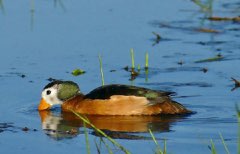 Kartong — wetland pools, Allahein river mouth and turtle beachCrakes and pygmy geese in the sand-mine pools, a wader roost at the Allahein mouth, and on rainy-season nights the beach with the surf and, if you are lucky, a nesting green turtle's breathing.
More: all spectacles in Benin · sea turtles · stork, heron and flamingo colonies · Benin in January · Benin in November · Benin in December