
Stork villages: Rühstädt and Bergenhusen
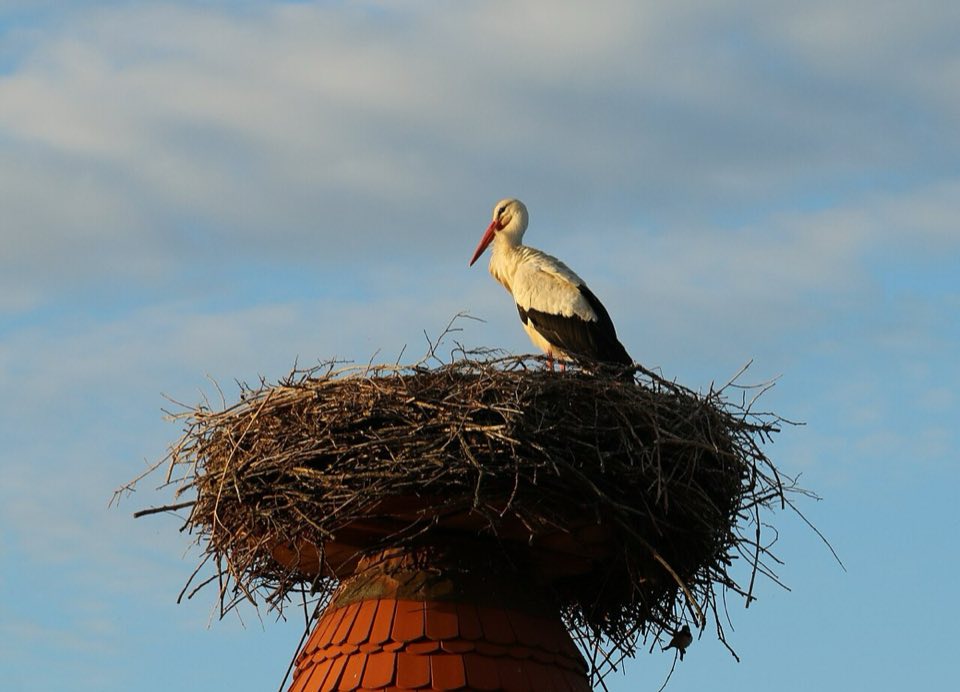
White stork (Ciconia ciconia) — Rühstädt c. 30 pairs a year (28 pairs, 35 young in 2026; record 44 pairs in 1996), Bergenhusen 10–15 pairs; cranes, beavers and sea eagles on the Elbe meadows. Rühstädt (Prignitz, Brandenburg — Elbe) and Bergenhusen (Schleswig-Holstein — Eider-Treene-Sorge), Germany.
Best time: 20 Apr – 20 Jul (April to July). Where: Rühstädt – NABU-Besucherzentrum (Neuhaus 9) and the village roofs, Bergenhusen – Michael-Otto-Institut im NABU (Goosstroot 1) (Germany). Time of day: Bill-clattering peaks at nest changeovers in the first two hours after sunrise and in the evening before dark.
- You can go on your own
- Low cost
- No binoculars needed
- Sound 3/5
Open it in the interactive calendarSunrise and sunset listening times for the day you pick, and the map.
When is the best time?
Peak: 20 Apr – 20 Jul. Late April to late July — hatching from late April, feeding and bill-clattering through June–July; arrival from early March, departure late August
Active from 1 Mar to 31 Aug (March to August) in a typical year.
Time of day
Bill-clattering peaks at nest changeovers in the first two hours after sunrise and in the evening before dark; the village is quietest at dawn before visitors arrive (centre opens 10:00).
- Morning changeovers and clattering: sunrise → 2 h after sunrise
- Evening feeding flights: 90 min before sunset → sunset
- NABU visitor centre hours (to 18:00 May–Aug): 10:00 → 16:00
What will you hear?
Bill-clattering duets from nests on every roof, hissing chicks begging in June, the whoosh of adults landing; swallows, village sparrows and church bells; cranes and geese on the Elbe floodplain behind.
Binoculars?
No binoculars needed. Thirty nests on the roofs of one village — the storks are 10–20 m above the street. Binoculars only for the Elbe meadows.
Where to go
- Rühstädt – NABU-Besucherzentrum (Neuhaus 9) and the village roofs — Europe's stork village since 1996; centre open Tue–Sun 10:00–16:00 (Apr and Sept–Oct), Thu–Sun 10:00–18:00 (May–Aug), exhibition €3.50 adult (2026); village streets free at all hours. Map
- Bergenhusen – Michael-Otto-Institut im NABU (Goosstroot 1) — Stork research centre with a white-stork exhibition (winter break mid Sept–mid March); nests on the village roofs; Eider-Treene-Sorge meadows. Map
How to go on your own, and what it costs
Rühstädt: drive via Bad Wilsnack (Prignitz), park at the village edge and walk the streets — free, any hour; the NABU centre exhibition and Friday/Saturday 14:00 village tours are paid (see costs). Bergenhusen: B202 from Friedrichstadt, park in the village; exhibition at the institute, nests visible from the streets.
Cost: Village free; NABU-Besucherzentrum Rühstädt exhibition €3.50 adult / €1.50 child / €7.50 family, village tour €7 adult, combined €8.50 (2026).
Field-recording notes
A village, so dogs, tractors and the Storchenfest (late July) are part of it; dawn in June is nearly pure stork and swallow. Nests are on private roofs — record from the public streets and the churchyard, no ladders, no drones (the centre runs its own nest webcam). The Elbe dike behind Rühstädt (UNESCO biosphere reserve) gives floodplain ambience and summer cranes. Bergenhusen's institute monitors the nests — ask before setting rigs near the village centre.
Sources
- Reiseland Brandenburg – NABU-Besucherzentrum Rühstädt (hours, prices, ~30 pairs)
- Nordkurier – 30 Jahre Europäisches Storchendorf (2026 pairs and young)
- NABU – Weißstorch: Storchendörfer und Besucherzentren
- NABU Michael-Otto-Institut Bergenhusen
Similar spectacles
 Tree-nesting white stork colony, March floodplainBill-clattering across a colony of 40–50 nests in the oak canopy, chick hissing, black-headed gulls from the oxbows, oriole, nightingale, tree frogs and fire-bellied toads in the flooded meadows, Konik horses.
 White stork village and floodplain summer, Lonjsko poljeBill-clattering duets from every rooftop, chick hissing and begging, spoonbill and heron colonies, marsh and pool frogs from the oxbows, corncrake and quail in the meadows at night, cattle bells and village life.
 White storks bill-clattering on the Chellah walls, RabatDozens of pairs bill-clattering with heads thrown back on the minaret and the medieval walls, wings thumping on landing, and below them the cattle egret roost and the Bou Regreg valley.
 The Zwin: wader passage, ringing season and the stork colonyBill-clattering of storks greeting at the nest; dunlin and redshank flocks over the salt marsh at the top of the tide; curlews; the sea behind the dunes; in autumn a steady trickle of migrating pipits and finches over the dike.
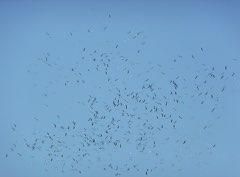 Strait of Gibraltar: raptor & stork passageMostly visual — kettles of thousands — but bee-eater flocks pour over calling all day, honey buzzards pass at head height in a levante, and the stork pre-roost at Los Lances is a bill-clattering crowd.
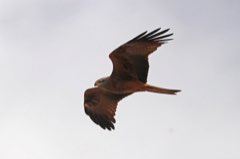 Spring raptor & stork passage over the Strait — Jbel MoussaMostly a visual event: kettles of hundreds of kites and storks spilling off the Spanish side and gaining height over Belyounech. Sound is the wind, bill-clattering storks on the ground, griffons' rasping wing-noise overhead and the reintroduced griffon colony's grunts on the cliffs.
More: all spectacles in Germany · storks · stork, heron and flamingo colonies · Germany in April · Germany in May · Germany in June · Germany in July