
Olive ridley nesting on the Angolan coast — the Atlantic's largest population
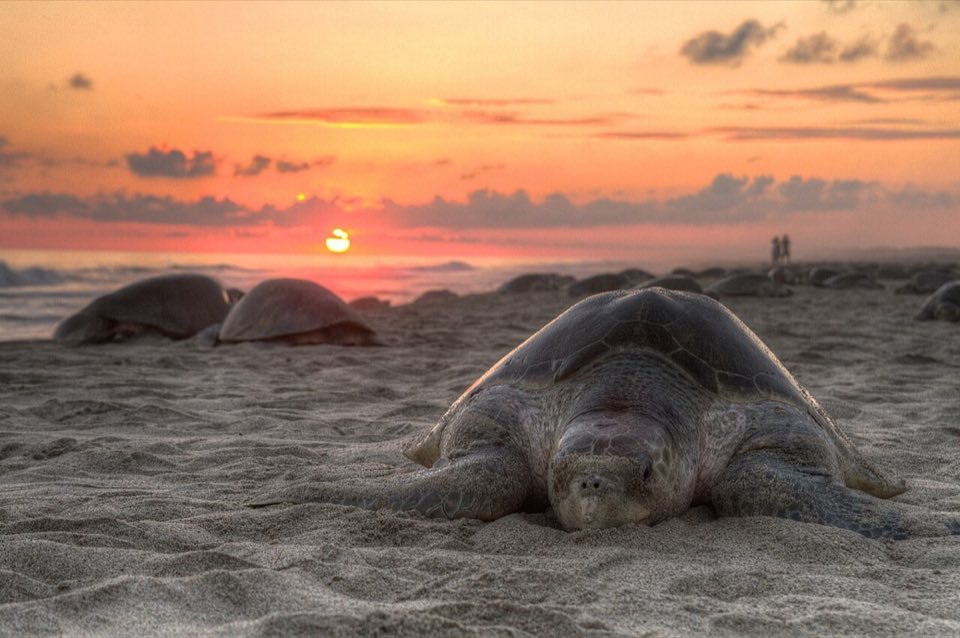
Olive ridley (Lepidochelys olivacea) — surveys found the largest nesting population in the Atlantic; leatherback and green turtles in smaller numbers. Palmeirinhas (south of Luanda), Cabo Ledo, Lobito and the Benguela coast, Angola.
Best time: 15 Nov – 15 Jan (November to January). Where: Palmeirinhas – Projecto Kitabanga beaches, Lobito – nesting beaches around the town, Cabo Ledo (Angola). Time of day: Females come ashore after dark, mostly 21:00–03:00.
- Partly on your own
- Low cost
- No binoculars needed
- Sound 2/5
Open it in the interactive calendarSunrise and sunset listening times for the day you pick, and the map.
When is the best time?
Peak: 15 Nov – 15 Jan. Mid November to mid January: nest density at Palmeirinhas has averaged over 30 nests per km of beach; hatchlings from December to March
Active from 1 Oct to 15 Mar (October to March) in a typical year.
Time of day
Females come ashore after dark, mostly 21:00–03:00; hatchlings emerge at night
- Nesting: 21:00 → 03:00
Depends on the tide: best around high tide. Check local tide tables.
What will you hear?
A sighting with a close-mic moment: the scraping and heavy breathing of a nesting ridley — a small turtle, a quick nest — against the Atlantic surf, and the Kitabanga patrol's low voices.
Binoculars?
No binoculars needed. A nesting ridley at arm's length on a dark beach; red torch only with the patrol.
Where to go
- Palmeirinhas – Projecto Kitabanga beaches — The long beach south of the Mussulo spit where Agostinho Neto University's Kitabanga project has patrolled since 2003. Map
- Lobito – nesting beaches around the town — Studied nesting population (October–February) on the beaches north and south of Lobito. Map
- Cabo Ledo — Beach and surf camp 120 km south of Luanda; nesting on the quieter stretches. Map
How to go on your own, and what it costs
The beaches are public (taxi or own car from Luanda to Palmeirinhas or Cabo Ledo); joining a Projecto Kitabanga patrol is by arrangement through the project (Agostinho Neto University) or the Angola Field Group. Do not approach a nesting turtle without a patrol.
Cost: Free beach; patrol by donation/arrangement, check current prices.
Free or no-guide alternative: Hatchling emergences on the public beach at Palmeirinhas or Cabo Ledo can be watched for free at night without lights; nesting females need the patrol.
Field-recording notes
Only with a Kitabanga or community patrol where one exists; on unpatrolled beaches nesting turtles are still taken, and a torch on the beach at night draws attention. Red light, rear approach, no flash. Beach driving is common on this coast and kills hatchlings — walk. Surf and wind are the bed; a low, close directional mic is the only isolation.
Sources
- Surveys of the Angolan coast uncover the largest olive ridley nesting population in the Atlantic (Oryx, 2021)
- Nesting ecology of Lepidochelys olivacea in Lobito, Angola (2024)
- Angola Field Group – turtles
Similar spectacles
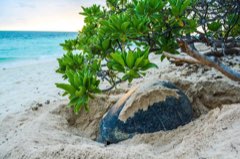 Sea turtles nesting at Grand-BérébyMostly a sight, but the sound is worth having: the heavy breathing and sand-throwing of a leatherback digging, flippers slapping wet sand, and the surf of the Gulf of Guinea behind it.
 Sea turtles on the Togo coastA sighting more than a sound: the heavy breathing and sand-scraping of a nesting female against the surf, and the patrol team's low talk.
 Sea turtles nesting at Grand-Popo and OuidahA sight more than a sound, but with a close mic: sand thrown by a leatherback's flippers, the deep exhalations of a nesting female, and the Bight of Benin surf behind.
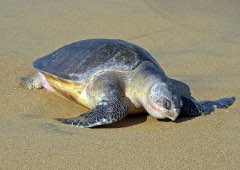 Sea turtles at Ebodjé and the Campo Ma'an coastA visual event with a good close-mic moment: the digging and heavy breathing of a nesting turtle against the surf; behind the beach the Campo Ma'an forest at night.
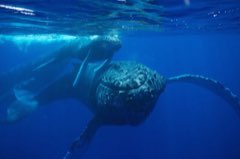 Conkouati-Douli: humpback whales and leatherback nestingBlows and breaches from the beach, humpback song on a hydrophone from a drifting pirogue, and at night the digging and heavy breathing of a leatherback on a wild beach with no lights for 50 km; chimpanzees pant-hooting from the lagoon islands at dawn.
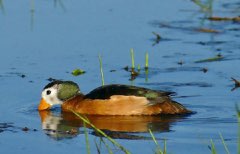 Kartong — wetland pools, Allahein river mouth and turtle beachCrakes and pygmy geese in the sand-mine pools, a wader roost at the Allahein mouth, and on rainy-season nights the beach with the surf and, if you are lucky, a nesting green turtle's breathing.
More: all spectacles in Angola · sea turtles · stork, heron and flamingo colonies · January · Angola in November · December