
Heron colonies ('garzaie')
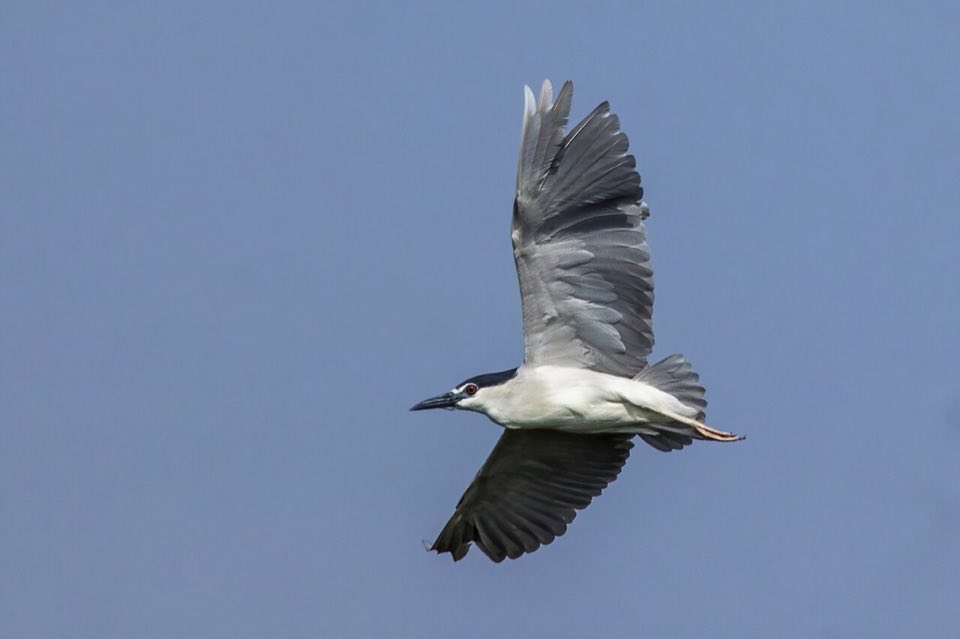
Night heron, little egret, squacco heron, grey & purple heron, cattle egret. Po plain (Lomellina, Vercelli, Varese), Italy.
Best time: 1 May – 20 Jun (May to June). Where: Riserva Garzaia di Valenza, Alessandria, Riserva Naturale Palude Brabbia (LIPU), Varese (Italy). Time of day: Colony noise from first light to mid morning as adults return.
- You can go on your own
- Low cost
- Binoculars essential
- Sound 4/5
Open it in the interactive calendarSunrise and sunset listening times for the day you pick, and the map.
When is the best time?
Peak: 1 May – 20 Jun. May to mid June
Active from 15 Mar to 15 Jul (March to July) in a typical year.
Time of day
Colony noise from first light to mid morning as adults return; night herons leave the colony in the 30 min around sunset, passing low over the paths.
- Morning colony: 30 min before sunrise → 150 min after sunrise
- Night heron departures: 30 min before sunset → last light
What will you hear?
Croaking, gargling colony noise, night heron 'quok' calls at dusk, begging chicks.
Binoculars?
Binoculars essential. Colonies are viewed from marked viewpoints 100–200 m off; binoculars needed, night herons pass low at dusk.
Where to go
- Riserva Garzaia di Valenza, Alessandria — Colony reserve with viewing points only; the Po and a railway bridge nearby. Map
- Riserva Naturale Palude Brabbia (LIPU), Varese — LIPU-run wetland with hides; Malpensa traffic overhead. Map
How to go on your own, and what it costs
Garzaia di Valenza: free viewing points on the marked trail from the reserve car park (Strada per Bassignana); the colony itself is closed. Palude Brabbia: LIPU reserve with hides and a small entry fee, opening hours posted; park at the Inarzo visitor centre.
Cost: Valenza free; LIPU Palude Brabbia entry (check current prices).
Field-recording notes
Colonies are protected — record from the viewpoints; the density works very well in ambisonics. Night heron departures at dusk pass low over the paths.
Sources
Similar spectacles
 Tree-nesting white stork colony, March floodplainBill-clattering across a colony of 40–50 nests in the oak canopy, chick hissing, black-headed gulls from the oxbows, oriole, nightingale, tree frogs and fire-bellied toads in the flooded meadows, Konik horses.
 Heronries, cormorant colonies and spring flood chorus, Kopački ritCroaking, bill-snapping heronries in flooded willows, cormorant grunts, spoonbill chick begging, eagle yelps, fire-bellied toad and marsh frog choruses under everything, cuckoo, golden oriole.
 White stork village and floodplain summer, Lonjsko poljeBill-clattering duets from every rooftop, chick hissing and begging, spoonbill and heron colonies, marsh and pool frogs from the oxbows, corncrake and quail in the meadows at night, cattle bells and village life.
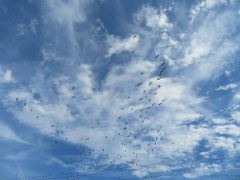 Fuente de Piedra: the great flamingo colonyTwenty thousand flamingos honking, growling and gabbling across a flat salt lagoon — the colony is a continuous roar from kilometres away on a still morning — with the goose-like flight calls of flocks commuting to feed, gull-billed terns and stilts yelping over the shallows.
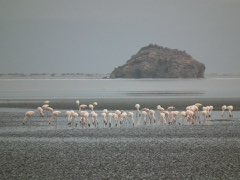 Aftout es Saheli — West Africa's only lesser flamingo breeding colonyFourteen thousand flamingo chicks and their parents: a continuous honking, growling roar from the colony islets that carries over a kilometre of flat water at dawn, the wing-thunder of a few thousand adults lifting at a jackal, and the lesser flamingos' higher yapping among the greater flamingos' goose-like calls. Around it, the silence of the Sahel coast.
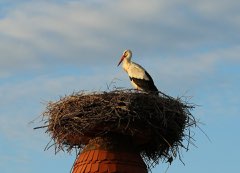 Stork villages: Rühstädt and BergenhusenBill-clattering duets from nests on every roof, hissing chicks begging in June, the whoosh of adults landing; swallows, village sparrows and church bells; cranes and geese on the Elbe floodplain behind.
More: all spectacles in Italy · stork, heron and flamingo colonies · Italy in May · Italy in June