
Northern bald ibis colonies, Souss-Massa & Tamri
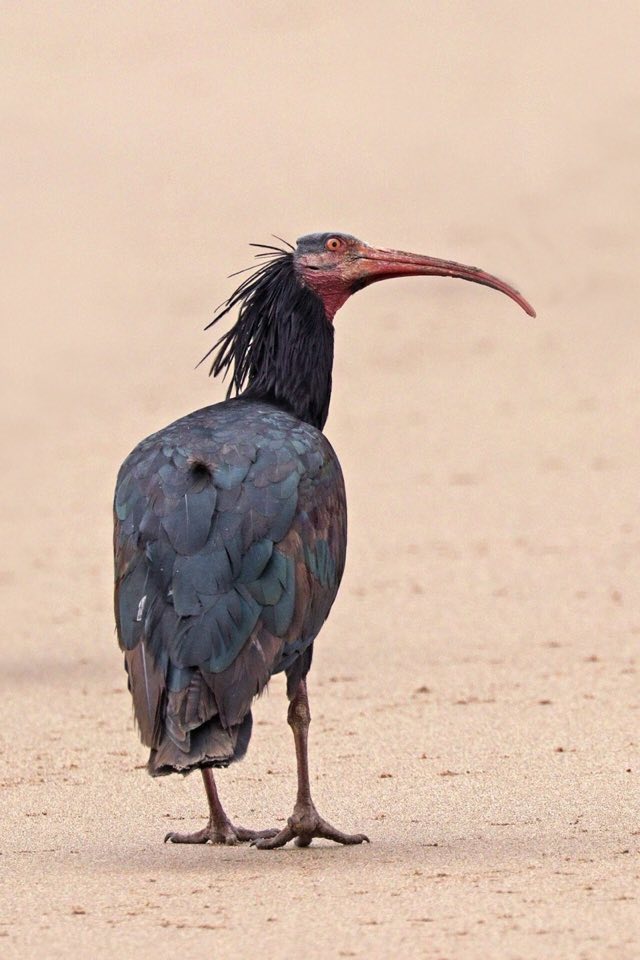
Northern bald ibis (Geronticus eremita). Agadir coast, Souss-Massa, Morocco.
Best time: 15 Mar – 15 Jun (March to June). Where: Oued Massa estuary – Sidi Rbat (park sector), Tamri estuary & cliffs (north of Agadir), Oued Souss mouth, Agadir (Morocco). Time of day: Dawn flight from the cliff roosts to the feeding steppes in the hour after sunrise.
- Partly on your own
- Entry fee
- Binoculars essential
- Sound 3/5
Open it in the interactive calendarSunrise and sunset listening times for the day you pick, and the map.
When is the best time?
Peak: 15 Mar – 15 Jun. Mid March to mid June (eggs from March, chicks fledge May–June); birds are present all year
Active from 15 Feb to 15 Jul (February to July) in a typical year.
Time of day
Dawn flight from the cliff roosts to the feeding steppes in the hour after sunrise; return in the last 90 minutes of light
- Leaving the cliffs: 30 min before sunrise → 90 min after sunrise
- Return to roost: 90 min before sunset → sunset
What will you hear?
Guttural 'hrump' and hissing calls at the cliff, and the low grunting chatter of a feeding flock working the coastal steppe. The world's last truly wild population — around 95% of it — lives on these few kilometres of cliff.
Binoculars?
Binoculars essential. Ibis feed on the steppe and estuary fields 100–300 m from the road; binoculars needed, a scope for the cliff roosts at Tamri.
Where to go
- Oued Massa estuary – Sidi Rbat (park sector) — Park entrance and eco-guides at Sidi Rbat; the ibis feed on the steppe between the estuary and Sidi Wassay. Access is with a licensed park guide; the breeding cliffs themselves are closed. Map
- Tamri estuary & cliffs (north of Agadir) — Holds close to half the population; birds feed in the estuary fields and along the N1 road cliffs. Watch from the road and beach, never the cliff top. Map
- Oued Souss mouth, Agadir — Roosting waders, flamingos and spoonbills below the royal palace fence; sunset access only from the Inezgane side. Map
How to go on your own, and what it costs
Tamri is free: park by the N1 bridge over the estuary (bus Agadir–Essaouira stops in Tamri) and watch the feeding flocks from the road, beach and fields. Inside Souss-Massa NP the ibis sector is guided only (park rule): eco-guides are hired at the Sidi Rbat park entrance, no tour company needed. Cliffs and nests are closed everywhere.
Cost: Tamri free. Souss-Massa: park entry plus a licensed eco-guide — check current prices at the Sidi Rbat entrance.
Free or no-guide alternative: The Tamri estuary holds close to half the world population and is watched free from the N1 road, the beach and the field edges — dawn departure and evening return both visible.
Field-recording notes
Critically endangered until 2018 and still guarded: no approaching nest cliffs, no drones, no playback, and stay with the park guide inside Souss-Massa (permit through ANEF for anything beyond a day visit). Wind is the enemy on this coast — an onshore breeze builds by 10:00 most days, so the dawn departure is the window. Argan-steppe ambience is very dry and open, with goats, dogs and the N1 traffic at Tamri; the estuary mouths add surf. Fledging weeks (late May–June) are when the flocks are noisiest on the feeding grounds.
Sources
- Wikipedia – Souss-Massa National Park
- ANEF – Agence Nationale des Eaux et Forêts (park authority, permits)
- GREPOM – BirdLife Morocco
Similar spectacles
 Great white pelican colony at DjoudjA wall of pelican grunts and chick begging from a few thousand pairs packed onto low islets a boat-length away, wings slapping water as flotillas fish in formation, and darters and cormorants in the tamarisks.
 Tree-nesting white stork colony, March floodplainBill-clattering across a colony of 40–50 nests in the oak canopy, chick hissing, black-headed gulls from the oxbows, oriole, nightingale, tree frogs and fire-bellied toads in the flooded meadows, Konik horses.
 Heronries, cormorant colonies and spring flood chorus, Kopački ritCroaking, bill-snapping heronries in flooded willows, cormorant grunts, spoonbill chick begging, eagle yelps, fire-bellied toad and marsh frog choruses under everything, cuckoo, golden oriole.
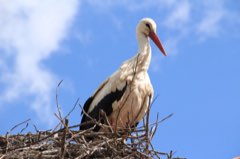 White stork village and floodplain summer, Lonjsko poljeBill-clattering duets from every rooftop, chick hissing and begging, spoonbill and heron colonies, marsh and pool frogs from the oxbows, corncrake and quail in the meadows at night, cattle bells and village life.
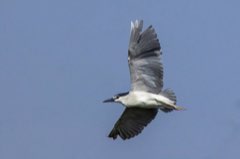 Heron colonies ('garzaie')Croaking, gargling colony noise, night heron 'quok' calls at dusk, begging chicks.
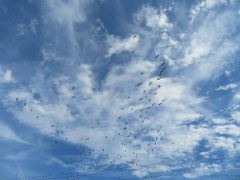 Fuente de Piedra: the great flamingo colonyTwenty thousand flamingos honking, growling and gabbling across a flat salt lagoon — the colony is a continuous roar from kilometres away on a still morning — with the goose-like flight calls of flocks commuting to feed, gull-billed terns and stilts yelping over the shallows.
More: all spectacles in Morocco · stork, heron and flamingo colonies · Morocco in March · Morocco in April · May · June