
Great white pelican colony at Djoudj
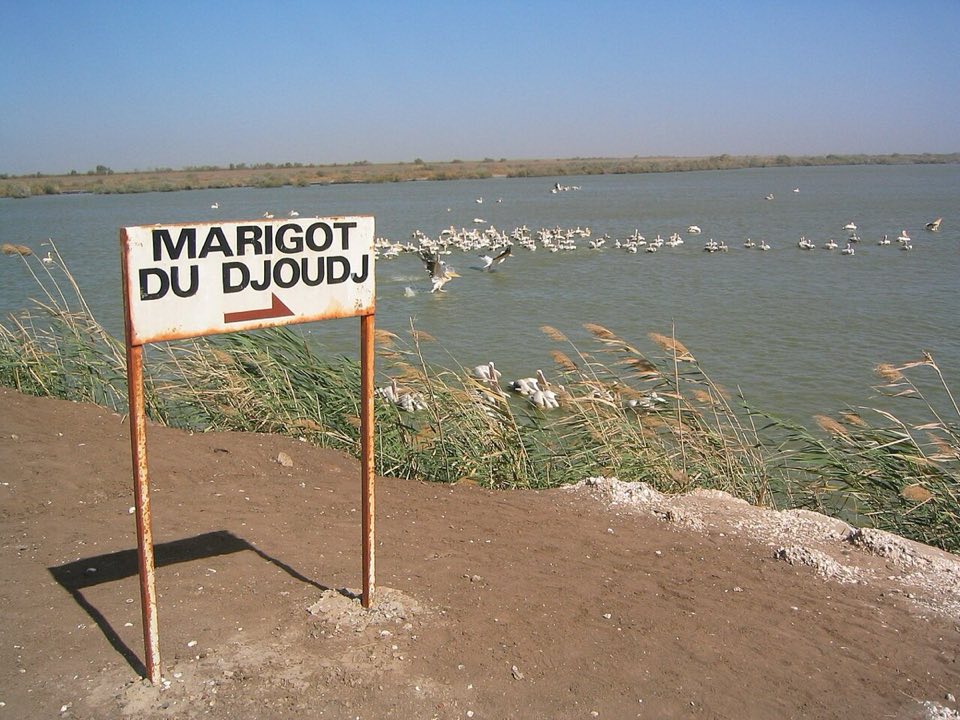
Great white pelican (Pelecanus onocrotalus), with pink-backed pelican, African darter, cormorants. Parc National des Oiseaux du Djoudj, Senegal.
Best time: 15 Dec – 15 Mar (December to March). Where: Pelican 'nichoir' islets, Marigot du Djoudj, Djoudj jetty & park entrance (Senegal). Time of day: Mid-morning pirogue when the park boats run (about 08:30–11:00) — the colony is loud all day.
- Guide, ranger or boat needed
- Entry fee
- No binoculars needed
- Sound 5/5
Open it in the interactive calendarSunrise and sunset listening times for the day you pick, and the map.
When is the best time?
Peak: 15 Dec – 15 Mar. Mid December to mid March — around 5,000 nesting pairs with chicks on the 'nichoir' islets
Active from 1 Nov to 30 Apr (November to April) in a typical year.
Time of day
Mid-morning pirogue when the park boats run (about 08:30–11:00) — the colony is loud all day; the fishing flotillas leave at dawn and return late afternoon
- Pirogue to the colony: 1 h after sunrise → 11:00
- Fishing return: 2 h before sunset → sunset
What will you hear?
A wall of pelican grunts and chick begging from a few thousand pairs packed onto low islets a boat-length away, wings slapping water as flotillas fish in formation, and darters and cormorants in the tamarisks.
Binoculars?
No binoculars needed. The pirogue drifts a boat-length from the colony; naked eye.
Where to go
- Pelican 'nichoir' islets, Marigot du Djoudj — Reached only by the park pirogue from the jetty; the boatmen cut the engine and pole the last stretch. Map
- Djoudj jetty & park entrance — Boarding point; fees and guides. Map
How to go on your own, and what it costs
The colony is on islets in a park marigot: only the park pirogue reaches it (park rule and physical access). Cheapest legal way is the standard shared park pirogue from the Djoudj jetty after paying entry.
Cost: Entry about 2,000 CFA plus shared pirogue about 3,000–5,000 CFA per person (recent reports) — check current prices.
Free or no-guide alternative: The pelican fishing flotillas fly out over the park boundary and feed on the Senegal river and the Ndiaël marshes; from the public dyke road and the Diama dam causeway you hear and see the wing-roar and grunting of the flocks for free — but the nesting islets themselves are only reachable by park boat.
Who runs access
- Djoudj park pirogues (DPN) (park authority) — Shared or private pirogue; private boat gives the engine-off drift.
Field-recording notes
You will be recording from a pirogue in a group unless you pay for a boat to yourself — worth it: brief the boatman to drift with the engine off at the colony for 20 minutes, no talking. Wind is negligible on the marigot in the morning. The outboard on the approach and the other boats are the noise; the park may allow an earlier departure for a documented project (ask the conservateur the day before). Colony disturbance rules: the pirogue stays in the channel, no landing, no drones.
Sources
Similar spectacles
 Diawling floodplain — pelicans, flamingos and Palearctic ducksPelican flotillas grunting, garganey and pintail flocks whirring off the flooded basins, flamingo chorus, and the low background of the Diama dam and the Senegal river.
 White storks bill-clattering on the Chellah walls, RabatDozens of pairs bill-clattering with heads thrown back on the minaret and the medieval walls, wings thumping on landing, and below them the cattle egret roost and the Bou Regreg valley.
 Aftout es Saheli — West Africa's only lesser flamingo breeding colonyFourteen thousand flamingo chicks and their parents: a continuous honking, growling roar from the colony islets that carries over a kilometre of flat water at dawn, the wing-thunder of a few thousand adults lifting at a jackal, and the lesser flamingos' higher yapping among the greater flamingos' goose-like calls. Around it, the silence of the Sahel coast.
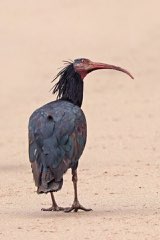 Northern bald ibis colonies, Souss-Massa & TamriGuttural 'hrump' and hissing calls at the cliff, and the low grunting chatter of a feeding flock working the coastal steppe. The world's last truly wild population — around 95% of it — lives on these few kilometres of cliff.
 Somone lagoon — pelicans, flamingos and the sandbank roost on the Petite CôtePelican wings and bill-clapping as the flock lands, tern and gull roost clamour, flamingo honks, spoonbills and herons in the mangrove, osprey whistles — small-scale next to the Saloum but the closest proper lagoon roost to the Saly resorts, and quiet at dawn before the jet-skis.
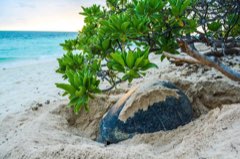 Sea turtles nesting at Grand-BérébyMostly a sight, but the sound is worth having: the heavy breathing and sand-throwing of a leatherback digging, flippers slapping wet sand, and the surf of the Gulf of Guinea behind it.
More: all spectacles in Senegal · pelicans · stork, heron and flamingo colonies · Senegal in January · Senegal in February · Senegal in March · Senegal in December