
Wildlife to see in Spain in July
7 spectacles at their peak in Spain in July, and 7 more still going on. Wild animals only: no zoos, no wildlife parks, no hunting. Open Spain in July in the interactive calendar for listening times on the day you pick.
At their peak in July
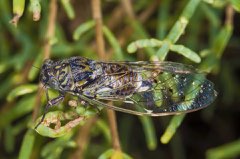 Cicadas of the Spanish pinewoodsContinuous cicada chorus from Aleppo and stone pines — Cicada orni's ticking pulses over Lyristes' saw — with the sea and, at dusk, bush-crickets taking over.
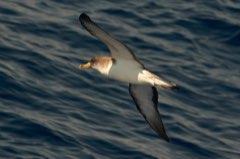 Cory's shearwater colonies of the CanariesThe wailing, sobbing 'pardela' chorus from thousands of birds over sea cliffs — the sound behind the Canarian mermaid legends — with the Atlantic swell and Bulwer's petrels' soft barking.
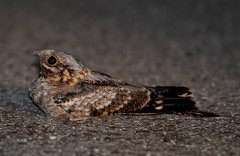 Red-necked nightjar nightsThe Iberian nightjar's knocking 'kutuk-kutuk-kutuk' — slower and woodier than the European nightjar's churr — from dozens of birds in stone-pine and dehesa, with scops owls and stone-curlews, and the birds sitting on the warm tracks in the headlights.
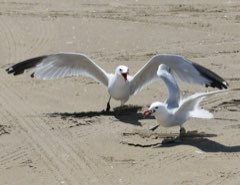 Ebro Delta: Audouin's gulls, terns and flamingosAudouin's gull colony (historically over half the world population at Punta de la Banya) as a nasal, laughing wall of sound, tern colonies screaming over the salt pans, flamingos honking across the lagoons, and frogs in the rice fields at night.
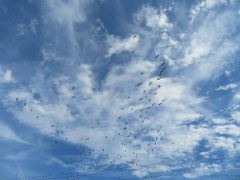 Fuente de Piedra: the great flamingo colonyTwenty thousand flamingos honking, growling and gabbling across a flat salt lagoon — the colony is a continuous roar from kilometres away on a still morning — with the goose-like flight calls of flocks commuting to feed, gull-billed terns and stilts yelping over the shallows.
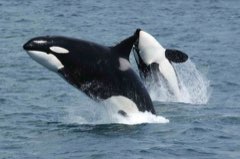 Orcas hunting bluefin tuna in the StraitWith a hydrophone: orca calls and echolocation, pilot whale whistles, and the tuna-boat engines they hunt around. Above water: blows, and the shouts from the fishing boats.
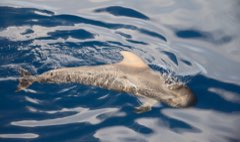 Pilot whales of Teno–Rasca, TenerifeWith a hydrophone: pilot whale whistles and clicks from a resident population of about 500 animals in deep water only 2–3 km offshore; above water, resting groups blowing quietly between boats.
Also going on in July
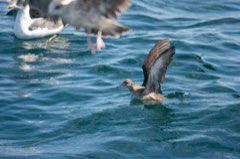 Balearic shearwater & storm petrel islandsHoarse, cackling Balearic shearwaters arriving to cliff burrows after dark, storm petrels purring in cave crevices, Audouin's gull colonies and Eleonora's falcons screaming over the sea in late summer.
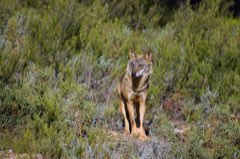 Iberian wolf howling, Sierra de la CulebraPack choruses with pups' yips across the heather-and-pine sierra, roe deer barks, and the deep quiet of one of the emptiest corners of Spain.
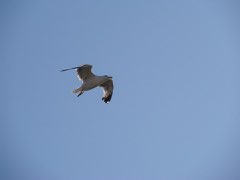 Islas Cíes & Ons seabird coloniesOne of the world's largest yellow-legged gull colonies in full cry on the cliff tops, shags grunting on the ledges, and at night the recently established Cory's shearwaters and storm petrels over the Atlantic side.
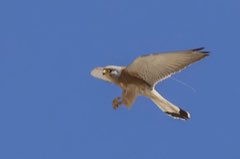 Lesser kestrel colonies of TrujilloA colony of small falcons chattering — the 'chay-chay-chay' and trilling of dozens of lesser kestrels over the bullring roof, swifts screaming through the Plaza Mayor, storks clattering on the church towers and the market noise of an Extremaduran town beneath it.
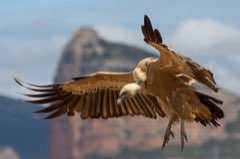 Griffon cliffs: Hoces del Duratón, Hoces del Riaza and MonfragüeA griffon colony settling at dusk is a surprisingly loud thing: hisses, grunts and cackles from hundreds of birds squabbling over ledges, the rush of wings passing at head height, choughs and alpine swifts along the wall and, after dark in winter, eagle owls hooting across the gorge.
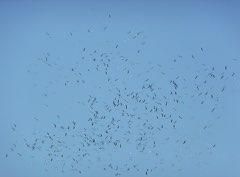 Strait of Gibraltar: raptor & stork passageMostly visual — kettles of thousands — but bee-eater flocks pour over calling all day, honey buzzards pass at head height in a levante, and the stork pre-roost at Los Lances is a bill-clattering crowd.
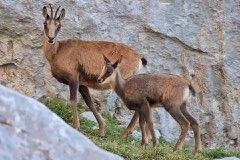 Cantabrian mountains: chamois rut, bears and wallcreepersChamois whistling alarms and clattering hooves on limestone, alpine chough flocks, wallcreeper thin whistles from the gorge walls, bells and the Cares river; bears are silent and distant.