
Strait of Gibraltar: raptor & stork passage
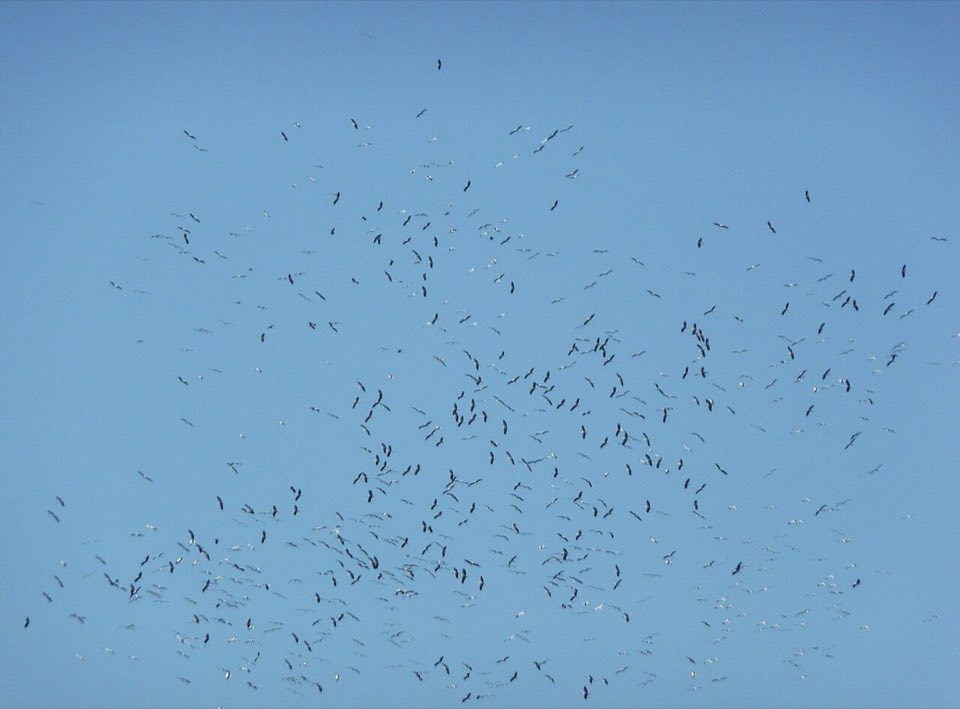
White & black stork, honey buzzard, black kite, short-toed & booted eagle, Egyptian & griffon vulture, bee-eater. Tarifa, Cádiz, Spain.
Best time: 15 Aug – 30 Sep and 1 Mar – 30 Apr (March to April, August to September). Where: Observatorio de Cazalla (N-340 km 87), Observatorio del Algarrobo, Punta Carnero, Algeciras (Spain). Time of day: Storks and bee-eaters move from early morning.
- You can go on your own
- Free
- Telescope recommended
- Sound 3/5
Open it in the interactive calendarSunrise and sunset listening times for the day you pick, and the map.
When is the best time?
- Peak 1: 15 Aug – 30 Sep — Mid August to September: autumn passage, over half a million soaring birds in a season
- Peak 2: 1 Mar – 30 Apr — March to April: spring return — black kites and short-toed eagles in March, honey buzzards from late April into May
Active from 15 Feb to 15 Nov (February to November) in a typical year.
Time of day
Storks and bee-eaters move from early morning; raptors once thermals build, roughly 10:00–17:00; the stork pre-roost at Los Lances gathers in the 2 h before sunset.
- Storks and bee-eaters: sunrise → 10:00
- Raptor passage: 10:00 → 17:00
- Stork pre-roost: 2 h before sunset → sunset
What will you hear?
Mostly visual — kettles of thousands — but bee-eater flocks pour over calling all day, honey buzzards pass at head height in a levante, and the stork pre-roost at Los Lances is a bill-clattering crowd.
Binoculars?
Telescope recommended. Kettles high over the Strait; binoculars essential, a scope for eagles and the stork roost on Los Lances.
Where to go
- Observatorio de Cazalla (N-340 km 87) — Fundación Migres count site for autumn; free, with volunteers counting daily. Map
- Observatorio del Algarrobo — Second autumn count site, sheltered from the levante. Map
- Punta Carnero, Algeciras — Spring count site; ships in the bay. Map
- Playa de los Lances, Tarifa — Stork and gull roost on the beach reserve; wind farms hum on the ridges behind. Map
How to go on your own, and what it costs
Cazalla observatory: N-340 km 87, free car park and viewpoint, Fundación Migres volunteers counting daily in autumn. Algarrobo: signed from the N-340 near Punta Paloma. Punta Carnero: the road from Algeciras/Getares. Los Lances: free beach reserve with a boardwalk from the Tarifa side.
Cost: Free.
Field-recording notes
The wind decides everything: easterly 'levante' pushes birds low over Tarifa itself; a westerly 'poniente' shifts them to Algeciras. Hundreds of wind turbines line the ridges — a constant broadband hum at the observatories. The N-340 runs past every viewpoint. For sound, target the bee-eaters and the stork roost rather than the raptors.
Sources
Similar spectacles
 The Zwin: wader passage, ringing season and the stork colonyBill-clattering of storks greeting at the nest; dunlin and redshank flocks over the salt marsh at the top of the tide; curlews; the sea behind the dunes; in autumn a steady trickle of migrating pipits and finches over the dike.
 Pyrenean passes: raptor, stork, pigeon & crane migrationMostly visual, but woodpigeon flocks pass with a rush of wings, cranes bugle over the pass, and pre-dawn passerine flight calls stream through — with gunfire from the neighbouring hunting passes.
 Spring raptor & stork passage over the Strait — Jbel MoussaMostly a visual event: kettles of hundreds of kites and storks spilling off the Spanish side and gaining height over Belyounech. Sound is the wind, bill-clattering storks on the ground, griffons' rasping wing-noise overhead and the reintroduced griffon colony's grunts on the cliffs.
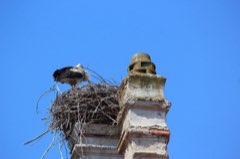 Tree-nesting white stork colony, March floodplainBill-clattering across a colony of 40–50 nests in the oak canopy, chick hissing, black-headed gulls from the oxbows, oriole, nightingale, tree frogs and fire-bellied toads in the flooded meadows, Konik horses.
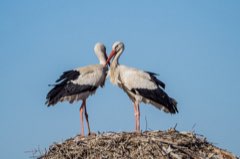 White storks bill-clattering on the Chellah walls, RabatDozens of pairs bill-clattering with heads thrown back on the minaret and the medieval walls, wings thumping on landing, and below them the cattle egret roost and the Bou Regreg valley.
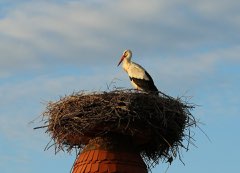 Stork villages: Rühstädt and BergenhusenBill-clattering duets from nests on every roof, hissing chicks begging in June, the whoosh of adults landing; swallows, village sparrows and church bells; cranes and geese on the Elbe floodplain behind.
More: all spectacles in Spain · storks · bird migration hotspots · Spain in March · Spain in April · Spain in August · Spain in September