
Wildlife to see in Spain in January
7 spectacles at their peak in Spain in January, and 2 more still going on. Wild animals only: no zoos, no wildlife parks, no hunting. Open Spain in January in the interactive calendar for listening times on the day you pick.
At their peak in January
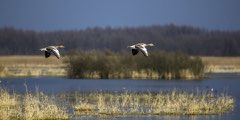 Doñana in winter: geese and the marismasTens of thousands of greylags calling at first light, wigeon whistling in rafts, flamingos honking, glossy ibis colonies grunting, and the near-total absence of roads in the marsh core.
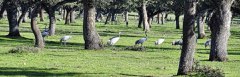 Wintering cranes in the Extremadura dehesaTens of thousands of cranes flying into the roosts at sunset in wave after wave, bugling in the acorn dehesa by day, with wintering lapwings, golden plovers and greylags.
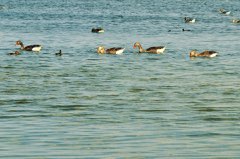 Wintering greylags at VillafáfilaWaves of greylags leaving the saline lagoons at first light in a continuous honking chorus, with great bustards grunting on the stubble and cranes overhead.
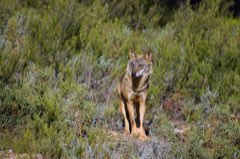 Iberian wolf howling, Sierra de la CulebraPack choruses with pups' yips across the heather-and-pine sierra, roe deer barks, and the deep quiet of one of the emptiest corners of Spain.
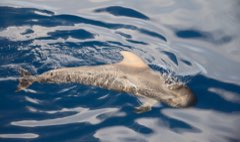 Pilot whales of Teno–Rasca, TenerifeWith a hydrophone: pilot whale whistles and clicks from a resident population of about 500 animals in deep water only 2–3 km offshore; above water, resting groups blowing quietly between boats.
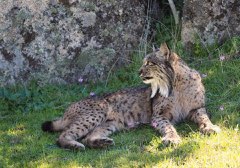 Iberian lynx mating calls, Sierra de AndújarLoud, hoarse caterwauling and 'meows' between males and females carrying across the scrub at dawn; red deer, wild boar and eagle owls in the same valleys. Mostly a sighting spectacle.
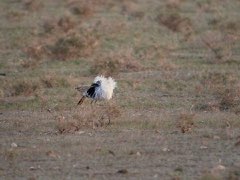 Houbara bustard display on the Canary steppesSilent theatre: a male running in circles with neck plumes thrown over his head like a white ball, visible for a kilometre at dawn. The soundscape is the trade wind, lesser short-toed larks, stone-curlews and coursers at first light — the plains are otherwise among the quietest places in Spain.
Also going on in January
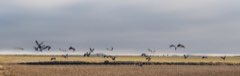 Cranes at Laguna de GallocantaUp to 100,000 cranes lifting off the salt lagoon at first light in a continuous trumpeting roar that lasts half an hour, then skeins bugling over the steppe villages.
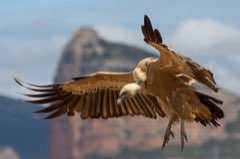 Griffon cliffs: Hoces del Duratón, Hoces del Riaza and MonfragüeA griffon colony settling at dusk is a surprisingly loud thing: hisses, grunts and cackles from hundreds of birds squabbling over ledges, the rush of wings passing at head height, choughs and alpine swifts along the wall and, after dark in winter, eagle owls hooting across the gorge.