
Griffon cliffs: Hoces del Duratón, Hoces del Riaza and Monfragüe
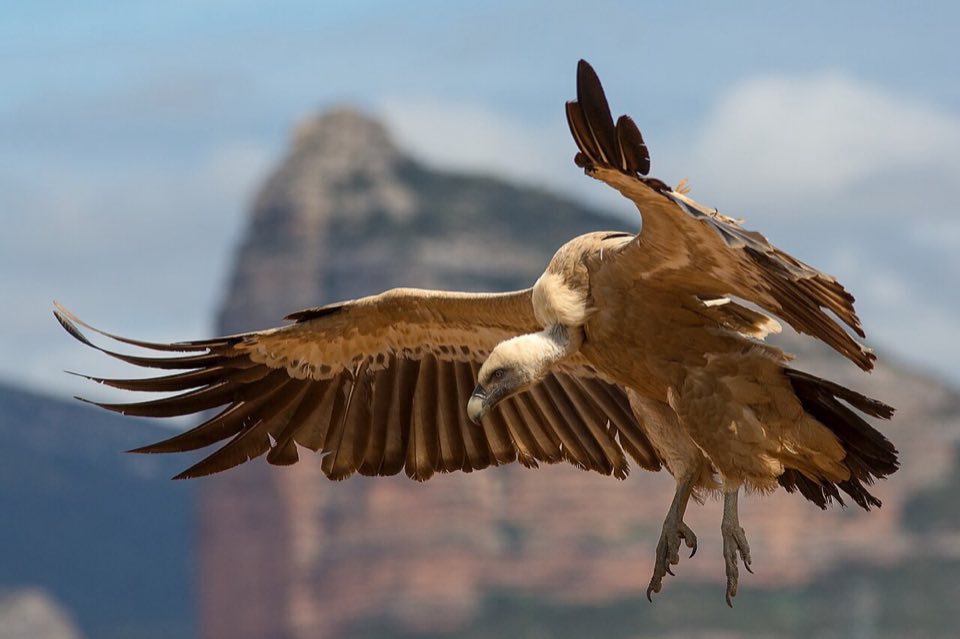
Griffon vulture (Gyps fulvus) — 768 pairs on the Duratón, c. 700 at Montejo; Egyptian vulture, black vulture (Monfragüe), golden eagle, eagle owl, peregrine, chough, alpine swift, black stork. Segovia (Duratón, Riaza) and Cáceres (Monfragüe), Spain.
Best time: 1 Feb – 30 Jun (February to June). Where: Ermita de San Frutos, Hoces del Río Duratón (Carrascal del Río), Montejo de la Vega – Refugio de Rapaces (Hoces del Riaza), Mirador Salto del Gitano, Monfragüe (Torrejón el Rubio) (Spain). Time of day: Griffons sit on the ledges until the sun warms the walls, leave about 2 h after sunrise, and come back in numbers in the 2 h before sunset — the best hour for the colony's sound.
- You can go on your own
- Free
- Binoculars helpful
- Sound 3/5
Open it in the interactive calendarSunrise and sunset listening times for the day you pick, and the map.
When is the best time?
Peak: 1 Feb – 30 Jun. February to June: incubation and chicks on the ledges, Egyptian vultures back from March; griffons are on the cliffs all year and the colonies are loudest at dusk when the birds settle
Active from 1 Jan to 31 Dec (all year) in a typical year.
Time of day
Griffons sit on the ledges until the sun warms the walls, leave about 2 h after sunrise, and come back in numbers in the 2 h before sunset — the best hour for the colony's sound; eagle owls call from the same cliffs from dusk in winter.
- Departures: 1 h after sunrise → 3 h after sunrise
- Return to the ledges, eagle owl at dark: 2 h before sunset → 30 min after last light
What will you hear?
A griffon colony settling at dusk is a surprisingly loud thing: hisses, grunts and cackles from hundreds of birds squabbling over ledges, the rush of wings passing at head height, choughs and alpine swifts along the wall and, after dark in winter, eagle owls hooting across the gorge.
Binoculars?
Binoculars helpful. Birds pass the San Frutos spur and the Salto del Gitano lay-by at eye level within 50 m — binoculars enough; a scope for nests across the gorge.
Where to go
- Ermita de San Frutos, Hoces del Río Duratón (Carrascal del Río) — Walk 1 km from the car park at the end of the Villaseca track over the La Cuchillada bridge to the hermitage spur; nests on the opposite wall. Park rules: stay on marked trails, no climbing or overnight stays; river navigation restricted January–July. Map
- Montejo de la Vega – Refugio de Rapaces (Hoces del Riaza) — WWF's refuge since 1975 inside the Hoces del Río Riaza natural park; c. 700 pairs with the Duratón, 12 pairs of Egyptian vulture; park trails (Senda del Río, Senda entre puentes) from Montejo. Map
- Mirador Salto del Gitano, Monfragüe (Torrejón el Rubio) — Roadside lay-by on the EX-208 opposite the Peña Falcón cliff: griffons, black vultures, Egyptian vultures and black storks at close range; free, open all hours. Map
How to go on your own, and what it costs
Duratón: from Sepúlveda take the SG-241 to Villaseca, then the signed 4 km dirt track west to the San Frutos car park and walk 1 km to the hermitage (free, open all hours; Casa del Parque in Sepúlveda for maps). Riaza: park in Montejo de la Vega and walk the signed park trails along the river (free). Monfragüe: the EX-208 lay-by at the Salto del Gitano, free, any hour.
Cost: Free.
Field-recording notes
Open gorges with little traffic — the Duratón's Villaseca track is dirt and dead-ends at the car park, so dusk is quiet; the Salto del Gitano lay-by fills with cars and coaches by mid morning and at the September rut, so go at first light. Nesting cliffs are protected: no approaching, no drones, no playback for eagle owls (a protected species under heavy disturbance pressure). Winds funnel through the hoces in the afternoon. Natural park rules at Duratón and Riaza; national park rules at Monfragüe (no leaving the marked tracks).
Sources
- Patrimonio Natural de Castilla y León – Parque Natural Hoces del Río Duratón (768 pairs, San Frutos access)
- Patrimonio Natural de Castilla y León – Parque Natural Hoces del Río Riaza (trails, colony)
- Ecoticias – Refugio de Rapaces de Montejo de la Vega (WWF): pairs and chicks
- MITECO – Parque Nacional de Monfragüe
Similar spectacles
 Vulture cliffs of the Jonte, Verdon and OssauWing-rush of griffons passing a few metres over the rim, hissing and grunting from the colony ledges, chough flocks and the river below; more a sight than a sound.
 Griffon vultures on the sea cliffs of CresHissing and grunting at the ledges, the wind-rip of 2.7 m wings passing low over a boat, chick begging; shags and yellow-legged gulls beneath, cicadas and scops owl in the maquis behind.
 Griffon vultures of the Bosa coast, SardiniaMostly visual: Italy's largest griffon colony riding the updraughts of volcanic sea cliffs. Sound is the Mediterranean swell under the cliffs, the wing-rush of birds passing close, hissing at the ledges, blue rock thrush and, in summer, Eleonora's falcons chattering along the coast.
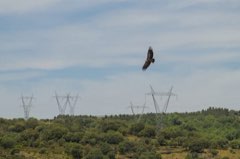 Douro Internacional: griffon and Egyptian vultures on the canyon wallsMostly visual, but the canyon is a natural reverb chamber: griffon wing-rush as they pass the viewpoint at eye level, hissing and grunting at the nests carrying across the gorge, alpine swifts screaming along the walls, blue rock thrush and the river far below.
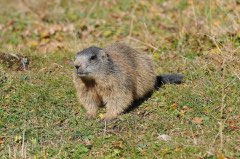 Marmots, ibex and vultures, Hohe TauernMarmot alarm whistles bouncing between glacier-polished walls, chough flocks, ibex hoof-clatter, the wing-rush of a griffon passing at 20 m, ptarmigan; glacier streams and cowbells below.
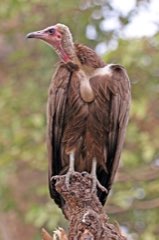 Hooded vultures of the Kombo coast — Africa's densest population at the fish beaches and abattoirsMostly silent birds in enormous numbers: the hiss and thin squealing at a carcass or fish-gut pile, the clatter of 200 pairs of wings lifting at once when a dog runs through, the thud of landings in the kapok roost at dusk. The real soundscape is the fish beach itself — pirogue crews, drying racks, gulls, kites and the vultures' shuffle. A phenomenon that no longer exists anywhere else in the species' range.
More: all spectacles in Spain · vultures · birds of prey · Spain in February · Spain in March · Spain in April · Spain in May · Spain in June