
Lesser kestrel colonies of Trujillo
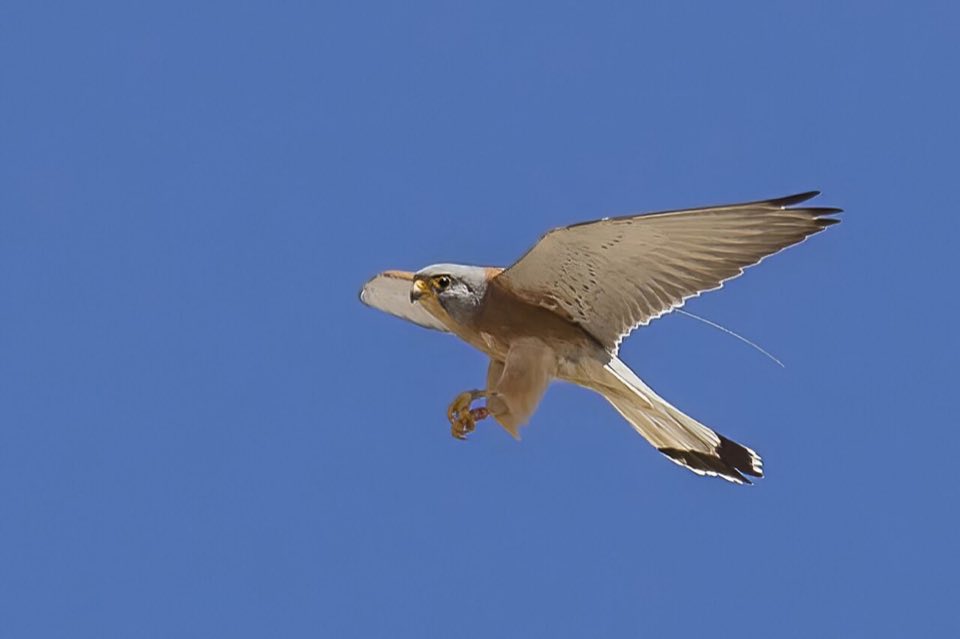
Lesser kestrel (Falco naumanni) — about 120 pairs in the town, the largest urban colony in Extremadura; white stork, pallid & common swift, jackdaw, spotless starling. Trujillo, Cáceres (ZEPA Colonias de Cernícalo Primilla de Trujillo), Spain.
Best time: 15 Apr – 30 Jun (April to June). Where: Plaza de Toros de Trujillo, Grain silos south of the town, Plaza Mayor / Iglesia de San Martín (Spain). Time of day: Colony activity from sunrise to mid morning and again from about 18:00 until dusk, when the whole colony wheels and calls over the bullring and the silos.
- You can go on your own
- Free
- Binoculars helpful
- Sound 4/5
Open it in the interactive calendarSunrise and sunset listening times for the day you pick, and the map.
When is the best time?
Peak: 15 Apr – 30 Jun. Mid April to end of June: pairs at the nests, males bringing prey, fledglings screaming on the roofs from June; birds arrive from late February and gather in pre-migration roosts in July–August
Active from 20 Feb to 31 Aug (February to August) in a typical year.
Time of day
Colony activity from sunrise to mid morning and again from about 18:00 until dusk, when the whole colony wheels and calls over the bullring and the silos; midday is quiet in the heat.
- Morning colony: sunrise → 10:30
- Evening wheeling and calling: 18:00 → last light
What will you hear?
A colony of small falcons chattering — the 'chay-chay-chay' and trilling of dozens of lesser kestrels over the bullring roof, swifts screaming through the Plaza Mayor, storks clattering on the church towers and the market noise of an Extremaduran town beneath it.
Binoculars?
Binoculars helpful. Birds are on the roofs and in the air 20–50 m away; binoculars enough, no scope needed.
Where to go
- Plaza de Toros de Trujillo — The 1848 bullring's tiled roof is the original SPA colony; watch from the road and car park outside (south of the town centre). Map
- Grain silos south of the town — Two 20th-century silos 125 m apart beside the bullring hold the two largest colonies — the one guaranteed spot. Map
- Plaza Mayor / Iglesia de San Martín — Old-town square with storks, swifts and kestrels on the palaces; the Urban Birding route starts here. Map
How to go on your own, and what it costs
Park at the bullring (south of the centre on the Cáceres road) and watch from the car park and pavements; walk the signed Urban Birding route (about 1.5 h) through the old town to the Plaza Mayor. Free, no permits; the tourist office has the route leaflet.
Cost: Free.
Field-recording notes
An urban colony: traffic on the N-521 ring road and the Plaza de Toros car park, bars and market in the Plaza Mayor. Evenings after 19:00 in May are the best balance of colony activity and town quiet; weekday dawns are quieter still. The buildings are private or municipal — record from the street, no access to roofs, no drones over the SPA. Nest boxes under the eaves are part of the conservation work (ZEPA Urbana programme).
Sources
- ZEPA Urbanas Extremadura – Urban Birding Trujillo route (PDF)
- ZEPA Urbanas Extremadura – lesser kestrel status in Extremadura
- elDiario.es – Extremadura, 3,800 pairs of lesser kestrel; urban SPAs incl. Trujillo
Similar spectacles
 Lesser kestrel colonies in the Sassi of MateraHundreds of chattering 'che-che-che' kestrels wheeling over the roofs of a UNESCO old town at dusk, with swifts, jackdaws and church bells.
 White-tailed eagles: Smøla, Lofoten and the TrollfjordThe eagle's yelping 'klee-klee-klee' duet from a nest crag, wing-rush of a 2.4 m bird taking a fish 10 m from the boat, gull and tern colonies, otters whistling in the skerries.
 Vulture cliffs of the Jonte, Verdon and OssauWing-rush of griffons passing a few metres over the rim, hissing and grunting from the colony ledges, chough flocks and the river below; more a sight than a sound.
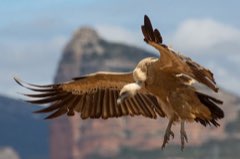 Griffon vultures on the sea cliffs of CresHissing and grunting at the ledges, the wind-rip of 2.7 m wings passing low over a boat, chick begging; shags and yellow-legged gulls beneath, cicadas and scops owl in the maquis behind.
 Griffon vultures of the Bosa coast, SardiniaMostly visual: Italy's largest griffon colony riding the updraughts of volcanic sea cliffs. Sound is the Mediterranean swell under the cliffs, the wing-rush of birds passing close, hissing at the ledges, blue rock thrush and, in summer, Eleonora's falcons chattering along the coast.
 Douro Internacional: griffon and Egyptian vultures on the canyon wallsMostly visual, but the canyon is a natural reverb chamber: griffon wing-rush as they pass the viewpoint at eye level, hissing and grunting at the nests carrying across the gorge, alpine swifts screaming along the walls, blue rock thrush and the river far below.
More: all spectacles in Spain · birds of prey · Spain in April · Spain in May · Spain in June