
Islas Cíes & Ons seabird colonies
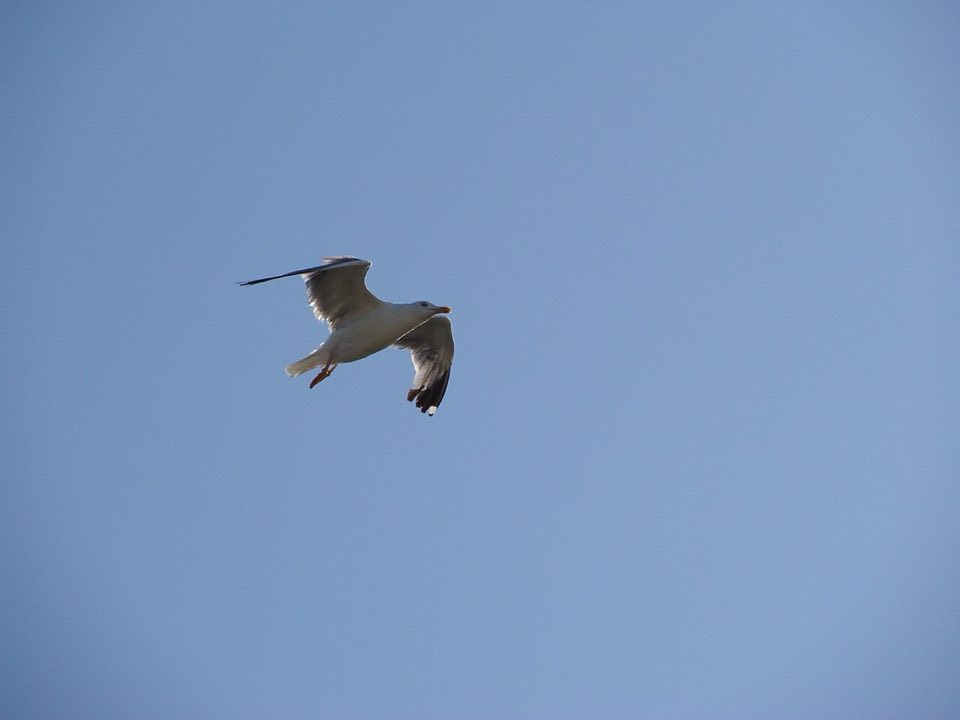
Yellow-legged gull (Larus michahellis), European shag, Cory's shearwater, European storm petrel, lesser black-backed gull. Parque Nacional das Illas Atlánticas, Galicia, Spain.
Best time: 1 May – 30 Jun (May to June). Where: Illa de Monteagudo, Cíes (Faro de Cíes trail), Cíes campsite (Rodas), Illa de Ons (Spain). Time of day: The gull colony is in full cry from first light.
- Partly on your own
- Entry fee
- Binoculars helpful
- Sound 4/5
Open it in the interactive calendarSunrise and sunset listening times for the day you pick, and the map.
When is the best time?
Peak: 1 May – 30 Jun. May–June (chicks in the gull colony)
Active from 1 Apr to 31 Jul (April to July) in a typical year.
Time of day
The gull colony is in full cry from first light; the hours before the first boat (about 10:00) are the quiet ones if you camp; shearwaters and storm petrels arrive only after full dark, peaking 23:00–02:00.
- Morning colony: 30 min before sunrise → 10:00
- Night shearwaters: 30 min after last light → 02:00
What will you hear?
One of the world's largest yellow-legged gull colonies in full cry on the cliff tops, shags grunting on the ledges, and at night the recently established Cory's shearwaters and storm petrels over the Atlantic side.
Binoculars?
Binoculars helpful. Gulls nest beside the cliff trails; binoculars for shags on the ledges. Night shearwaters are ears only.
Where to go
- Illa de Monteagudo, Cíes (Faro de Cíes trail) — Gull colony along the cliff trails; daily visitor cap of about 2,200 with pre-booked boats from Vigo. Map
- Cíes campsite (Rodas) — The only way to be on the island at night — book with the boat ticket. Map
- Illa de Ons — Sister island with a shearwater colony, gulls and a small village; ferries from Bueu. Map
How to go on your own, and what it costs
Get the free landing permit online from the Xunta (autorizacionillasatlanticas.xunta.gal), then book a return boat from Vigo, Cangas or Baiona (several ferry companies; a daily cap applies). To be there before the first boat, book the Cíes campsite with your boat ticket. Ons: ferries from Bueu, camping by permit. Stay on the marked trails.
Cost: Landing permit free; return boat about €25 adult and campsite fees (check current prices).
Free or no-guide alternative: No free way onto the islands (boat needed). Free mainland alternative: the Costa da Vela cliffs at Cabo Home / Punta Subrido face the Cíes across the channel, with shag and yellow-legged gull colonies on the mainland rocks.
Field-recording notes
Daytime is crowded on the Rodas beach side; the west cliffs and the hours before the first boat (about 10am) are yours if you camp. National park rules: stay on the marked trails, no drones, no approaching colony cliffs. Atlantic wind on the west side, calm on the ría side.
Sources
Similar spectacles
 Hornøya and Gjesværstappan: Arctic seabird cliffsA guillemot wall at arm's length: massed growling and trumpeting, kittiwake screaming, puffin grunts, Brünnich's guillemots' lower calls; Arctic surf; at Gjesværstappan the gannet colony's grating and the constant wing-noise of puffins by the hundred thousand.
 Svalbard: Arctic summer cliffs, walrus and ternsLittle auk colonies — a shrill, laughing chorus from scree slopes by the hundred thousand; Brünnich's guillemot walls (Alkefjellet) with birds pouring off 100 m dolerite cliffs; arctic terns in a screaming defensive cloud in Adventdalen; walrus grunts and snorts on a haul-out; calving glaciers.
 Seabird citiesA wall of seabird calls: gannet grating, kittiwakes calling their name, guillemot growls, puffin burrow moans, sea and wind below.
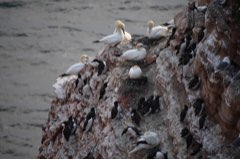 Helgoland Lummenfelsen: guillemots, gannets and the 'Lummensprung'Germany's only seabird cliff: guillemot growls, kittiwake screaming, gannet colony grating, fulmar cackles; at the jump, chicks peeping and adults calling them down to the sea 40 m below.
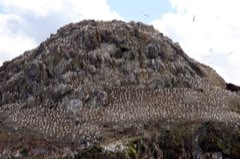 Sept-Îles: gannets on Rouzic, puffins and auksFrance's only gannet colony (about 14,000 pairs on Rouzic) as a wall of grating calls from the boat, puffins and kittiwakes on the sea, and the Atlantic swell against the granite.
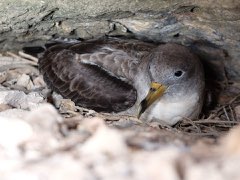 Shearwater colonies at night, Lastovo archipelagoScopoli's shearwaters wailing and cackling overhead and from burrows — the 'crying baby' chorus of Mediterranean islets; Yelkouan's higher nasal calls; waves on rock, cicadas fading at dusk.
More: all spectacles in Spain · seabird colonies · Spain in May · Spain in June