
Wildlife to see in Angola in October
4 spectacles at their peak in Angola in October, and 5 more still going on. Wild animals only: no zoos, no wildlife parks, no hunting. Open Angola in October in the interactive calendar for listening times on the day you pick.
At their peak in October
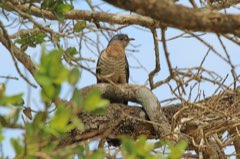 Miombo woodland at the first rains: cuckoos, barbets and frogsThe full southern-African miombo dawn — cuckoos calling in every direction, barbets duetting, tinkerbirds' endless popping, orioles and the red flush of new leaves — and after the first storms the pans erupt with reed frogs and bullfrogs at night.
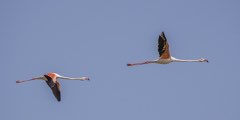 Flamingos and Palearctic waders on the Mussulo lagoonFlamingo flocks honking and murmuring on the shallows of the inner lagoon, whimbrel and grey plover across the flats at low tide, terns over the channel and, on the city side, Luanda's traffic and the port.
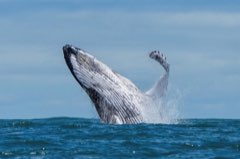 Humpback whales off Namibe and BenguelaBlows and breaches close inshore below desert cliffs, with a hydrophone over the side of a fishing boat: humpback song. Above water the Namib coast is fog, surf and cormorants.
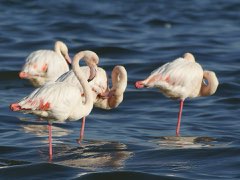 Iona and the Namib coast: desert dawn, flamingos and the Cunene mouthRüppell's korhaan and larks in the absolute silence of the Namib at dawn, flamingo flocks on the Baía dos Tigres shallows, Cape cormorant colonies, the surf and fog of the Skeleton Coast's northern end, and jackals at night.
Also going on in October
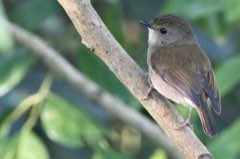 Kumbira forest: the Gabela endemics at dawnRed-crested turacos croaking through the coffee-forest canopy, the loud, ringing calls of Monteiro's and Gabela bushshrikes, the akalat's thin song in the understorey — a set of species found nowhere else on earth — with farm cocks, goats and the Conda road in the background.
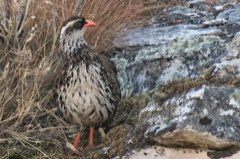 Mount Moco: Swierstra's francolin and the Afromontane forestThe loud, rasping crow of Swierstra's francolin — Angola's most wanted bird — from the remnant forest patches at dawn, sunbirds and batises in the trees, and the wind over montane grassland at 2,400 m with a village waking far below.
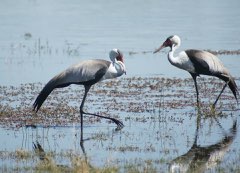 Okavango headwaters: the Cuito source lakes and the CuandoOne of the least-recorded soundscapes in Africa: hippos and Pel's fishing owl on the Cuito, frog choruses on peat-edged source lakes, wattled cranes over the floodplains, the miombo dawn with its cuckoos and barbets, and no engine for days.
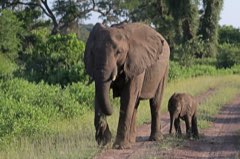 Kissama (Quiçama): elephants and the Cuanza riverElephants on the Cuanza floodplain, hippos grunting from the river at dusk, fish eagles, and the coastal savanna's dawn of francolins, hornbills and doves — with the fog of the cacimbo damping everything until mid-morning.
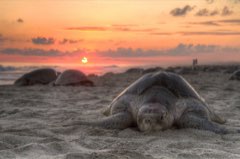 Olive ridley nesting on the Angolan coast — the Atlantic's largest populationA sighting with a close-mic moment: the scraping and heavy breathing of a nesting ridley — a small turtle, a quick nest — against the Atlantic surf, and the Kitabanga patrol's low voices.