
Flamingos and Palearctic waders on the Mussulo lagoon
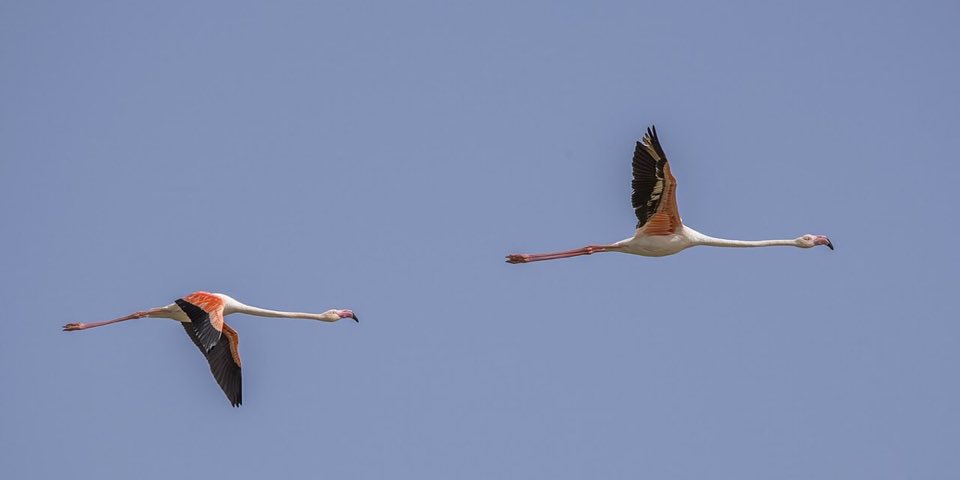
Greater flamingo (Phoenicopterus roseus), lesser flamingo; curlew sandpiper, little stint, sanderling, grey plover, whimbrel, bar-tailed godwit; terns, pelicans, cormorants. Mussulo and Luanda Bay, Luanda, Angola.
Best time: 15 Oct – 28 Feb (October to February). Where: Mussulo – inner lagoon flats (Ilha do Mussulo), Luanda Bay – Ilha de Luanda and the bay shore (Angola). Time of day: Waders and flamingos feed on the flats around low water.
- You can go on your own
- Free
- Binoculars essential
- Sound 3/5
Open it in the interactive calendarSunrise and sunset listening times for the day you pick, and the map.
When is the best time?
Peak: 15 Oct – 28 Feb. Mid October to February: Palearctic waders on the flats (every wader species recorded in Angola has been seen here) with flamingo flocks through the year
Active from 1 Sep to 30 Apr (September to April) in a typical year.
Time of day
Waders and flamingos feed on the flats around low water; the calmest, quietest hours are the first three after sunrise before the boats and the sea breeze
- Morning flats: sunrise → 3 h after sunrise
Depends on the tide: best around low tide. Check local tide tables.
What will you hear?
Flamingo flocks honking and murmuring on the shallows of the inner lagoon, whimbrel and grey plover across the flats at low tide, terns over the channel and, on the city side, Luanda's traffic and the port.
Binoculars?
Binoculars essential. Flamingos and waders feed on flats 100–500 m from the shore; binoculars needed, a scope pays.
Where to go
- Mussulo – inner lagoon flats (Ilha do Mussulo) — Sand spit south of Luanda with the shallow lagoon behind it; boats from the mainland at Benfica/Cabo Ledo road landing. Map
- Luanda Bay – Ilha de Luanda and the bay shore — Urban; flamingos and waders on the bay flats at low water, best from the Ilha's inner shore. Map
How to go on your own, and what it costs
Taxi or candongueiro to the Mussulo landing on the Cabo Ledo road (Benfica side) and a public boat across, or walk the inner shore of the Ilha de Luanda from the city; no permit, no guide.
Cost: Free; the Mussulo boat crossing is a few hundred kwanzas, check current prices.
Field-recording notes
Public shore: no permits, but a lot of people — the Mussulo beaches are Luanda's weekend playground, so weekdays at first light or the inner flats are the option. Speedboats and jet-skis from about 09:00. Photographing anything near the port or the naval base draws attention; keep rigs pointed at birds. The flats are soft; tides on this coast are small but decide where the waders are. Angola has no Ramsar sites, so there is no reserve infrastructure — the site is a BirdLife IBA/KBA only.
Sources
Similar spectacles
 Iona and the Namib coast: desert dawn, flamingos and the Cunene mouthRüppell's korhaan and larks in the absolute silence of the Namib at dawn, flamingo flocks on the Baía dos Tigres shallows, Cape cormorant colonies, the surf and fog of the Skeleton Coast's northern end, and jackals at night.
 Flamingo colonies & courtshipGoose-like gabbling of big flocks, and the synchronised 'marching' displays with a constant honking.
 Diawling floodplain — pelicans, flamingos and Palearctic ducksPelican flotillas grunting, garganey and pintail flocks whirring off the flooded basins, flamingo chorus, and the low background of the Diama dam and the Senegal river.
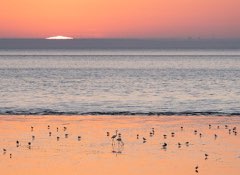 Tagus estuary in winter: flamingos, avocets and 100,000 waterbirdsFlamingo flocks honking as they move between the estuary and the Lezíria rice fields, avocet and godwit roosts chattering on the salinas at high tide, teal whistling on the lagoons and the great winter silence of the open marsh broken by hunters' shots outside the reserve.
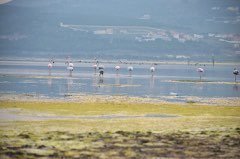 Marchica lagoon, the Moulouya mouth and the Mohammed V reservoir — the Mediterranean east in winterFlamingo honking across a lagoon the size of a city, wigeon whistling, shelduck, the bugling of common cranes at the Mohammed V shore at dusk, and in spring a booming bittern and avocet colony clamour at the Moulouya mouth. Nador's traffic and the fishermen's outboards are the backdrop; the Moulouya is quieter.
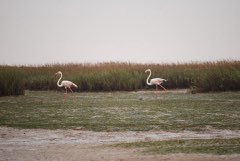 Saharan lagoons — Khnifiss and Dakhla Bay in winterFlamingo honking in the hundreds across a lagoon with no other sound at all, wader flocks lifting, the rattle of royal and Caspian terns, and on Dakhla Bay the blow of a humpback dolphin close to shore.
More: all spectacles in Angola · flamingos · bird migration hotspots · January · February · Angola in October · Angola in November · December